Climate tech funding paths for different scenarios
In 2023, climate tech startups absorbed $44.5 billion in venture capital. Software captured $5.8 billion—13% of the total. Hardware and infrastructure absorbed the remaining $38.7 billion, or 87%. One equity stack does not fund both sides.
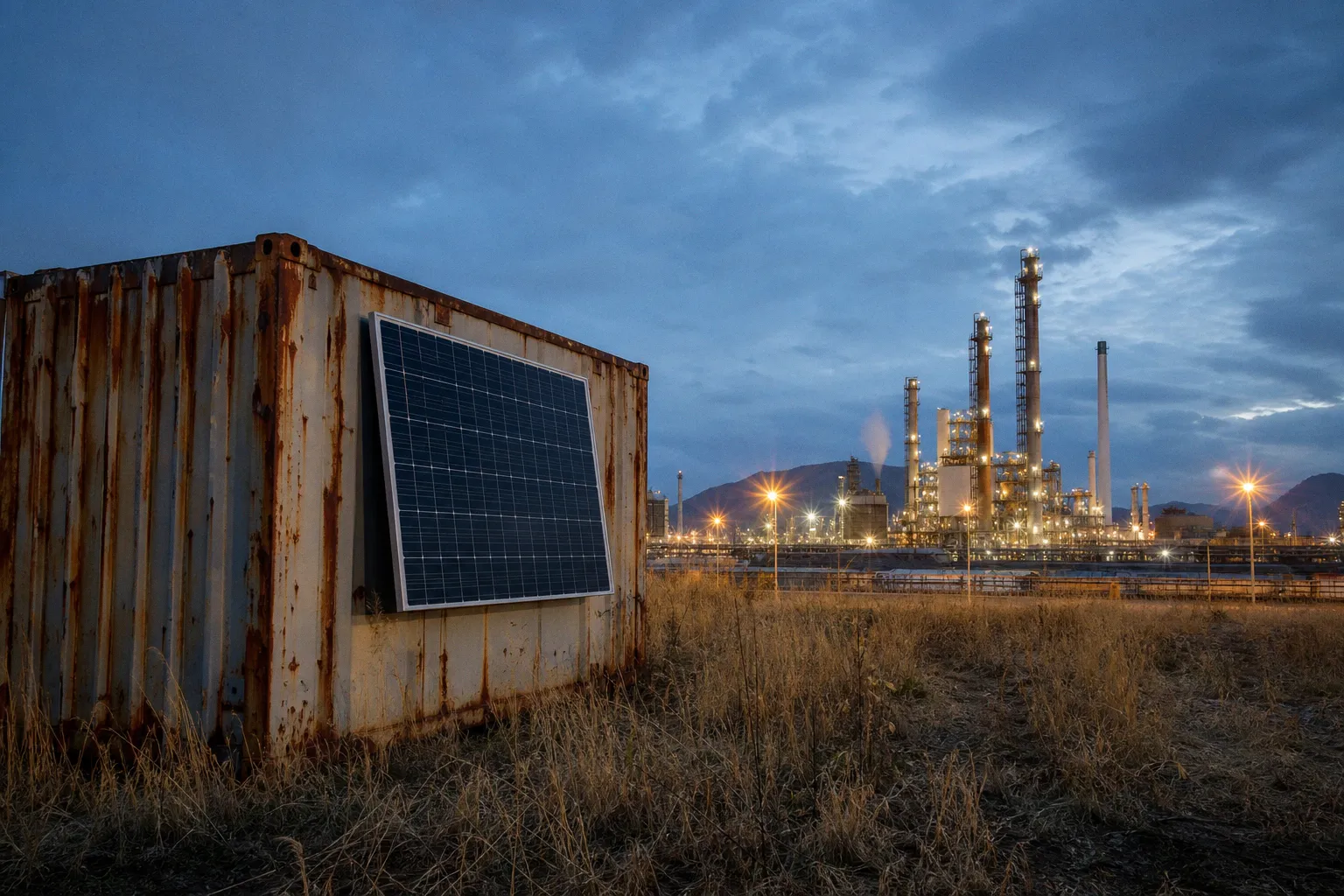
The funding architecture for a SaaS carbon-accounting platform and a battery gigafactory is not the same problem. Treating them as if they were is the first mistake a founder makes when the seed round closes.
Compare car rental deals in United Kingdom
See available offersPartner link — DiscoverCars comparisonA software climatetech startup may move through a relatively familiar sequence: pre-seed, seed, Series A, perhaps Series B, then an acquisition or public-market process. A hardware startup can require substantially more financing events, larger checks, longer timelines, and several instrument types before commercial scale is secure. Battery developer Northvolt closed 14 rounds—eight equity and six debt—before scaling commercial production. That is not a template for every hardware company, but it illustrates how quickly the financing architecture can become more complex than the original venture plan.
The unit of analysis is not the company. It is the funding architecture. Pick the wrong architecture and the company dies at the same growth stage regardless of traction.
The right climate startup funding path selection therefore begins with the physical and commercial shape of the business. Does growth require more software seats, or another factory? Does the next milestone require engineers and salespeople, or equipment, permitting, commissioning, and working capital? The answers determine whether venture equity is the core engine or only one layer in a broader capital stack.
The divergent paths: software SaaS vs. capital-intensive hardware
Software climatetech follows a recognizable sequence. Pre-seed closes on a small check against an MVP or initial traction. Seed funds product development and the first repeatable sales motion. Series A funds go-to-market. Series B expands revenue channels, geographic coverage, or the product suite. Some companies need additional rounds; others reach an acquisition process without following the entire sequence.
The bottleneck is usually sales throughput and CAC payback. The unit economics resolve around ARR per customer, gross margin, retention, implementation cost, and the time required to convert a pipeline into contracted revenue. Capital is primarily financing people, software infrastructure, compliance, and the working capital required to make the sales engine repeatable.
Hardware climatetech does not follow this sequence because the capital requirement scales with physical throughput, not user count. A company can have strong pilot results and still be years away from a bankable commercial asset. Founders may need equipment financing, project finance, venture debt, government grants, corporate R&D partnerships, and equity in mixed tranches over a longer timeline.
The sequence usually breaks into four operating phases:
1. R&D and lab validation—funded through equity rounds, grants, and corporate R&D partnerships. The central question is whether the technical system works under controlled conditions.
2. Pilot deployment—funded through equity, project finance, customer contributions, and pilot-specific grants. The company must demonstrate performance outside the lab and establish who bears operational risk.
3. FOAK commercial scale-up—funded through blended finance: concessional public capital, project finance, venture debt, strategic investment, and larger equity rounds. The challenge is building the first commercial-scale asset without asking venture investors to absorb every category of risk.
4. NOAK commercial deployment—funded through project finance, infrastructure funds, standard debt, and retained operating cash flow. The technology is no longer being financed as a single experiment; it is being financed as a repeatable asset class.
Each phase has its own bottleneck. On the software side, the constraint is often sales efficiency: whether the company can turn product adoption into durable, high-margin recurring revenue. At the hardware stage, the constraint becomes industrial execution. The FOAK valley of death sits between technical validation and an asset that lenders, insurers, customers, and infrastructure investors can underwrite.
The capital profiles diverge as well. Hardware climatetech startups can raise materially more equity than software climatetech startups, particularly when commercialization requires manufacturing capacity or deployment assets. When grants, concessional capital, and asset-level debt are included, the difference in total capital can become larger still. These are directional comparisons rather than universal rules: a capital-light software business can require substantial funding, while a hardware business may reach revenue through contract manufacturing or a partner-led model. But the financing question remains the same—what exactly must the next dollar build?
| Parameter | Software climatetech | Hardware climatetech |
|---|---|---|
| Equity rounds to commercial scale | Often 3–4, depending on growth and exit timing | 7–14 or more financing events can occur in complex cases |
| Primary bottleneck | CAC payback, retention, sales throughput | FOAK capital gap, commissioning, and industrial execution |
| Dominant instrument | Equity | Blended: equity, debt, grants, and project finance |
| Total capital to first commercial scale | Often in the sub-$10M range | Often in the $50M–$200M range for asset-heavy builds |
| Time from seed to commercial scale | Often 3–5 years | Often 7–12 years |
| Typical exit or liquidity paths | Acquisition, IPO, strategic sale | Acquisition, offtake-backed expansion, infrastructure ownership, IPO |
The table is not a valuation model. It is a warning against importing software assumptions into a physical business. In SaaS, the next round often follows a product or revenue milestone. In hardware, the next financing may have to precede a permitting decision, long-lead equipment order, factory lease, or construction contract. Missing that window can delay the entire program by more than the fundraising calendar suggests.
Surviving the FOAK valley of death: bridging the $50M–$200M gap
The “first-of-a-kind”—FOAK—bottleneck is the structural problem many hardware climatetech founders eventually face. Moving from a successful pilot to the first commercial-scale manufacturing facility can cost between $50 million and $200 million. That figure excludes operating losses during ramp-up. It covers physical construction, equipment, and commissioning only.
The number matters because it changes the identity of the investor. A pilot may be financed as a technology-risk project. A commercial facility is also a construction project, an operating business, a supply-chain commitment, and a long-term revenue contract. A founder who presents the FOAK round as simply “a larger Series B” is asking one instrument to solve several different underwriting problems.
The capital required at this stage is outside the standard VC pattern. A late-stage venture fund may be able to write a large check, but it may not be designed to fund a single-asset manufacturing build whose return depends on construction, utilization, offtake, and debt service. The fund’s portfolio construction, reserve policy, and expected time to liquidity may not match the asset’s needs.
Equity dilution at this stage can become severe if the founder relies on equity alone. The exact outcome depends on valuation, investor appetite, existing preferences, and the amount of capital required, but a single large round can transfer a significant share of the company to new investors. It can also leave too little equity available for the next financing, when the facility still has commissioning risk or has not yet reached stable utilization.
The fix is not to avoid equity. It is to give equity a narrower job. A blended capital stack layers concessional public capital, government grants, project finance, equipment financing, venture debt, strategic capital, and equity. Each layer absorbs a different risk and receives a different return.
The Ottana project in Sardinia used a €60 million blended package to fund the first full-scale CO2 battery. The structure brought together public concessional capital and private investment, reducing the risk that any single participant would have to carry the entire transition from demonstration to commercial operation.
If the founder waits until Series C to construct the FOAK unit, the bridge is already gone. Begin assembling the blended stack at pilot close, not at commercial scale.
The mechanics of a working FOAK stack can look like this:
- 30% to 40% concessional capital from sources such as the EU Innovation Fund, the US Department of Energy, the EIB, multilateral lenders, climate-focused development finance institutions, or national programs. This capital may be subordinate in repayment priority and may be non-dilutive, but it is rarely automatic. It comes with policy requirements, milestone reporting, procurement conditions, and a defined use of proceeds.
- 20% to 30% venture debt or equipment financing. This can include term loans, equipment leases, and revenue-based structures. Availability depends on lender appetite, repayment capacity, collateral, revenue visibility, and the presence of a credible offtake contract. The instrument may be unavailable precisely when the company has the greatest technology risk.
- 20% to 40% project finance. This is non-recourse or limited-recourse debt against the FOAK asset. It requires more than a promising technology deck: lenders want bankable offtake, construction assumptions, insurance, operating plans, contingency reserves, and cash-flow projections that survive downside cases.
- 10% to 30% equity. Series B or later capital may come from climate-focused VCs, strategic corporates, infrastructure funds, or specialist growth investors. This equity absorbs risks that debt cannot and provides the flexibility required during construction and ramp-up.
These percentages are an illustrative architecture, not a financing recipe. A first commercial facility with uncertain offtake may require a larger equity layer. A project supported by a government grant and a creditworthy buyer may support more debt. A company that owns the technology but not the asset may raise less project capital and monetize through licensing, equipment sales, or a joint venture.
The key is to map the stack before the round is announced. Grants require policy alignment and a credible project plan. Venture debt requires lenders comfortable with the company’s risk and repayment profile. Project finance requires bankable offtake and asset-level diligence. Equity requires a milestone narrative that explains why the company becomes less risky after each tranche.
The founder assembles the stack in parallel, not in sequence. The cap table at FOAK close should reflect the intended debt-to-equity ratio, not the accidentally surviving ratio after every other source of capital has failed to arrive.
Building a blended capital stack: beyond traditional venture equity
Grants versus venture capital in climate tech is not a binary choice. Founders who pitch only equity discard capital that may not dilute ownership and may be better suited to long-duration technical work. Non-dilutive funding for climate startups is not charity. It is a policy instrument with its own eligibility rules, reporting obligations, timing windows, and political priorities.
The grant is not free money in the operational sense. It can require matching funds, audited expenses, procurement documentation, technical milestones, and restrictions on how the money is spent. It can also arrive later than the engineering schedule requires. The practical question is not whether a grant has no dilution; it is whether the grant’s conditions fit the company’s actual development plan.
Three non-equity instruments form the core of many blended stacks:
1. Government grants and concessional capital. Sources include the European Innovation Fund, the US Department of Energy, the UK Net Zero Innovation Portfolio, ARPA-E, Innovate UK, EIT Climate-KIC, and national climate funds. Depending on the program and project, these instruments may cover a meaningful share of eligible project costs. Application timelines can run for months, and award timelines may extend further. Founders who wait until after the equity round closes may find that the grant arrives too late to reduce the amount of equity required for the current milestone. The grant should be designed into the financing plan rather than treated as an upside scenario.
2. Venture debt. Specialized lenders provide term loans against recurring revenue, contracted offtake, equipment, or a combination of these. Typical structures include a three- to five-year term, market-rate interest, repayment covenants, and sometimes warrant coverage. Venture debt can extend runway without issuing ordinary equity at the time of borrowing, but it does not guarantee a particular runway extension or eliminate dilution altogether. Interest, fees, mandatory repayments, covenants, and warrants all affect the economics. If the company misses its operating milestone, debt can reduce flexibility rather than create it.
3. Project finance. This is non-recourse or limited-recourse debt against a specific revenue-generating asset. Banks and infrastructure funds can deploy it against operating power assets or industrial facilities with bankable offtake. The asset’s cash flow services the debt. Project finance generally becomes more realistic at FOAK and NOAK stages, when construction, operating performance, and revenue contracts can be diligenced. It is not a substitute for early technical-risk capital.
| Instrument | Dilution | Cost basis | Best stage | Key requirement |
|---|---|---|---|---|
| Government grant | None in ordinary equity terms | Application time, compliance, and restricted use of funds | Pilot, FOAK | Policy fit, eligible costs, milestones |
| Concessional debt | None in ordinary equity terms | Below-market or supported interest, with conditions | FOAK | Public program mandate and repayment case |
| Venture debt | Usually low direct dilution, but warrants may dilute | Interest, fees, covenants, and possible warrants | Series A+ or later | Revenue visibility, collateral, offtake, or lender fit |
| Project finance | None at the parent-company equity level in a non-recourse structure | Standard debt service and reserve requirements | FOAK+ | Bankable offtake, asset cash flow, construction plan |
| Infrastructure fund equity | Medium to substantial, depending on structure | Equity dilution or asset-level ownership | NOAK | Bankable project, repeatability, contracted revenues |
The table also clarifies why founders should not compare instruments only by headline dilution. A grant may preserve the cap table but consume management time and restrict deployment. Debt may avoid an immediate equity reset but create a fixed payment obligation before revenue is stable. Infrastructure equity may be more expensive than project debt but can supply patient capital and industrial expertise.
The financing plan should therefore specify what each instrument is buying. Equity might fund the engineering team and corporate platform. A grant might fund a demonstration line. Equipment finance might purchase a known class of machinery. Project debt might fund an asset with contracted cash flows. Mixing these uses makes diligence harder and allows each investor to assume that somebody else is carrying the risk.
The shift toward infrastructure: why 60% of dry powder favors scale
The climatetech capital strategy has shifted since 2021. Total assets under management raised for climate tech since 2021 reached $164 billion by 2024, with a 20% year-on-year increase in new AUM. The composition of that AUM matters as much as the total.
Infrastructure funds now hold nearly 60% of the dry powder in climate tech. Dry powder is committed but undeployed capital. A concentration of that capital in infrastructure means the deployment priority is large-scale, mature-sector projects: wind farms, solar arrays, energy storage, grid infrastructure, and hydrogen at commercial scale. The marginal dollar tends to flow toward bankable offtake and asset-backed cash flow, not toward unproven technical risk.
That does not mean infrastructure investors are indifferent to technology. It means they price technology risk differently. They want evidence that the asset can be built, operated, insured, connected to the grid or customer, and paid for under a contract. A prototype may be technically impressive and still be a poor infrastructure investment.
Software climatetech does not draw from infrastructure dry powder in the same way. Early-stage hardware beyond FOAK does not automatically qualify either. The 60% figure tracks the late-stage, mature-technology, utility-scale end of the pipeline. Founders whose unit economics fit this end of the pipeline have access to a different capital pool: bigger checks, longer holding periods, and potentially a lower cost of capital than venture equity.
The qualification is structural, not rhetorical. A founder cannot simply rename a hardware startup an infrastructure company and expect infrastructure underwriting. The business must begin to resemble an investable asset.
Three markers signal infrastructure-fund eligibility:
- Recurring contracted revenue. A PPA, offtake agreement, capacity contract, or equivalent arrangement covers a substantial portion of forecast production capacity. The quality of the counterparty matters as much as the percentage.
- Comparable asset economics. Metrics such as LCOE, LCOS, capacity factor, operating margin, maintenance cost, and useful life sit within a credible range for comparable assets. A compelling unit cost in a laboratory setting is not enough.
- A repeatable construction-and-operate model. The project is not a one-off FOAK showcase. The company can explain how the next site will be permitted, financed, built, staffed, and operated with fewer unknowns.
There is also a corporate-structure question. Infrastructure capital may prefer to invest in a project company rather than the venture parent. That can protect the parent-company cap table, but it introduces governance, transfer-pricing, intellectual-property, and control questions. Who owns the equipment? Who receives the offtake revenue? Who carries warranty risk? Who can approve a refinancing or sale?
Founders who secure infrastructure-fund capital at the NOAK stage may lower the cost of capital and preserve equity for earlier stages. Founders who miss the infrastructure markers remain in the venture pool, where the time horizon and dilution profile are different. Neither route is automatically superior. The error is assuming that a venture round can remain the default instrument after the company has become an asset-development business.
Lessons from the trenches: managing multi-round complexity
The operational burden of raising ten or more rounds before commercial scale differs from raising four. The founder’s calendar reshapes. Diligence cycles compound. Investor reporting standards rise. Cap table hygiene becomes a load-bearing system rather than a back-office task.
A complex financing can fail for ordinary reasons. A grant reimbursement is delayed. A debt covenant conflicts with a new equity instrument. An offtake contract does not satisfy the lender’s bankability test. A strategic investor requests rights that complicate a later infrastructure round. None of these problems is necessarily fatal in isolation. Together, they can make the next close slower, more expensive, or impossible on the planned terms.
Four operating mechanics separate the teams that close the FOAK bridge from the ones that fall in:
- Cap table discipline. Track every preferred-share class, SAFE, convertible note, warrant, option grant, liquidation preference, and pro-rata right at instrument-level granularity. Model the fully diluted outcome before signing a new security, not after. By later rounds, investors will examine not only ownership percentages but also consent rights, conversion mechanics, seniority, and the effect of outstanding promises on the next financing.
- Investor-relations cadence. Send quarterly KPI reports to all equity holders. Active investors can receive forward-looking metrics and decision requests; passive investors still need reliable trailing actuals. A consistent reporting rhythm does not guarantee investor support, but it gives the board and capital providers an earlier view of missed milestones, cash pressure, and changes to the financing plan.
- Financial-model granularity. Maintain a working three-statement model with a capex schedule, debt-service coverage, construction drawdown timing, offtake scenario trees, and sensitivity bands on output price, utilization, capacity factor, input costs, and commissioning delays. Infrastructure LPs and project lenders will not underwrite a facility from a venture-style revenue forecast alone.
- Legal-stack modularity. Each tranche in the blended stack may require its own legal vehicle, intercreditor agreement, security package, reporting obligations, and step-in rights. The legal architecture must support simultaneous or coordinated closings across instrument types. A financing that is commercially agreed but legally unable to close in the required order is not committed capital.
Diligence at a later round with a disordered cap table is a material transaction risk. It can slow the process, force corrective work, weaken negotiating leverage, or cause an investor to reconsider the deal. It would be too strong to claim that cap-table disorder is the cause of most failed financings; failed deals have multiple causes, and reliable public evidence does not support a universal causal statistic. The practical conclusion is narrower and more useful: cap-table disorder is preventable, and it becomes more expensive to repair as the number of instruments and stakeholders increases.
The debt-to-equity ratio at FOAK close determines whether the next round is a financing or a recapitalization. Build the ratio at round zero.
The same discipline applies to debt. Venture debt should be modeled under the downside case, not only the base case. The founder needs to know when amortization begins, what happens if the next equity round is delayed, how warrants affect future ownership, and whether the lender can restrict a strategic transaction. Debt is valuable when it matches the asset’s cash-flow profile. It is dangerous when it merely postpones a financing problem.
The market backdrop reinforces the need for architecture. Global VC funding into climate tech startups reached $39.0 billion in 2025, while the first half of 2026 closed at $19.5 billion and the full-year projection held flat at $39.0 billion. These figures suggest a funding pool that is reallocating rather than expanding rapidly. Software climatetech may capture a stable but modest allocation. Hardware captures a larger share of the total capital requirement, and within that category, infrastructure-eligible assets are positioned to win more of the marginal dollar.
The climate startup funding path selection question reduces to four checkpoints. Each routes the founder toward a different capital architecture:
- Software product, sub-$10M to commercial scale. Use the standard VC path where the business is genuinely capital-light. Optimize for CAC, gross margin, retention, and sales efficiency. Do not add project-finance complexity simply because the product has a climate label.
- Hardware at pilot stage, pre-FOAK. Assemble the blended stack at pilot close. Target the FOAK bridge directly. Apply for grants before the equity round where possible, and design the pilot to produce the operating, performance, and offtake evidence that later lenders will require.
- Hardware at FOAK, pre-commercial scale. Infrastructure-fund eligibility is the gate, not merely the size of the equity check. Refit the unit economics for project finance, secure credible offtake, and separate technology-company risk from asset-level construction risk where the structure allows.
- Hardware at NOAK, commercial operation. Infrastructure capital and conventional project finance become more relevant. Equity rounds may become smaller relative to total capex, while asset-level debt and operating cash flow carry more of the expansion burden.
Fund the architecture that matches the unit. The funding path is determined by engineering reality, revenue contracts, asset risk, and the timing of cash needs—not by the founder’s preferred label for the round. The same company with two different cap tables can produce two different outcomes at the same growth stage.
Treat the funding architecture as a design parameter, not a fundraising byproduct. In software, that may mean preserving ownership while proving repeatable revenue. In hardware, it may mean preserving equity for the risks that debt and grants cannot absorb. The right path is not the one with the fewest instruments. It is the one in which each instrument is carrying the risk it was built to carry.