Climate validation frameworks: choosing your method
A pitch deck is not validation. A landing page with 800 signups is not validation. A sustainability VP saying “we love this” over Zoom is — emphatically — not validation.
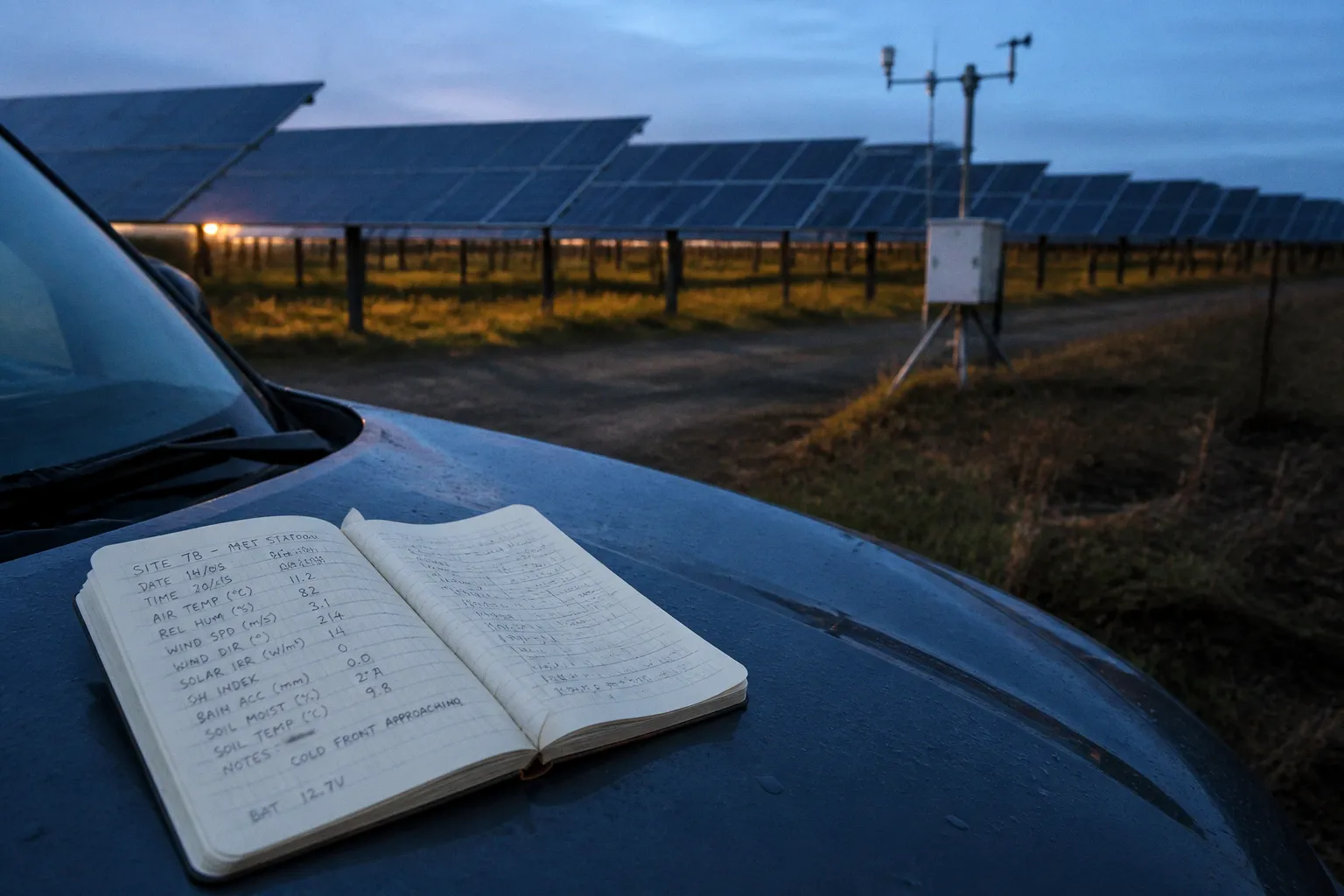
Yet founders in climate tech keep treating these moments as proof, collecting digital thumbs-ups and mistaking them for evidence of demand. The market does not owe you that confusion.
ClimateTech sits in an unusual corner of the startup world: the buyer claims to care about your mission, the procurement officer claims to have budget, the pilot champion claims to have authority — and none of those claims independently buys you anything. What buys you something is structured testing against operational, technical, and commercial friction, not enthusiasm. Your job is not to be liked. It is to be useful, measurably, in conditions nobody is glossing over.
Beyond Landing Pages: Why ClimateTech Requires Structural Validation
The assumption most first-time founders carry into ClimateTech — that mission alignment shortens the sales cycle — is wrong in a measurable way. Corporate sustainability teams are not necessarily the buyer. They are often the loudest voice in the room, but rarely the one with a purchase order. A landing page tells you whether your messaging resonates. It does not tell you whether a plant manager can install your sensor without shutting down a line, whether your monitoring software meets a utility’s SCADA integration requirements, whether your novel cathode passes a UL certification on the first attempt, or whether a procurement cycle will approve a vendor nobody has worked with before.
ClimateTech buyers need several kinds of permission before they can say yes:
- Site access: can they legally and physically let you in?
- Safety compliance: does your technology meet their EHS standards?
- Data integration: will it talk to their existing stack?
- Regulatory clearance: does it clear the jurisdictional hurdles?
- Commercial approval: can the organization buy from a company at your stage?
A landing page addresses exactly zero of these. That is not a flaw in the landing page. It is a flaw in the founder’s assumption that they were ever measuring the same thing.
If your only evidence is “they said they’d buy,” you have a testimonial, not a validation.
The shift, then, is from collecting signals about interest to collecting signals about friction. Every unanswered email from a procurement contact, every stalled pilot agreement, every “we need to loop in legal,” and every request for a certification you have not yet obtained is data. It is expensive data, the kind that costs you six months if you wait to gather it post-launch.
That is why serious commercialization programs force founders out of the comfort of product development and into direct customer contact. The U.S. Department of Energy’s Phase Shift I commercialization program requires participating teams to conduct at least 30 structured customer-discovery interviews. The number is not magic, and it does not turn a weak question into good research. It does, however, make it harder to build an entire market thesis around three friendly conversations.
NSF I-Corps approaches the same reality through a structured customer-discovery framework. The point is not to treat every program as having an identical interview quota. The point is that both kinds of commercialization support recognize the same underlying problem: technical teams tend to overvalue what they can build and undervalue what a customer must change, approve, integrate, insure, and defend internally before adoption.
ClimateTech founders who skip that structured contact are not validating faster. They are validating on vibes.
The Five Strategic Models for Customer Discovery
The mistake is treating “customer discovery” as a single activity. In ClimateTech, discovery splits into at least five strategic models, each testing a different assumption. Most founders run one — usually the one that flatters their hypothesis — and skip the others. That is not rigor. It is selection bias with a notepad.
Application Discovery
Application Discovery tests whether the problem you are solving is actually the problem your buyer is hiring you to solve.
It assumes your technology has a use case, but perhaps not the one you have named. You talk to operators about what wastes their day, what triggers their shift supervisor’s escalation, what makes their monthly report late, and what causes an avoidable service call. You are listening for operational language, not asking whether they like your product concept.
A founder building an emissions-monitoring platform may believe the core value is better reporting. The operator may care more about avoiding an unplanned shutdown. The sustainability team may care about auditability. The finance team may care about the cost of a failed compliance estimate. These are related problems, but they are not interchangeable buying arguments.
If the use case you imagined never comes up unprompted, your assumption is biased. If it comes up only after you explain the product, you have evidence of comprehension, not necessarily evidence of demand.
Value-Chain Discovery
Value-Chain Discovery tests where in the value chain the willingness to pay actually sits.
A carbon-capture technology does not necessarily get paid for by the emitter. The payer may be the offtaker, the storage operator, the credit aggregator, or another participant that captures the economic value created by the system. In distributed energy, the user, asset owner, utility, and financier may all value different outcomes. In industrial efficiency, the person who experiences the savings may not control the capital budget.
Map the chain before you price. Pricing into the wrong pocket is a six-month rework.
This model also exposes the difference between the beneficiary and the customer. A municipality may benefit from lower emissions, while a contractor procures the equipment. A building owner may want lower energy costs, while a facilities-management provider controls access to the site. The person who gives you the strongest emotional endorsement may have no authority to introduce you to the person who pays.
Do not ask only, “Who has the problem?” Ask:
- Who carries the cost of the problem today?
- Who owns the budget that could address it?
- Who captures the benefit after implementation?
- Who bears the risk if the promised result does not appear?
- Who has to explain the purchase to someone above them?
Those answers rarely point to one clean customer profile.
Gatekeeper Discovery
Gatekeeper Discovery identifies who can actually say no.
In B2B climate sales, three or four different roles may need to bless a deal: the sustainability champion, the technical evaluator, the procurement officer, the budget holder, the site manager, and sometimes legal or risk. Each is a gatekeeper. Each has a different objection profile.
The sustainability champion wants the project to exist. The engineer wants it not to disrupt operations. Procurement wants a compliant vendor. Finance wants a defensible return. Legal wants liability contained. The site manager wants to know who will be blamed when something goes wrong. These concerns can coexist in one account without producing a purchase.
Talking only to the champion is bias masquerading as research. A champion can open a door, but cannot necessarily keep the door open. The strongest discovery conversations therefore move laterally through the organization. When a contact says, “Our operations team would need to review that,” do not record it as a generic objection. Ask who owns the review, what they will ask for, and what has stopped similar projects before.
Pilot and Qualification Discovery
Pilot and Qualification Discovery tests whether a pilot is possible under real operating conditions.
A “yes, run a pilot” is not a yes. It is a conditional. Pilot discovery asks: under what conditions? With what data access? At what cost to the customer? Who prepares the site? Who supplies the baseline? What happens if the system underperforms? What is the kill switch, and who holds it?
A pilot can fail before the technology is switched on. The customer may not have permission to share the necessary data. The site may not have the right electrical connection. The safety review may take longer than the proposed pilot window. The operator may be unable to allocate staff. The legal team may reject the liability terms. None of these outcomes tells you whether the core technology works, but all of them tell you whether the proposed route to adoption is real.
Qualification discovery also distinguishes a learning pilot from a disguised unpaid deployment. If the customer expects production-grade reliability, integration, insurance, and support, you are not conducting a cheap experiment. You are being asked to provide a product before you have validated the product.
Ecosystem Discovery
Ecosystem Discovery maps the third parties that will make or break adoption: regulators, certification bodies, system integrators, channel partners, insurers, financiers, and infrastructure operators.
ClimateTech rarely sells in a vacuum. It sells through layers. A hardware startup may need an engineering, procurement, and construction partner. A grid software company may need integration with incumbent systems. A new material may need an independent certification pathway before a large customer can use it. A water-treatment solution may depend on permits and local operating expertise.
Map the layers, or discover them at the worst possible moment.
| Model | Core question | Bias it counters |
|---|---|---|
| Application | Is this the right problem? | Solution-first thinking |
| Value Chain | Who actually pays? | Payer assumption |
| Gatekeeper | Who can say no? | Champion bias |
| Pilot and Qualification | Under what conditions can it run? | Pilot-as-validation bias |
| Ecosystem | Who enables or blocks adoption? | Direct-sale assumption |
Run all five. Twenty-five to thirty structured interviews across these models — not spread evenly, but weighted toward whichever assumption is riskiest — is where patterns start to emerge. If the largest risk is technical integration, spend more time with integration owners and operators. If the risk is who pays, follow the value chain instead of scheduling another conversation with the enthusiastic sustainability lead.
Below that level of structured coverage, you may still learn something useful. But you are more likely to be collecting anecdotes than patterns, and founders are exceptionally good at selecting anecdotes that support the story they already want to tell.
Mapping the B2B Buying System: Securing the Five Essential Permissions
Even with five discovery models running, you will miss the structure of the B2B climate sale if you do not map the buying system. A buying system is the set of permissions a deal needs to clear before anyone writes a check. In ClimateTech, five permissions are especially important. The order varies by organization; the completeness does not.
Operational Permission
Operational permission says the buyer actually has the problem on the operating floor, not only in an ESG report.
If the problem does not show up in a shift log, maintenance ticket, throughput metric, incident record, energy bill, or recurring reporting burden, it may not be operational demand. It may be a strategic aspiration without an owner.
This distinction matters because strategic language is cheap. A company can publicly commit to decarbonization while having no operational process for evaluating a new technology. An operations team can acknowledge a waste problem while ranking it below uptime, safety, labor, or production constraints. Your product may be relevant to the company and still be irrelevant to the person who must make room for it.
Technical Permission
Technical permission is what the engineering or operations team grants when it confirms that your technology will not break its environment.
This permission takes longest to acquire and is most often faked. Engineers nod politely in meetings and torpedo deals in private channels because the proposed system introduces an integration burden, an unknown failure mode, or a maintenance requirement nobody has budgeted for.
Technical discovery should move beyond “Does this fit your workflow?” That question invites politeness. Ask what systems your product must connect to, what data formats are accepted, what operating conditions invalidate the result, who owns installation, and what evidence is required before the site team allows a live test.
A technical evaluator is not trying to be difficult. They are often protecting a process that has been optimized around avoiding downtime. Treating their caution as resistance is one of the fastest ways to lose a serious account.
Commercial Permission
Commercial permission belongs to procurement and vendor management. Does your company meet the customer’s requirements for doing business?
The list may include insurance, certifications, references, cybersecurity documentation, financial information, payment terms, data-processing agreements, and approved-vendor status. ClimateTech startups often fail here because they do not yet exist as a vendor of record.
This is why asking, “Would you buy this?” is weaker than asking, “What would have to be true for your organization to buy this from us?” The second question surfaces requirements before the pilot, not after months of technical work.
Commercial permission also reveals whether your proposed contract is realistic. A small startup may assume a customer can sign a simple pilot agreement. The customer may require a master services agreement, site-specific safety review, indemnity provisions, and a procurement process that cannot be bypassed merely because the project is labeled a pilot.
Economic Permission
Economic permission is the finance threshold. Will the technology save or earn enough to clear the organization’s hurdle?
This is not simply “Is it cheaper?” It is “Does the unit economics work for our business case, under the assumptions we are allowed to use?” Carbon credits, avoided penalties, energy savings, improved yield, reduced maintenance, and new revenue can all count, but only if the buyer can model them and defend the model internally.
Founders frequently present a total theoretical value when the buyer needs an incremental cash-flow case. They count every possible benefit, then discover that the budget holder recognizes only one of them. A credible validation process separates:
- value the customer can measure directly;
- value the customer can claim internally;
- value dependent on a market mechanism or policy;
- value that remains strategically useful but is difficult to monetize.
If your economics require three uncertain benefits to arrive at the same time, that dependency is part of the validation problem. It is not a footnote for the financial model.
Strategic Permission
Strategic permission is the final layer: does the project align with where the company is going?
A coal plant retiring in the near term does not need your gasifier-efficiency tool. A utility committed to a major renewables transition may have a reason to evaluate it, but only if the timing matches its asset plan. A manufacturer may care deeply about emissions reduction while simultaneously freezing capital expenditure. Strategic fit determines whether the customer can act now, not whether the customer agrees with your mission in principle.
| Permission | What it answers | Typical delay |
|---|---|---|
| Operational | Is the problem on the floor? | Days |
| Technical | Will it break anything? | Weeks |
| Commercial | Can we become a vendor? | One to three months |
| Economic | Does the math work? | Two to six months |
| Strategic | Does the timing fit? | Quarterly planning cycles |
If you have never named these five permissions explicitly, you have been selling with a partial map. That is why “validated” leads evaporate in procurement. The lead was not necessarily false. Your definition of progress was incomplete.
Designing Rigorous Minimum Viable Tests for Climate Hardware
A Minimum Viable Test, or MVT, is distinct from a Minimum Viable Product. It is the smallest experiment that can confirm or kill your riskiest assumption.
In ClimateTech, where hardware is real, unit economics are tight, and certification cycles are long, the MVT is the thing standing between you and a major financing decision based on vibes. It also overlaps with what a proper feasibility study is supposed to evaluate: technical performance, customer demand, adoption friction, environmental impact, and economic viability. Each of those is a different hypothesis. They do not all belong in one oversized pilot.
A valid MVT contains four elements. Skip any one and your test is theatre.
1. A quantified baseline. What is the metric you intend to move, and what is its current value, measured rather than estimated? “Reduce emissions” is not a baseline. “Cut NOx emissions at Boiler 3 from 42 ppm to under 25 ppm during peak load” is. The exact metric will vary by technology, but the principle does not: establish the starting condition before you claim an improvement.
2. A defined operational intervention. What, specifically, are you doing? At what scale, with what equipment, and under which operating conditions? Vague interventions produce vague data. If you change several process variables at once, you may produce an improved result without knowing which change caused it.
3. A specific measurement protocol. Who measures, with what instrument, on what cadence? What happens when the instrument fails? Which readings are excluded, and who decides? If your measurement depends on the customer’s intern running a spreadsheet, your data is compromised before you collect it. Third-party telemetry is often worth the cost, especially when the result will later be used in a certification, financing, or procurement discussion.
4. A clear boundary of the claim. What does a successful result entitle you to say, and what does it not? “We proved the principle in one boiler at one site for 30 days” is a different claim from “our technology works.” Confusing the two is how founders end up overselling pilots to investors and underselling the next experiment to themselves.
An MVT without a baseline is a demo. An MVT without a boundary is a marketing claim.
The boundary also protects the customer. A site operator needs to know whether a test is exploratory, production-relevant, or intended to support a purchasing decision. If you present a learning experiment as a near-final product, the customer will evaluate it against expectations it was never designed to meet. If you present a narrow result honestly, you create a clearer basis for the next permission.
The bias to watch is obvious: founders design MVTs to confirm what they already believe. The structure — baseline, intervention, measurement, boundary — exists to break that bias. If you cannot define what result would falsify your thesis, you have not thought hard enough about the test. Go back.
For climate hardware, the most useful MVTs are often smaller than the founder’s first instinct:
- a controlled material test before a field deployment;
- a short installation exercise before a full operational pilot;
- a data-integration test using a limited historical dataset;
- a maintenance simulation before promising uptime;
- a buyer-side economic model built from the customer’s actual inputs;
- a safety or compliance review before the device is shipped to a live site.
The point is not to make the test small for its own sake. The point is to isolate the highest-risk assumption while the cost of being wrong is still tolerable.
The Four-Stage Hardware Validation Roadmap: From Lab to Pilot
Climate hardware does not get the luxury of “ship and iterate.” The validation roadmap is a four-stage gauntlet, and skipping a stage costs more than running it.
Pre-Alpha: Is the Principle Real?
Pre-alpha is the assumption stage. You are testing whether the core physical or chemical principle holds.
The environment is usually a lab bench, a controlled test rig, or a set of synthetic conditions. Inputs are known. Variables are limited. The output is a decision about whether the underlying physics or chemistry is real enough to justify engineering work.
This stage is not meant to prove commercial readiness. It should answer narrower questions: Does the reaction occur? Can the material produce the claimed effect under defined conditions? Does the mechanism survive basic variation in inputs? What fails first?
A pre-alpha result can be exciting and still be commercially irrelevant. That is not a problem, provided the claim remains bounded.
Alpha: Can the Engineering Meet a Defined Specification?
Alpha, or engineering validation, is the requirements stage. You are proving that the engineering can meet specifications for throughput, purity, efficiency, durability, response time, or another relevant performance measure under realistic but not yet fully field conditions.
Failures here are cheap and informative compared with failures at a customer site. The work should expose whether the prototype can be assembled, controlled, serviced, and measured consistently. It should also reveal which requirements are essential and which were inherited from the pitch deck without being tied to a buying decision.
The output is not simply a working prototype. It is a prototype that meets a defined specification in a defined environment, with known limitations.
Beta, EVT, or DVT: Can It Survive the Outside World?
Beta, EVT, or DVT is the outside-the-lab stage. The prototype faces real-world variance: temperature swings, dirty inputs, operator error, intermittent power, inconsistent feedstock, network interruptions, and the unglamorous constraints of an actual site.
This is where much climate hardware dies, because founders treat alpha results as if they were beta results. A controlled test may show excellent efficiency. A field site may introduce contamination, vibration, calibration drift, or a maintenance routine that changes the result entirely.
Field readiness is not only a performance question. It is also an operations question. Can a trained site employee use the system? Can a service team reach it? Can the customer identify a failure quickly enough? Can the system fail safely? Can the collected data be trusted when conditions are not ideal?
Pilot Production or PVT: Can You Build It Repeatedly?
Pilot production, or PVT, validates manufacturing capability, not just product capability.
Can you build ten units in a row with acceptable yield? Can your supply chain deliver consistent components? Can quality control detect the failures that matter? Can installation remain predictable when the founding engineer is no longer on site? Pilot production is where unit economics are tested, and where the gap between “works once” and “works at scale” becomes painfully visible.
A technology can be technically validated and commercially unready because every unit requires custom fabrication. It can also be manufacturable but impossible to maintain economically. PVT forces those questions into the open before the company has committed to a larger deployment promise.
| Stage | What you validate | Environment | Typical cost of skipping |
|---|---|---|---|
| Pre-alpha | Core principle | Lab | Wasted engineering investment |
| Alpha | Engineering specification | Testbed | Field failures under real conditions |
| Beta / EVT / DVT | Field readiness | Pilot site | Customer trust and reputational damage |
| Pilot / PVT | Manufacturing capability | Production line | Unit economics collapse after launch |
The discipline is simple to state and difficult to maintain: do not advance to the next stage until the current stage’s questions are answered with data, not conviction.
That does not mean waiting for perfect data. It means knowing what uncertainty remains and deciding whether the next stage is designed to resolve it. A field pilot can be appropriate before every laboratory variable is understood, but only if the unresolved variables are explicit, the site can tolerate the risk, and the test has a measurement protocol that will produce useful evidence.
ClimateTech founders who rush from pre-alpha to a public pilot announcement are building a marketing event, not a product.
The Reality Check You Actually Need
By the time a founder tells me, “We’ve validated the market,” I usually find three things missing: a quantified baseline, a named gatekeeper beyond the champion, and a boundary on the claim they are willing to defend. That is not only a market-validation problem. It is an honesty problem dressed up as strategy.
The path forward is narrower than the pitch decks suggest. Your first 50 customer engagements should be led personally by the founder, not delegated immediately to a business-development hire who is three months in. Those conversations are the dataset that defines your beachhead, and your beachhead is the segment where you can earn initial revenue before assuming the unit economics generalize.
But the engagements should not all be sales calls wearing research costumes. Some should test the application. Some should follow the money. Some should identify the person who can block the deal. Some should expose the conditions of a viable pilot. Some should map the ecosystem around adoption. If every conversation is conducted with the same pitch and the same contact, you are not running a customer-discovery process. You are repeating a preference.
Frameworks are useful only if the founder runs them against reality, not if they are summarized for a board update. A framework should make the next uncertainty more visible. It should tell you which conversation to have, which measurement to establish, and which assumption is expensive enough to kill early.
So here is the test, and it has nothing to do with your deck: pick your riskiest assumption — the one whose failure kills the company. Name it in one sentence. Define the baseline. Define the intervention. Define the measurement. Define the boundary. Then run the smallest version of that test in the next two weeks. Not a month. Not “after the next hire.” Two weeks.
If the risk is customer demand, speak to the person who owns the operating problem and the person who controls the budget. If the risk is integration, test the actual data or system boundary. If the risk is field performance, expose the prototype to the condition most likely to break it. If the risk is economics, use the customer’s numbers rather than the numbers that make your model look comfortable.
If you cannot do that, the assumption was never yours to test. It was someone else’s, and you have been carrying it without looking.
The market will not validate you out of courtesy. Prove the assumption, or let it go.