ClimateTech Overtakes Fintech as Africa’s Leading Investment Sector
5 billion — over 40% of total VC deployed on the continent, according to a report cited by The Cooperator News.
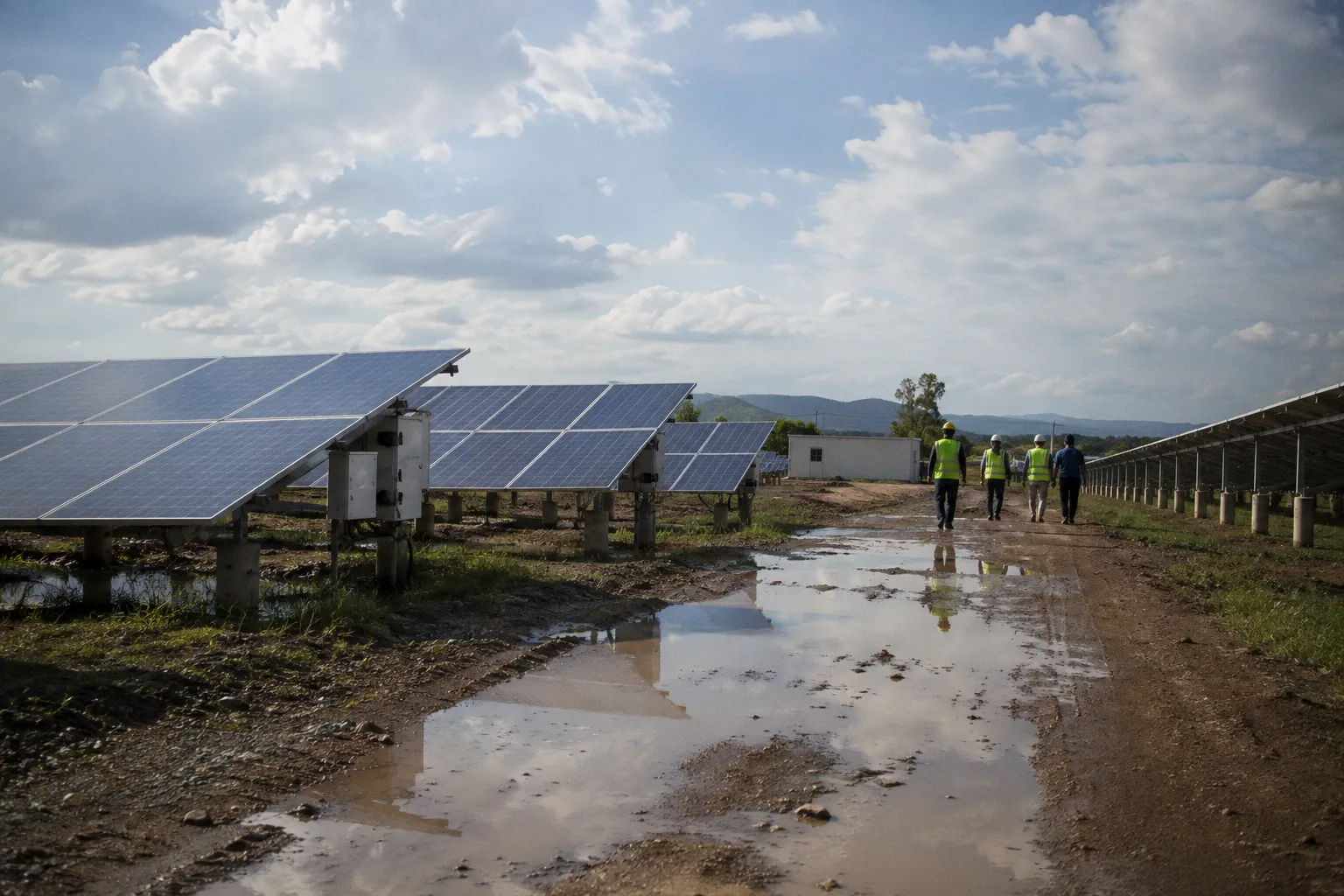
overtook fintech as Africa's top venture-funded sector in 2025, pulling in roughly $1.5 billion — over 40% of total VC deployed on the continent, according to a report cited by The Cooperator News. The data, drawn from London-based research group House Briter's "The State of ClimateTech in Africa, Moving Beyond the Headline Numbers," marks a structural shift from a decade of fintech dominance.
Capital concentration by geography
The $1.5 billion sits inside a nine-year arc: ClimateTech companies raised more than $6.35 billion across at least 779 ventures between 2016 and 2025. In 2016, the sector captured only $206 million. That is a roughly seven-fold increase in annual deployment.
Geography concentrates the capital. Kenya absorbed approximately 52% of total ClimateTech investment. South Africa claimed roughly 29%. Nigeria, across 2019–2025, drew about 12.9%. For an operator reading this as a market-entry map, three markets account for the bulk of deployable capital.
Operational parameters
House Briter highlights logistics, farmer-market linkages, and post-harvest loss reduction as Kenya's leverage points. These are unit-economics problems: cold-chain throughput, input distribution cost-per-hectare, yield-loss percentages. Each maps to a venture-backable bottleneck.
Parallel capital instruments are forming. Africa Business Communities reports IFAD and Equity launching a $200 million climate adaptation fund. Guardian.ng flags expert calls for expanded MSME climate financing as a condition for withstanding climate impact. The structure is multi-tier: VC at the top, blended finance in the middle, MSME credit at the base.
Operator checklist
- If your model needs regulatory familiarity and offshore investor signaling, build in Kenya.
- If your model needs scale and corporate procurement channels, build in South Africa. Burn rate tolerance is higher.
- If your model needs addressable volume and can absorb longer payback, build in Nigeria. Customer acquisition cost is higher.
- If your unit economics depend on SME or farmer distribution, track the IFAD-Equity vehicle.
- If you operate at MSME stage, concessional climate finance remains the binding constraint — not product-market fit.
The funding trajectory is documented. Whether it holds depends on capital discipline across the next two vintages.