First 50 climate customers: shifting from enthusiasts to buyers
How do you move from a handful of climate believers who happily join a pilot to the first 50 customers who will survive procurement, pass finance review, integrate with operations, and pay for the solution?
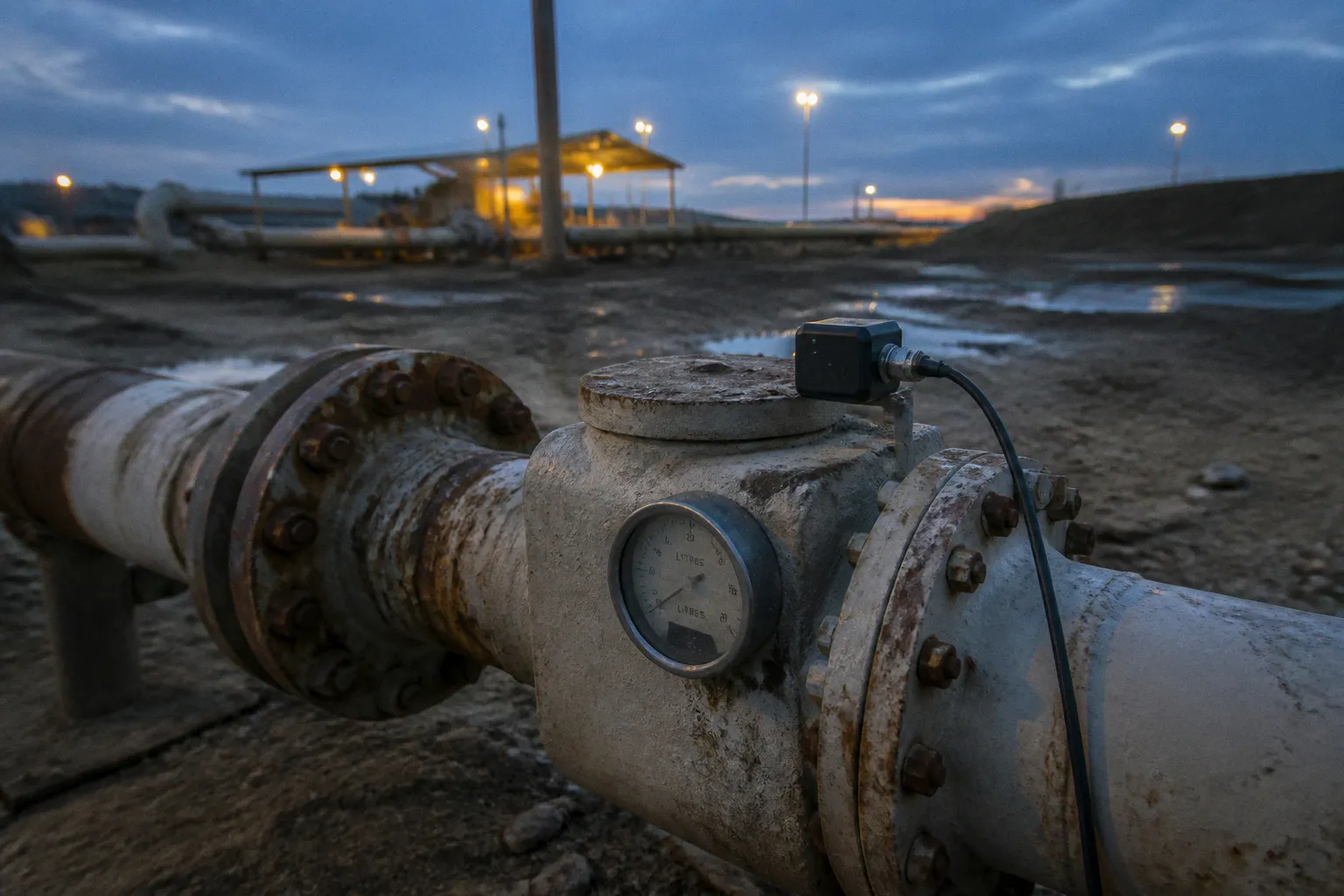
This is the point where many climate startups feel the market change beneath them. Early adopters may have been convinced by the urgency of the climate problem and the promise of a better system. The next buyers usually need something more specific: lower operating risk, a credible payback period, regulatory alignment, implementation support, and evidence that the solution will work inside an existing organization.
The first 50 customers for a climate startup are not simply more versions of the first five. They represent a shift from mission-aligned adoption to commercial adoption. Your customer validation strategy needs to shift with them.
The chasm between visionary pilots and commercial procurement
Early climate customers are often visionaries. They can see what the market may become before the rest of the organization is ready for it. They may accept an imperfect product, help shape the roadmap, and tolerate a manual implementation process because the strategic upside feels worth the effort.
That is valuable. Those customers can help you discover the real problem, refine your product, and generate the first meaningful evidence that your technology works outside the lab.
But a successful pilot is not the same thing as a repeatable buying motion.
Geoffrey Moore’s Technology Adoption Life Cycle describes this transition clearly. Early adopters make decisions based on strategic vision and breakthrough potential. The early majority, by contrast, tends to look for proven productivity improvements, references, reliability, and a complete solution rather than an exciting possibility.
Climate startups often encounter this gap after a pilot that seemed highly encouraging. The sustainability team is enthusiastic. The technical champion sees a strong use case. The founder believes product-market fit is close.
Then the commercial process begins.
A procurement team asks whether the company is an approved vendor. Finance wants to understand the payback period. IT asks where data will live and how access will be secured. Operations wants to know what happens when the system fails. Engineering asks whether the technology can integrate with existing equipment. Legal reviews liability, warranties, and performance commitments.
None of these questions mean the buyer has lost interest in climate impact. They mean the purchase must now work inside a system with several forms of accountability.
A useful way to think about this stage is to separate three kinds of evidence:
1. Vision evidence: the technology could create meaningful climate or strategic impact.
2. Operational evidence: the technology works within the customer’s real environment.
3. Commercial evidence: the customer can justify buying, implementing, and expanding it.
Early pilots often prove the first category and begin to address the second. Your first 50 customers will require all three.
The first 50 climate customers are not won by making the mission sound bigger. They are won by making the buying decision feel safer.
This does not mean abandoning the climate story. It means translating the story into the language each stakeholder uses to make a decision.
A methane reduction percentage may matter to the sustainability lead. For a plant manager, the same solution may need to mean fewer shutdown risks, a manageable maintenance schedule, or compliance with an approaching regulatory deadline. The technical achievement remains important, but it is no longer the entire value proposition.
Mapping the B2B buying center beyond the sustainability lead
One of the most common mistakes in climatetech customer discovery is treating the person who cares most about the problem as the person who can approve the purchase.
The sustainability lead may be your strongest internal champion. They may own emissions targets, climate reporting, or decarbonization plans. They may also lack authority over the budget, operations, data systems, or vendor approval process.
In a complex B2B sale, the buying center usually includes several distinct stakeholders:
| Stakeholder | What they are trying to protect or improve | Evidence they may need |
|---|---|---|
| Sustainability lead | Emissions targets, reporting, transition commitments | Measurable climate impact and credible data |
| Plant or operations manager | Uptime, safety, throughput, maintenance workload | Operational reliability and implementation plan |
| Engineering team | Equipment performance and integration | Technical validation, compatibility, and failure response |
| IT team | Cybersecurity, data access, system governance | Security documentation and clear data architecture |
| Procurement | Approved vendors, contract terms, process compliance | Vendor readiness, pricing structure, and support terms |
| Finance | Payback, cash flow, and investment risk | Unit economics, assumptions, and financial model |
The exact structure varies by sector and company size, but the underlying pattern is consistent: a climate startup is rarely selling to one person.
That changes how we run customer interviews. If every interview is with the sustainability function, we may learn a great deal about the strategic problem and very little about the purchase problem.
A stronger discovery process asks:
- Who experiences the problem day to day?
- Who owns the budget that would pay for the solution?
- Who can block implementation?
- Who has to sign off on technical risk?
- Who will be blamed if the deployment fails?
- What existing vendor, contract, or procurement process does this purchase need to fit?
- What event would make the organization act this quarter rather than next year?
These questions help us distinguish a strong champion from a complete buying path.
From one champion to a usable account map
For each serious prospect, build a simple account map. It does not need to become a sprawling sales document. The point is to see where the adoption path is strong and where it is still dependent on one enthusiastic person.
Capture:
- the person with the clearest pain;
- the economic buyer;
- the operational owner;
- the technical evaluator;
- the procurement route;
- the likely blocker;
- the event or deadline creating urgency;
- the proof required before a broader rollout.
This also improves early adopter acquisition. Rather than pursuing any company that expresses interest, you can prioritize organizations where the problem is visible across multiple functions and where a path to implementation already exists.
For example, a heat-pump startup may receive strong interest from a sustainability manager who wants to reduce building emissions. That is a useful opening, but not yet a complete opportunity. The facilities team may be concerned about installation disruption. Finance may compare the project against other capital expenditures. Procurement may require an approved contractor network. A successful sale has to align these needs without making the sustainability lead carry the entire project internally.
That is the practical difference between a contact and a customer.
Reframing the value proposition from carbon impact to operational ROI
Climate founders often begin with a technically precise description of the solution:
- a catalyst that reduces degradation;
- a platform that captures methane;
- software that improves energy forecasting;
- hardware that lowers process emissions;
- a system that enables renewable integration.
These descriptions are essential for understanding the technology. They are not always sufficient for understanding why a buyer should act.
The next layer is the operational problem. What does the technology change in the customer’s working environment?
A stronger problem definition might connect the technical outcome to:
- avoided downtime;
- reduced maintenance;
- a compliance deadline;
- lower energy exposure;
- more predictable production;
- less manual reporting;
- improved asset utilization;
- a lower-cost path to an existing climate commitment.
This is not a matter of hiding the climate benefit. It is a matter of connecting impact to the conditions under which the organization is allowed to spend money.
A customer may care deeply about emissions and still be unwilling to spend more time or money on a sustainability action. A 2024 Ernst & Young survey found that 78% of consumers considered sustainability important, while only 55% said they were willing to pay more for sustainable products. The same survey reported that 70% were unwilling to spend more time or money on sustainable energy actions.
Consumer behavior is not a direct model for B2B purchasing, but the signal is useful: positive sentiment does not automatically become paid adoption. Climate value has to be made practical.
The value translation exercise
Take one technical claim and translate it through three questions:
1. What changes physically or digitally?
This is the technical outcome.
2. What changes in the customer’s operation?
This is the workflow, asset, cost, or risk outcome.
3. What changes in the customer’s decision model?
This is the budget case, compliance case, or strategic reason to purchase now.
For example, “reduces methane leakage” is a technically meaningful statement. It may become commercially useful when connected to fewer regulatory exposures, more reliable monitoring, a simpler reporting process, or reduced loss of saleable product—depending on the customer’s actual operation.
The final step is not to choose the most impressive benefit. It is to identify the benefit that the buyer can verify and defend internally.
That is where a climate startup customer validation process becomes more disciplined. We are no longer asking only whether someone likes the idea. We are asking what evidence they would put in front of finance, operations, or procurement.
Build a minimum viable test around the buying risk
A climate startup MVT, or minimum viable test, should test the riskiest assumption in the commercial path—not simply demonstrate that the technology can function.
Possible tests include:
- securing access to the operational data required for a real evaluation;
- completing a technical review with engineering and IT;
- producing a site-specific financial model;
- obtaining a conditional procurement approval;
- running a pilot with agreed success metrics and a defined expansion decision;
- testing whether the customer will allocate budget rather than only offer interest;
- validating the implementation timeline with the team responsible for delivery.
The best test depends on the stage of your company. A lab-stage hardware startup may not be ready to promise commercial deployment. It can still test whether the target customer recognizes the problem, has a budget owner, and would support a field trial under specific conditions.
A software company with a working product may need to test something different: whether a pilot converts into a paid department rollout, whether data access creates an IT barrier, or whether the initial user can bring finance into the conversation.
The principle is simple: test the part of the purchase that could stop the deal.
Navigating the hard-tech reality of capex and deployment timelines
Software founders sometimes use a fast customer acquisition model as a reference point for climate hardware. That can create unrealistic expectations for both the team and the market.
Climate tech companies producing hardware or physical units may require between $20 million and $200 million in capital expenditure before shipping meaningful commercial revenue. The path from founding to a first commercial plant deployment can take 7 to 12 years, compared with roughly 3 to 5 years for software startups.
This changes what “validation” looks like.
For a software startup, early validation may include a paid trial, repeated usage, and expansion within the same account. For hard tech, the path may involve technical certification, site design, manufacturing readiness, permitting, financing, construction, commissioning, and performance verification before a customer can place a meaningful commercial order.
That does not make customer discovery less important. It makes it more specific.
You need to understand not only whether the customer wants the outcome, but also whether the deployment can fit the customer’s physical and financial system.
Questions for physical climate technology
During discovery, explore:
- What equipment or infrastructure would the solution touch?
- What site conditions could change the deployment?
- Which team owns installation and ongoing maintenance?
- What shutdown window would be required?
- What certifications, permits, or safety reviews are involved?
- Is the buyer able to fund the project directly, or does it require project finance?
- What performance guarantee would make the risk acceptable?
- Who carries the cost if the system underperforms?
- What happens after the pilot ends?
- Which part of the deployment has the longest lead time?
These questions may feel less exciting than discussing the technology’s long-term potential. They are often where product-market fit is actually decided.
A customer can agree that a technology is valuable and still reject it because the installation process is too disruptive, the warranty is unclear, or the internal team cannot support another complex system. If those constraints appear repeatedly in interviews, they are not administrative details. They are part of the product.
Do not let the pilot become a permanent waiting room
For climate hardware, pilots can last a long time. That makes it especially important to define the commercial decision before the pilot begins.
Agree on:
- the operational baseline;
- the metrics that determine success;
- the people responsible for measuring them;
- the time period for evaluation;
- the conditions for expansion;
- the commercial offer that follows a successful result;
- the decision date.
Without this structure, a pilot can become a comfortable place for the customer to learn while the startup carries the cost and uncertainty.
The goal is not to force a purchase before the evidence exists. The goal is to make the path from evidence to purchase visible to everyone involved.
For hard tech, customer validation is not only proving that the machine works. It is proving that the organization can absorb the machine.
Building trust for the early majority
The early majority does not necessarily need a perfect product. It needs a product that feels dependable enough to place inside an existing operating model.
That means trust has several layers.
Technical trust
Can the system perform under the conditions the customer actually faces? This may include temperature, load, feedstock, network conditions, usage patterns, or equipment age.
Technical trust comes from relevant evidence. A result in a controlled environment may support the story, but a customer wants to know whether the same performance applies to its site and use case.
Operational trust
Can the customer implement and maintain the solution without creating a new source of disruption?
This is where onboarding, documentation, training, service response, and integration become part of the offer. A product that performs well but requires constant founder intervention may work for an early visionary and fail with a mainstream buyer.
Financial trust
Can the customer understand the economics without building the model from scratch?
You do not need to promise a universal payback period. In fact, that can weaken credibility when economics vary by site, energy price, regulation, or operating profile. Instead, show the assumptions clearly:
- what the customer pays;
- what implementation requires;
- which costs are one-time or recurring;
- what operational improvement is expected;
- what could reduce the benefit;
- how the result will be measured.
A transparent model is often more persuasive than a confident headline number.
Institutional trust
Can the company survive the procurement and contracting process?
This includes vendor documentation, references, security information where relevant, insurance, warranties, support terms, and a clear answer to who is accountable after deployment.
Mainstream buyers are not asking for bureaucracy because they enjoy it. Their processes are designed to manage the consequences of a bad decision. Your job is to help them see that adopting your solution will not create an unmanageable risk.
Turning early customers into a repeatable acquisition system
The first 50 customers should teach you how the market buys, not only which companies might buy.
Track patterns across conversations and deals:
- Which trigger creates urgency?
- Which stakeholder opens the door?
- Which stakeholder closes the deal?
- Where does the process slow down?
- Which proof points move the conversation forward?
- Which objections are genuinely about price?
- Which objections are actually about integration, risk, or ownership?
- What portion of the pilot work can be standardized?
- Which customer profile has the shortest path from problem recognition to budget approval?
Avoid treating every early customer as a unique story. Some customization is necessary in climate markets, but repeated customization can conceal a weak market position.
You are looking for a usable segment: a group of customers with a similar problem, similar buying constraints, and a credible reason to act.
That segment may be narrower than your original market thesis. Narrowing is not failure. It is often how a climatetech product-market fit strategy becomes actionable.
For example, “industrial companies seeking decarbonization” is too broad to guide a first-50 plan. A more useful segment might be companies with a particular type of asset, a specific reporting obligation, an upcoming equipment replacement cycle, or a defined operational loss that your solution can address.
The tighter the segment, the easier it becomes to:
- identify the right interviewees;
- write a relevant value proposition;
- find credible references;
- design a repeatable pilot;
- forecast implementation needs;
- build a sales process that does not depend entirely on the founder.
A practical progression from pilot to commercial account
A healthy customer path might look like this:
1. Problem discovery: the customer confirms that the operational problem is real, costly, and owned by a specific team.
2. Technical fit: the solution can work within the customer’s physical, digital, and regulatory environment.
3. Commercial hypothesis: both sides agree on what value could justify a purchase.
4. Minimum viable test: the riskiest assumption is tested with defined evidence.
5. Pilot decision: success metrics, responsibilities, and timing are agreed before deployment.
6. Procurement preparation: the required documents, approvals, and budget route are understood.
7. Expansion decision: the customer can explain what happens after the pilot and why.
This sequence is not a rigid rulebook. Some customers will move out of order. A regulated market may require procurement work before technical access. A hardware deployment may need financing before the pilot can begin.
The point is to keep the whole buying system in view.
What the first 50 customers are really validating
Your first 50 customers are not only validating a product. They are validating a set of connected assumptions:
- the problem is urgent enough to receive attention;
- the customer can connect climate impact to operational or financial value;
- the solution fits the existing environment;
- the buying center can align around the purchase;
- the deployment risk is manageable;
- the company can support the customer after the sale;
- the commercial model works at a scale beyond founder-led persuasion.
This is why the transition from enthusiasts to buyers can feel uncomfortable. The questions become less flattering. Buyers may care less about the elegance of the technology and more about the service plan, the integration timeline, the warranty, the budget owner, and the measurable result.
That is not a rejection of the mission. It is the market asking whether the mission can operate in the real world.
If you are working toward the first 50 customers for a climate startup, choose one active opportunity and map its buying center this week. Speak with the sustainability lead, then find the operations, engineering, finance, IT, or procurement stakeholder who will shape the decision. Ask each person what would make the project safe to approve—and what could stop it.
You do not need to solve every barrier at once. You need to identify the next barrier clearly enough to test it.
That is how climate startups move from promising pilots to durable commercial adoption: one piece of alignment at a time, with the climate impact still at the center and the buying reality finally in the room.