How Crew Carbon Secured a Microsoft Deal for Wastewater-Based Carbon Removal
Crew Carbon, a Yale spinout barely out of stealth, just put a real number on its promise: an offtake with Microsoft for up to 23,602 carbon removal units, as reported by ESG Today.
If you've been staring at your own early-stage climate deck wondering what "good enough" looks like for a hyperscaler buyer, this is worth slowing down for.
What the technology actually does
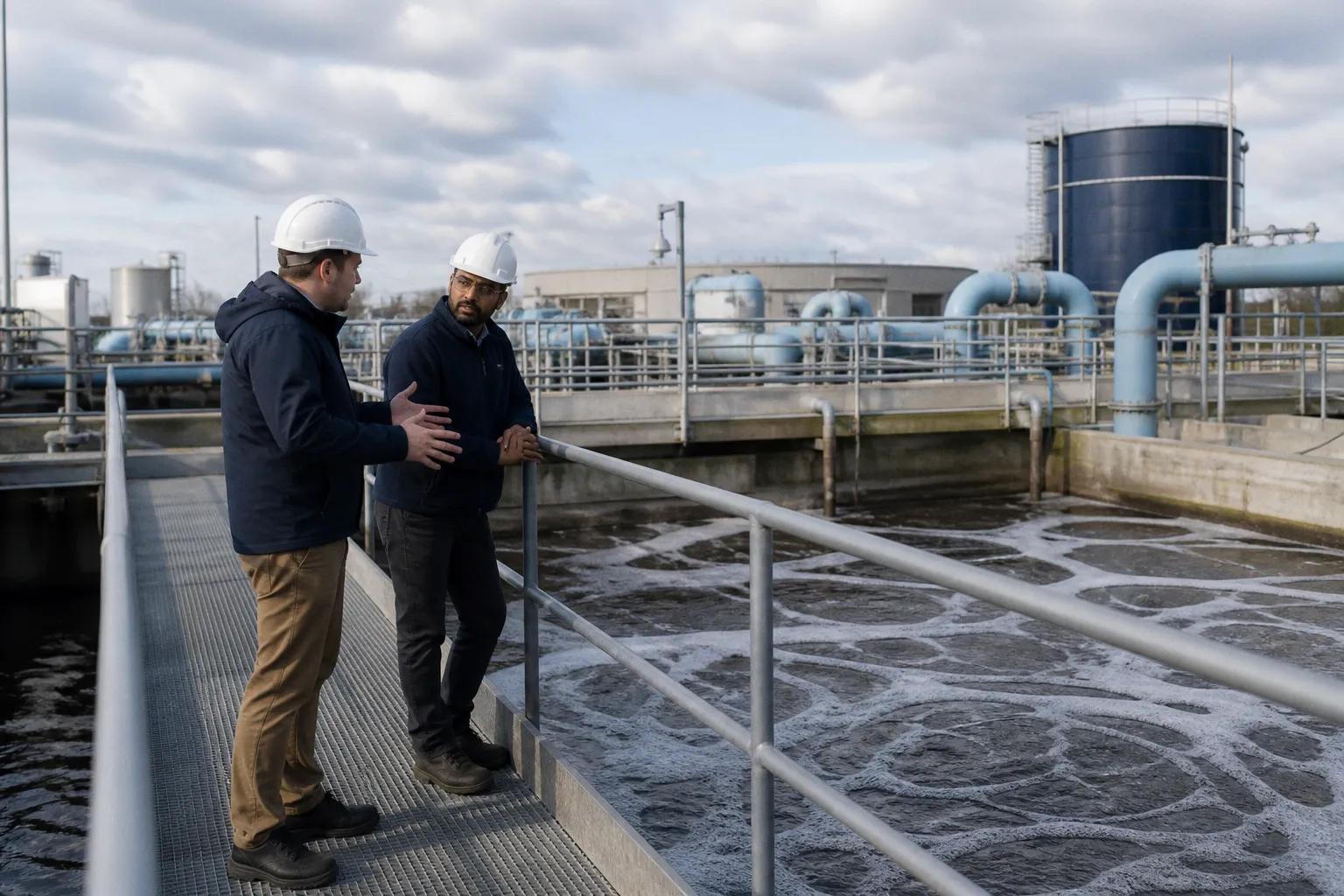
We can strip the jargon together. Crew Carbon's wastewater alkalinity enhancement approach drops into the wastewater plants already running in your city — no new pipelines, no new permitting gauntlet. Their team adds strategically sourced alkaline minerals, including calcium carbonate, to tune the pH and alkalinity inside the treatment process. Two things happen at once: biological treatment gets a performance bump, and CO2 gets captured through accelerated mineral weathering and locked away in a measurable, durable form. Operators get a productivity story; your climate startup gets carbon credits with real MRV certainty. Crew notes that partner plants already process billions of gallons a day, which is the kind of throughput pitch that makes a venture buyer lean forward instead of reach for the next tab.
Why Microsoft said yes now
Here's the part that matters for your own roadmap. Microsoft paused most of its CDR purchases back in April, then started writing smaller, more targeted offtakes against novel pathways. Philip Goodman, the company's Carbon Removal Portfolio Director, framed the Crew deal around three words you should screenshot: "novel," "highly durable," and "measurable." That is the filter. Microsoft's recent sustainability report lays out a multi-approach CDR strategy that pairs long-term agreements for engineered and nature-based solutions with smaller early-stage bets meant to de-risk emerging pathways and mature the monitoring protocols around them. If you are building in this space, you are not competing for the same envelope as the DAC giants — you are competing for a smaller, more experimental slice that is explicitly designed for companies at your stage.
What to do about it this week
Pull up your one-pager and ask three honest questions. First, can you describe your removal mechanism in one sentence a wastewater plant operator would actually nod at? Second, do you have a durable storage story with real alignment to a buyer's MRV protocol — not vibes, but a verifiable claim? Third, does your unit economics story hold up if the buyer only wants a pilot-sized offtake instead of a gigaton pledge? Crew Carbon was founded in 2022 out of Yale and is based in Connecticut. A two-year sprint from lab bench to Microsoft contract is not a fairy tale — it is a sequencing lesson. Your next step is small and concrete: pick one of those three questions, write the answer in plain language on a single page, and run it past one buyer who is not your mom.