Climate customer discovery: five ways to avoid bias
A sustainability manager says "we desperately need this," slides a business card across the table, and the founder walks out counting down the days to product-market fit. That card is usually a participation trophy, not a purchase order.
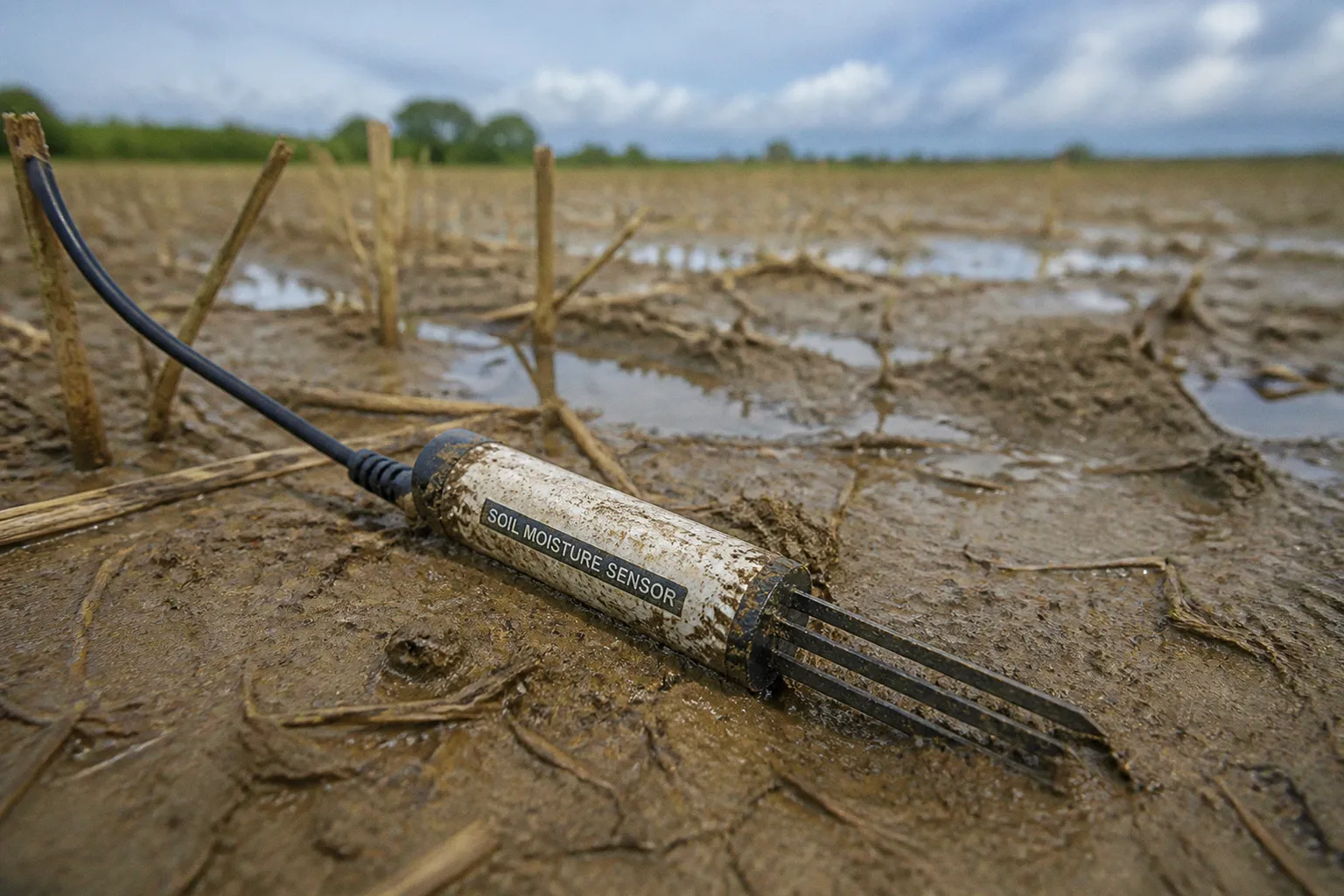
In green markets, enthusiasm is cheap and evidence is expensive — and most founders can't tell the difference until the runway is gone.
The hard truth: ClimateTech customer discovery is uniquely contaminated by what researchers call the "query effect" and social desirability bias. Prospects want to signal virtue. They nod at your decarbonization pitch because nodding costs nothing. The signal you're measuring — verbal warmth — is the wrong signal entirely. If your discovery process isn't engineered to filter out that bias, you're not validating a market; you're running a fan club.
Verbal support from a sustainability team is a mood, not a forecast — and moods don't pay invoices.
The Trap of Sustainability Enthusiasm: Why Verbal Support Isn't Demand
Let's be blunt about the asymmetry. Corporate climate commitments are loud, public, and increasingly required by law. They show up on websites, in annual reports, in press releases timed to COP. None of that touches the procurement ledger. The actual purchasing decision is constrained by operational risk — uptime, safety, cost, regulatory exposure — and the people who control those levers rarely have "sustainability" in their title.
So when your champion in the sustainability office says "absolutely, we need this," what have you actually learned? That one person in one department wants the world to be greener. You have not learned that the company will cut a check. You have not learned that engineering will approve it, that IT will integrate it, that procurement will sign off on it, that finance will budget for it.
This is the friction ClimateTech founders systematically underweight: the gap between "someone said yes" and "someone wrote a PO." Bias enters at the first gap and compounds at every step. By the time you've run thirty interviews with enthusiastic gatekeepers and zero POs, you've built a portfolio of false positives — and a false sense of momentum.
The fix isn't optimism. The fix is structural. Discovery in climate requires three things most founders skip:
- Past behavior over hypothetical futures. Don't ask "would you use…" — ask "when was the last time you…" and watch what changes.
- Mapping the entire buying system, not just the loudest voice.
- A commitment ladder that forces prospects to spend resources at each rung before you credit the signal.
Mastering the Two-Minute Rule and Avoiding the Query Effect
The query effect is the gremlin in your interview script. Ask a hypothetical — "Would you use a tool that cuts your Scope 3 emissions by 30%?" — and the respondent doesn't answer your question. They construct an answer that makes them look like the kind of person who would. That's social desirability doing the work, not the market.
The U.S. Department of Energy's Phase Shift I commercialization program recommends a minimum of 30 customer-discovery interviews for a reason that has nothing to do with thoroughness and everything to do with statistics. At 30, patterns repeat. Outliers — the one CTO who hates your pitch, the one sustainability lead who would buy anything — start to cancel each other out. At ten interviews, you're pattern-matching on noise. At 30, you're pattern-matching on signal. Anything below 30 is a vibe.
Then there's the two-minute rule. If you, the founder, speak for more than two consecutive minutes without asking a question, the conversation has stopped being research and started being a sales pitch. You missed it. The respondent is now polite, nodding, and your data is contaminated. The fix is mechanical: set a timer on your phone if you have to. Practice the discipline of asking, listening, then asking again. A discovery interview is a structured interrogation in service of the founder's hypothesis — not a TED talk.
Mechanically, "asking a question" doesn't mean ticking a box. It means a question that requires the other person to generate specific recall: dates, names, numbers, workarounds. Closed questions ("Is your team motivated to solve this?") get you yes-answers and nothing else. Open questions with a built-in past-tense anchor ("Walk me through the last time your team tried to solve this — what broke?") force the respondent off the script of social desirability and into the memory of reality. That shift, second by second, is where the two-minute rule earns its bite.
Questions that filter bias vs. questions that manufacture it
- "Would you use a tool that…" → bad. Triggers query effect.
- "When was the last time you tried to solve this problem, and what did you actually do?" → good. Forces past behavior.
- "Do you think Scope 3 reporting is important?" → bad. Universal yes.
- "Walk me through the last Scope 3 report you submitted — how long did it take, who helped, what broke?" → good. Costs the respondent nothing to lie about the first; the second is specific enough that lies show.
- "Are you open to a pilot?" → bad. Of course they are. You're asking if they'd like more options.
- "What would have to be true for you to commit budget in the next quarter?" → good. Forces specificity.
The difference between these two columns is the entire game.
Mapping the Buying System: Value-Chain and Gatekeeper Discovery
You found your champion. Great. Now: who can kill this deal?
Value-Chain Discovery is the work of tracing where the product, the cost, the risk, and the data actually move through the customer's organization. The point isn't to find the person who benefits environmentally — that person is rarely the buyer. The point is to find the economic owner of the decision: the person whose budget moves when this deal closes. In a manufacturing pilot for a heat-recovery system, that might be the plant manager, not the chief sustainability officer. In a SaaS play for emissions tracking, it might be the VP of Operations or the CFO, not the ESG team lead. The environmental beneficiary and the economic owner sit on different chairs — and founders who assume they're the same person are learning the wrong lesson.
Gatekeeper Discovery is the complementary practice. Map every non-technical stakeholder who can block deployment regardless of the champion's enthusiasm. In practice, that's at least five functions:
- Engineering — does it work in our stack, our process, our uptime model?
- IT / Security — will it pass our vendor review and data policy?
- Procurement — does it fit our vendor onboarding and contract terms?
- Finance — does it survive budget review and payback scrutiny?
- Sustainability — does it move the public needle we report on?
Your champion lives in the last column. The first four are where deals die. A discovery process that only talks to sustainability is theatre.
| Stakeholder | What they control | What they're actually worried about |
|---|---|---|
| Sustainability | Public narrative, ESG metrics | Optics, regulatory disclosure |
| Engineering | Technical integration, reliability | Uptime, complexity, liability |
| IT / Security | Vendor approval, data handling | Compliance, breach risk |
| Procurement | Vendor onboarding, contracts | Terms, references, compliance |
| Finance | Budget approval, ROI models | Cost, payback period, risk |
You don't need to sell to all five in week one. You do need to map them, identify which one holds the budget, and design your discovery to surface their objections — not your champion's enthusiasm.
The first 50 engagements — a deliberately broad number, mixing interviews, stakeholder calls, conference conversations, even cold replies — are where founder-led discovery earns its keep. By the time you've touched fifty stakeholders across the buying system, you've stopped asking "do people want this?" and started asking "who pays for this, what's their friction, and what does the buying motion actually look like?" If your first 50 don't surface at least three stakeholders who say "no, and here's why," you're still in the fan club.
The Commitment Ladder: Moving from Conversation to Commercial Step
Most ClimateTech founders are stuck on rung two of a five-rung ladder and don't know it. Here's the full structure:
| Rung | What the prospect does | What it actually proves |
|---|---|---|
| Conversation | Takes your call, agrees to meet | Almost nothing — curiosity or politeness |
| Evidence | Reviews a deck, gives feedback | Mild interest; not commitment |
| Access | Introduces you to a colleague, shares internal data | Real friction — spending political capital |
| Test | Agrees to a pilot or paid trial | Operational skin in the game |
| Commercial step | Signs an order, commits budget | Demand |
The brutal reality: most founders count "Evidence" as validation. The prospect looked at the deck. The prospect gave feedback. The prospect said "this is great, send me the next iteration." None of that is a rung that proves demand. It proves tolerance — which has a market value of zero.
The way to move prospects up the ladder is to ask at every rung for the next one. After a conversation, ask for a stakeholder introduction. After a stakeholder introduction, ask for a paid pilot or access to internal data. After the pilot, ask for a commercial commitment — with a pre-agreed conversion criterion written down before the test starts. If the prospect won't climb the next rung, you've learned something more valuable than enthusiasm: you've learned where the real friction is, and which rung the deal actually stalls on. A prospect who won't spend a dollar to test your product will, in retrospect, never spend a thousand to buy it.
Structuring the Minimum Viable Test: Baselines and Success Metrics
A pilot is not a test. A paid engagement is not a test. A letter of intent is not a test. A test is a structured experiment with four pre-defined elements, and if you don't have all four, you have a hope — not a hypothesis.
1. Baseline. What's the current state, measured? Not "high emissions" — actual numbers, ideally in the unit your product moves. If you can't measure it now, you can't prove you changed it. A heat-recovery pilot that can't tell you the baseline BTU loss per shift is a pilot that will conclude with "it seemed warmer."
2. Intervention. What exactly does your product do, in this specific deployment? Same feature set in both sites? Different? Spell it out, because the moment the pilot diverges from the spec is the moment your data becomes uninterpretable.
3. Measurement. What metric tells you success or failure, and when? This is where most pilots die. Success means "the champion is happy." Failure means "we ran out of time." Neither is a metric. Pick a number, set a threshold, decide in advance what happens if it's hit and what happens if it's missed.
4. Boundary. What's the scope, what's out of scope, and how long does the test run? A pilot that runs forever is a pilot that never converts. A pilot without a commercial exit criterion is a discount, not a discovery.
| Element | What it answers | Common founder mistake |
|---|---|---|
| Baseline | Where are we starting? | Skipping it because "it's obviously bad" |
| Intervention | What exactly are we testing? | Letting the customer redefine the product mid-test |
| Measurement | How do we know it worked? | Using the champion's satisfaction as the metric |
| Boundary | When and how does it end? | No commercial conversion criterion — the pilot just… continues |
A Minimum Viable Test that survives this four-element discipline is no longer a hope. It's an experiment. It produces data you can defend in a board meeting, in a fundraise, and — more importantly — to yourself at 2 AM when the runway is short.
Discovery that doesn't bite the customer doesn't bite the market either.
The Reality Check
So here's the challenge. Take your current interview script, your last five discovery conversations, or your most promising pilot. Run it through the four filters: Are you asking past-behavior questions or hypotheticals? Have you talked to the economic owner, or just the loudest advocate? Where on the commitment ladder is your best prospect, really — Conversation or Commercial step? And can you name the baseline, the intervention, the metric, and the boundary of your pilot, or are you hoping it goes well?
If you can't answer all four cleanly, you don't have validation. You have a thesis and a runway. The market doesn't owe you the difference. Prove it — or change what you're proving.