Climate hardware MVT setup: a four-stage project
What must be true before you spend months and serious capital building the first production-ready version of your climate hardware?
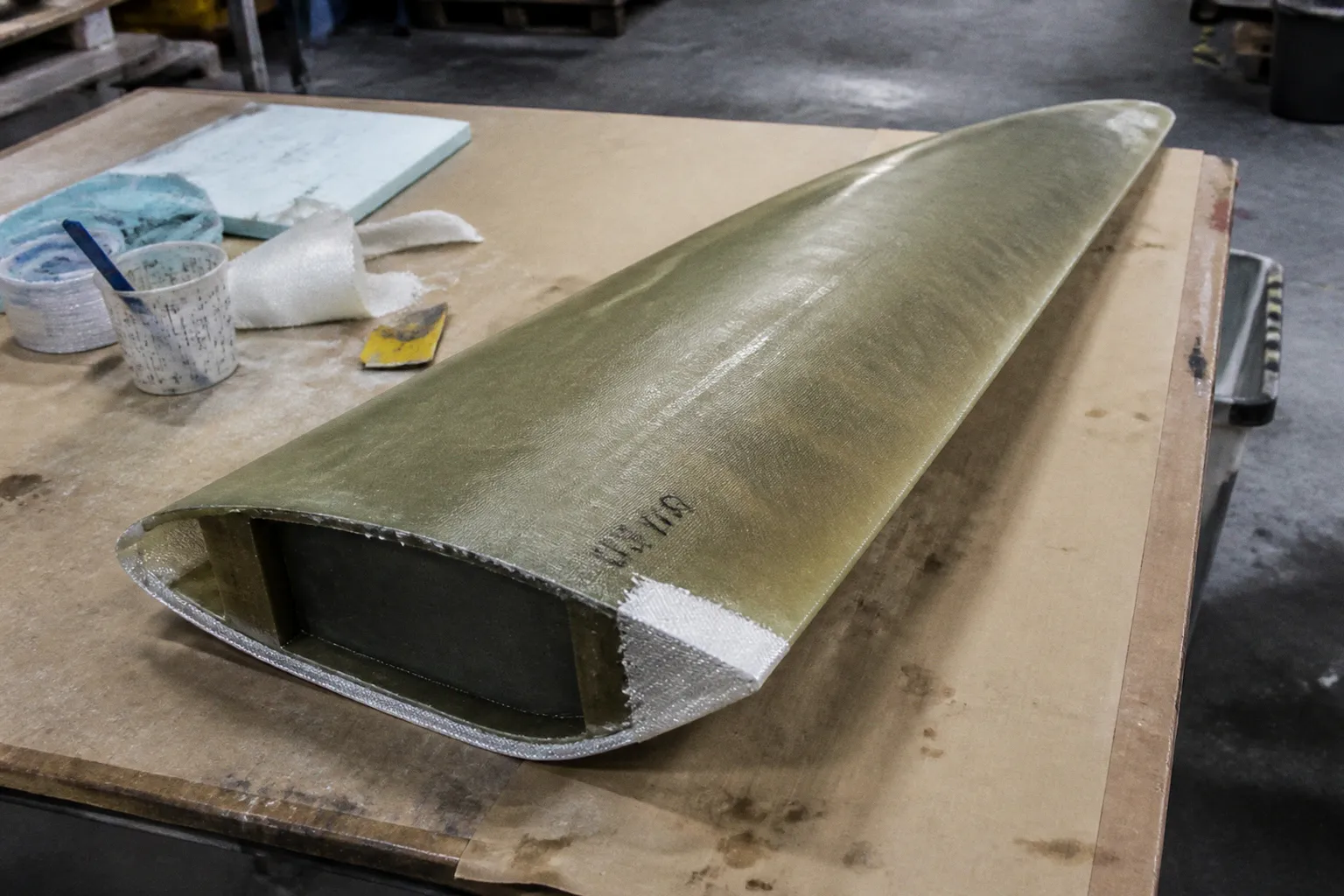
That question is more useful than asking whether your prototype is impressive. In climate tech, a working prototype can still leave the business exposed: the unit may require too much maintenance, cost too much to manufacture, fail in real operating conditions, or solve a problem customers are not ready to pay to fix.
This is where a climate hardware minimum viable test setup becomes valuable. A Minimum Viable Test, or MVT, does not attempt to imitate the entire finished product. It isolates the assumptions that could still break the company and tests them one by one, with the lightest credible investment.
That distinction matters because climate hardware carries a heavier capital burden than software. Hardware startups often require 20% to 50% more equity funding than software companies, and their total capital requirements can be close to twice as high once manufacturing and physical infrastructure are included. Their survival rate is also approximately 10% lower. Early validation is not a slower route to market. It is how we avoid financing the wrong version of the company.
Beyond the MVP: test the assumption, not the whole machine
A traditional Minimum Viable Product is usually a simplified version of the product you eventually want customers to use. For software, that might mean a narrow workflow, a manual back end, or a limited feature set.
Climate hardware is different. A simplified product can still be expensive, dangerous, slow to iterate, and misleading. If your full system involves heat, pressure, chemicals, outdoor exposure, grid connection, biological processes, or specialized installation, reducing the number of features does not necessarily reduce the core engineering risk.
An MVT takes a different approach. We identify a specific hypothesis and design the smallest test that can generate meaningful evidence about it.
For example:
- Technical hypothesis: the material can maintain its performance after repeated exposure to the target operating conditions.
- Customer hypothesis: a facility operator will allow a pilot if the installation takes less than a day.
- Economic hypothesis: the expected savings or revenue are large enough to justify the equipment and service model.
- Manufacturing hypothesis: the core assembly can be produced using accessible processes rather than bespoke fabrication.
- Adoption hypothesis: the person experiencing the problem has enough authority, budget, or internal influence to move a purchase forward.
Each hypothesis needs its own test. A bench experiment may answer whether the technology functions. It will not tell us whether a customer can install it without disrupting operations. A customer interview may reveal strong interest. It will not demonstrate that the product can survive a payback period with minimal maintenance.
A prototype shows what you have built. An MVT shows which business-critical assumption has earned the right to survive.
The goal is not to create a collection of disconnected experiments. The goal is to build an evidence path from raw science to a product that can operate reliably, be manufactured sensibly, and create enough value for a real customer.
The three questions every climate hardware MVT should answer
A useful climate tech MVT design brings three questions into the same conversation.
1. Does the underlying technology work?
Start with the narrowest technical claim. Do not begin with the full system architecture if the core mechanism has not been proven under realistic conditions.
A technology may function in a controlled laboratory setting but lose performance when exposed to:
- temperature swings;
- humidity, dust, vibration, or corrosion;
- variable feedstock or inconsistent input quality;
- repeated cycling rather than one successful run;
- operator error or irregular maintenance;
- the safety constraints of the intended site.
At this stage, we are not trying to prove the entire commercial product. We are trying to learn whether the mechanism behaves well enough to justify further investment.
That means defining the operating conditions before running the test. “It worked” is not a useful result unless we know at what temperature, for how long, with which inputs, and against which performance threshold.
A technical MVT should produce evidence that can be compared across iterations. Depending on the product, that may include output quality, energy consumption, degradation, cycle life, fault frequency, or recovery after interruption. The exact measurement will vary by category, but the discipline is consistent: name the variable before you build the experiment.
2. Does it solve a problem someone will act on?
A working technology is not automatically a valuable product.
Climate founders often begin with a scientifically meaningful improvement: more efficient storage, lower-emission processing, better monitoring, cleaner industrial heat, or a more resilient agricultural system. The customer, however, may describe the problem in a different language. They may care about downtime, compliance exposure, fuel volatility, labor shortages, insurance requirements, or the cost of replacing an aging asset.
This is where problem discovery interviews become more useful than broad market research. We want to understand what happens today, who feels the consequences, what has already been tried, and what would make a change worth the disruption.
Good discovery conversations focus on recent behavior rather than hypothetical enthusiasm. Instead of asking whether a prospect likes the concept, explore:
1. When did this problem last occur?
2. What did the team do in response?
3. What did that response cost in money, time, risk, or lost output?
4. Who had to approve the solution?
5. Which alternatives were considered?
6. What would make a pilot difficult to run?
7. What evidence would be required before a larger deployment?
This gives us a more grounded view of early adopter potential. In climate markets, the first customer is rarely buying only a device. They may be taking on installation risk, operational risk, permitting work, data integration, or reputational risk. The MVT has to reduce enough of that burden for the customer to participate.
3. Can the design move toward scaled manufacturing?
Customer demand and technical performance are necessary, but they are not sufficient for climate hardware commercialization.
The third question is whether the design can realistically transition into production. A device that works once in a founder’s workshop may rely on manual calibration, rare materials, custom parts, or an assembly process no factory would accept.
At this point, we are not demanding a fully optimized supply chain. We are looking for early evidence about whether production is becoming simpler or more complicated as the design evolves.
Useful questions include:
- Which components are standard, and which are custom?
- Can the assembly sequence be repeated by someone other than the original builder?
- Are there materials with long lead times or unstable pricing?
- Does the design require specialist labor at every stage?
- What must be calibrated manually?
- Which parts will be difficult to repair in the field?
- Can the product be packaged, shipped, installed, and serviced without an entirely new infrastructure?
The answers may change the product architecture. That is not a failure of validation. It is one of the reasons we test early.
Two axes: reliability and productionisation
Hardware validation stages in climate startups should not be treated as a single upward staircase where every prototype is simply a more polished version of the last. Two different kinds of progress are happening at once.
The first is the reliability axis. The product must become capable of operating with minimal care over the period in which the customer expects to recover their investment. Reliability includes more than whether the unit turns on. It covers performance consistency, fault behavior, maintenance frequency, safety, and the ability to recover when conditions are imperfect.
The second is the productionisation axis. The product must become less expensive and less complex to build, assemble, install, and maintain. This is where design-for-manufacturing decisions begin to matter: part count, tolerances, standard components, accessible materials, repeatable testing, and serviceability.
A prototype can move forward on one axis while moving backward on the other. For instance, a founder may improve performance by adding sensors, custom brackets, and manual adjustment steps. The device becomes more capable in the lab but harder to produce and maintain.
Conversely, a simpler design may be easy to assemble but fail after a short period in the field. Both axes need attention.
| Validation focus | The question we are answering | Evidence that moves us forward |
|---|---|---|
| Core technology | Does the mechanism perform under defined conditions? | Repeatable results across relevant operating ranges |
| Customer problem | Is the problem costly or urgent enough to trigger action? | Specific customer behavior, pilot commitment, or paid discovery |
| Operational fit | Can the product be used without unacceptable disruption? | Installation, training, maintenance, and workflow evidence |
| Reliability | Can the system perform with minimal care over time? | Cycle testing, fault data, service requirements, and recovery behavior |
| Productionisation | Can the product be manufactured and serviced at sensible complexity? | Repeatable assembly, component strategy, supplier input, and cost drivers |
Keeping the two axes visible helps us avoid a common trap: celebrating technical milestones that quietly make the business harder to operate.
A practical four-stage MVT project
There is no single universal four-stage project standard recognized across every climate incubator or hardware category. The framework below is a practical way to structure a minimum viable test climate startup project. The stages can overlap, and the exact order may change depending on the technology.
The important point is to connect each stage to a decision.
Stage one: map the assumptions and choose the highest-risk one
Before building anything, list the assumptions that must be true for the company to work.
Separate them into four groups:
- Physics: the technology can achieve the required performance.
- Use case: the product addresses a real operational or financial problem.
- Delivery: the customer can install, use, and maintain it.
- Business model: the economics support a viable purchase and a sustainable company.
Then rank the assumptions by consequence and uncertainty. A low-cost assumption that is easy to verify can wait. A high-consequence assumption that could invalidate the company deserves attention first.
For example, suppose you are developing a modular system for reducing industrial process emissions. The temptation may be to build a visually complete pilot unit. But the most dangerous assumption might be that the system can be integrated into an existing line without shutting production down. If that is false, the design and sales process both need to change.
Your first MVT could therefore be an integration study, a temporary connection, or a controlled installation exercise rather than a complete commercial unit.
At the end of stage one, write a one-sentence test statement:
We believe that [specific condition] will produce [measurable result] for [defined user or operating environment].
If the statement is broad enough to include several different outcomes, it is not ready to test.
Stage two: run a focused technical test
Now build only what is needed to test the highest-risk technical assumption.
This might be a test rig, a subsystem, a material sample, a software-controlled simulation paired with a physical component, or a short-duration field trial. The format matters less than the connection between the test and the decision it supports.
A focused test should define:
- the input conditions;
- the performance measure;
- the threshold for continuing;
- the duration or number of cycles;
- the failure modes you are watching for;
- the next design decision after the result.
Avoid treating one successful run as validation. Climate hardware operates in environments that change, and early evidence needs to reveal how the system behaves outside ideal conditions.
If the test fails, that result can still be highly valuable. It may show that the material degrades, that the energy demand is too high, or that a control system cannot respond quickly enough. Finding that out with a small test is much less expensive than discovering it after tooling, certification work, or a customer installation.
At this stage, document not only the result but also the conditions under which it was produced. Future iterations need a reliable baseline.
Stage three: test the customer’s reality
Once the core technical risk has enough evidence behind it, test the product in the environment where adoption would actually happen.
This is not necessarily a full commercial pilot. It may be a supervised demonstration, a temporary deployment, a site assessment, a paid feasibility study, or a workflow test with a real operating team.
The purpose is to learn where the product meets friction.
A strong field-oriented MVT explores:
1. Access: Can we reach the equipment, site, data, or process needed to operate the system?
2. Interruption: What must stop or change during installation?
3. Ownership: Who operates the product after the founding team leaves?
4. Maintenance: What happens when a component needs cleaning, calibration, or replacement?
5. Approval: Which internal, regulatory, safety, or procurement steps are required?
6. Value: What result matters enough for the customer to continue?
This is where early adopter acquisition becomes more precise. We are not looking for the largest possible audience. We are looking for customers whose circumstances make the problem visible, costly, and actionable.
A smaller operator with a clear pain point and a short decision path may teach us more than a large enterprise that expresses interest but cannot schedule a pilot for a year.
The evidence from this stage should include observed behavior. Did the customer provide site access? Assign an operator? Share relevant data? Allocate budget? Agree to a defined next step? Those actions are more informative than general approval.
Stage four: test repeatability and production direction
The final stage is about whether the result can be repeated without the founder acting as the hidden component that makes the system work.
Repeat the build, installation, and operation with greater separation between the people who designed the product and the people who assemble or use it. Introduce realistic variation in materials, operators, or site conditions. Track what requires explanation, adjustment, or rescue.
This stage does not require a finished factory or a perfect cost model. It does require a clearer view of the path ahead.
You should be able to describe:
- the current assembly sequence;
- the components most likely to constrain production;
- the tasks that require specialist expertise;
- the maintenance tasks a customer or service partner would perform;
- the tests each unit must pass before deployment;
- the design changes that would reduce cost or complexity;
- the assumptions that remain unresolved.
If reliability improves only through more manual intervention, say so plainly. If productionisation requires a major redesign, surface it before fundraising narratives make the current architecture feel permanent.
The fourth stage is not about pretending the product is ready. It is about discovering what readiness will actually demand.
Choosing the right evidence for each decision
One reason founders struggle with validation is that they collect evidence without deciding what the evidence needs to unlock.
A test should answer a question such as:
- Do we continue investing in this technical approach?
- Do we narrow or change the target customer?
- Do we redesign the installation process?
- Do we pursue a paid pilot?
- Do we need a manufacturing partner before raising more capital?
- Is this problem valuable enough to justify the operational burden?
That decision-oriented structure keeps the MVT from becoming an endless research project.
It also helps us distinguish between evidence types. Some evidence is directional; some is decisive.
A conversation can reveal a repeated pain pattern, but it may not validate willingness to pay. A letter of intent may show commercial interest, but it may not prove the customer can complete procurement. A successful lab test can validate a mechanism, but it may not prove field reliability.
We can map the evidence like this:
- Conversation: clarifies language, urgency, existing alternatives, and buying context.
- Site or workflow observation: reveals operational constraints that customers may not mention.
- Technical experiment: tests whether a specific mechanism or component behaves as expected.
- Field trial: tests performance and adoption in a real environment.
- Paid pilot: provides stronger evidence that the problem and proposed value are commercially meaningful.
- Repeat build or installation: exposes production, service, and training complexity.
No single item carries the whole argument. Alignment comes from making sure each test answers a different risk rather than repeating the same type of reassurance.
Managing capital when every prototype is expensive
An MVT is not a promise that climate hardware can be developed as cheaply or quickly as software. Physical iteration has real costs. Materials, tooling, safety procedures, site access, certification, shipping, and skilled labor all shape the pace.
The aim is capital efficiency, not artificial frugality.
A useful budget separates spending into three layers:
1. Learning costs: experiments, site visits, customer discovery, measurement, and analysis.
2. Commitment costs: custom parts, tooling, long-lead materials, compliance work, and integration engineering.
3. Scale costs: production equipment, inventory, installations, service infrastructure, and hiring.
Spend on learning before committing heavily to the second and third layers. That does not mean avoiding meaningful builds. It means making sure the build is tied to a high-value uncertainty.
For example, if the largest risk is whether a customer’s existing system can accommodate your equipment, spend first on integration evidence. If the main uncertainty is degradation over repeated cycles, invest in a test setup that accelerates cycling and measures failure. If manufacturing complexity is the concern, involve suppliers earlier instead of waiting until the design is treated as finished.
A simple decision log can keep the project grounded:
| Test result | What it tells us | Likely next move |
|---|---|---|
| Core performance meets the threshold repeatedly | The mechanism merits further development | Test durability or field conditions |
| Performance works only under narrow conditions | The use case or design may be too constrained | Adjust operating window or target customer |
| Customer sees value but cannot host a pilot | Adoption friction is blocking evidence | Redesign installation or find a better early adopter |
| Field performance is strong but maintenance is heavy | Reliability is not yet commercially acceptable | Simplify service and fault recovery |
| Assembly depends on custom labor | Productionisation risk is high | Redesign components or engage manufacturing expertise |
| Results vary across builds | The process is not repeatable | Identify tolerances, suppliers, or assembly controls |
This kind of log makes it easier to explain progress to a team, a pilot customer, or an investor without overstating what has been proven.
What a strong MVT outcome looks like
A successful MVT does not always end with a green light.
Sometimes it shows that the original target customer is not the right one. Sometimes the technical route works, but the installation burden makes the initial market unattractive. Sometimes the product needs a different revenue model because the person who benefits does not control the budget.
Those are valuable outcomes because they improve alignment between the science, the customer, and the business.
By the end of a four-stage project, we should have more than a better prototype. We should have:
- a clear record of the assumptions tested;
- evidence tied to defined operating conditions;
- a sharper understanding of the customer’s workflow;
- a view of reliability over time rather than one successful demonstration;
- an early production and service direction;
- a decision about what deserves capital next.
That is the real purpose of a climate hardware minimum viable test setup. It creates a disciplined bridge between possibility and commitment.
The next action is straightforward: write down the one assumption that could still invalidate your company, then design the smallest credible test that could change your mind about it. Do not build the whole future yet. Give the riskiest part of the future a fair test first.