Climate pilot failure: a structured pivot plan
A climate pilot can pass every laboratory test and still fail after deployment. The failure may come from thermal loads, data frequency, legacy infrastructure, procurement rules, or a customer who…
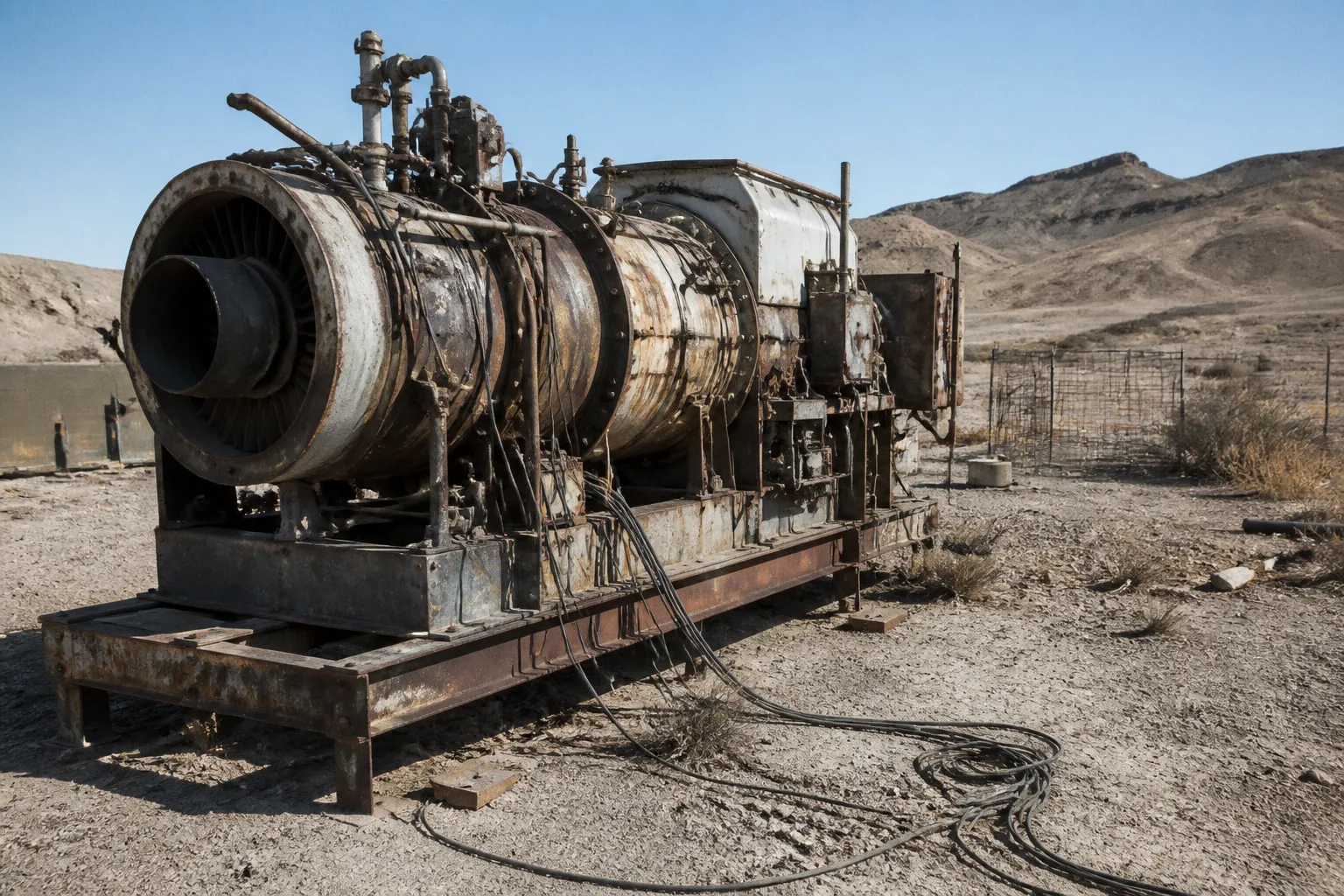
A climate pilot can pass every laboratory test and still fail after deployment. The failure may come from thermal loads, data frequency, legacy infrastructure, procurement rules, or a customer who cannot convert the result into operating value.
This is not an edge case. CB Insights data attributes 35% of startup failures to a lack of market need. In ClimateTech, the gap is wider because the product must survive both commercial and physical systems. A technically valid device can still produce negative unit economics. A working software layer can still depend on data the site cannot provide. A decarbonisation result can still lose internal funding if it does not connect to the customer’s operating model.
The correct response is not an immediate pivot. It is a controlled diagnosis.
A climate startup pilot failure pivot should answer five questions:
1. Which assumption failed?
2. At what layer did it fail?
3. Who absorbed the cost?
4. Which customer value remained intact?
5. What evidence would justify the next deployment?
If the team cannot answer these questions, it is not pivoting. It is changing direction under pressure.
Diagnosing the gap: lab success versus field reality
Laboratory validation removes variables. Field deployment adds them back.
The lab may control temperature, load, data quality, installation geometry, maintenance access, and user behaviour. A commercial site controls none of these with the same precision. The system runs inside an existing asset base. That asset base has undocumented constraints, operating cycles, safety procedures, and decision rights.
This creates a common failure pattern:
- The technical team validates the core mechanism.
- The sales team sells the expected outcome.
- The customer provides a site with different operating conditions.
- The deployment team discovers constraints that were not included in the pilot design.
- The company interprets the result as a product problem.
- The team changes the product before isolating the failed assumption.
That sequence increases burn rate without increasing learning throughput.
The first task is to separate the pilot into layers. A useful model has six parameters:
1. Physics
Did the technology produce the expected technical effect under field conditions?
2. Integration
Could the product connect to the customer’s infrastructure, data systems, workflows, and safety requirements?
3. Operations
Could the site team install, run, maintain, and interpret the system without excessive support?
4. Economics
Did the deployment create value after installation, support, downtime, energy, and financing costs?
5. Commercial ownership
Did the person sponsoring the pilot control the budget required for scale?
6. Capital fit
Could the company fund the next step before revenue arrived?
A failed pilot often has one primary bottleneck and several secondary symptoms. Treating every symptom as a separate problem creates product sprawl.
Build a failure ledger
Do not begin with a new roadmap. Begin with a ledger.
For each pilot assumption, record:
- the assumption;
- the evidence expected;
- the evidence observed;
- the variance;
- the cost of the variance;
- the owner of the decision;
- the next test required.
Use measurable statements. “The customer struggled with adoption” is not a test result. “Operators did not enter data at the required frequency” is closer. It identifies a process constraint. “The integration required manual reconciliation because the legacy system exposed incomplete records” identifies a technical and operational constraint.
The ledger should distinguish between a failed result and a failed measurement system. If data collection stopped during deployment, the company may not know whether the technology underperformed. It only knows that the evidence chain broke.
That distinction affects the pivot.
A field failure is not a diagnosis. It is an observation that must be assigned to a system layer.
If the technical effect was not measured, the next action is not a product pivot. It is a measurement redesign. If the effect was measured but did not create financial value, the technical product may be valid while the commercial model is not.
The anatomy of a failed deployment
ClimateTech products fail in the field for reasons that do not appear in a lab protocol. The failure modes are usually specific.
| Failure mode | Field symptom | Likely bottleneck | Correct response |
|---|---|---|---|
| Unverified site constraints | Installation stops or requires redesign | Integration and deployment planning | Requalify the site before changing the core product |
| Thermal or load variance | Performance drops under actual operating conditions | Technical envelope | Retest under the observed load profile |
| Insufficient data frequency | The system cannot prove impact | Measurement architecture | Reduce data dependency or redesign instrumentation |
| Legacy infrastructure conflict | Manual workarounds expand | Integration cost | Define supported interfaces and price the integration |
| Weak commercial value | Customer likes the result but will not scale | Value proposition or buyer ownership | Reframe around a budgeted operating outcome |
| Capital mismatch | Pilot succeeds but FOAK project cannot be financed | Financing structure | Separate pilot capital from deployment capital |
| Excessive service burden | Every site requires custom support | Product repeatability | Standardise deployment or narrow the target segment |
This table is not a substitute for technical investigation. It is a way to prevent category errors.
If the product fails because the site has an unmanageable integration burden, improving the material science may not change the result. If the customer cannot monetise the savings, reducing hardware cost may still leave the purchase decision unresolved. If the next project requires infrastructure finance, another venture round may not solve the bottleneck.
Separate technical failure from commercial failure
Use an if/then test.
- If the core effect disappears under field conditions, test the operating envelope. Check load, temperature, duty cycle, installation, and maintenance conditions.
- If the core effect remains but deployment cost destroys the margin, treat integration and service as product constraints.
- If the economics work but the buyer lacks authority, the customer segment or sales path is wrong.
- If the buyer has authority but no budget, the timing or financing model is wrong.
- If the buyer sees value but cannot verify it, the measurement system is part of the product.
- If the pilot works only through founder intervention, the deployment process has not reached repeatable throughput.
This logic matters because a customer need pivot and a customer segment pivot are common responses to negative customer reactions and flawed business models. But a segment change is not automatically a solution. If the underlying deployment cost is unchanged, the new segment inherits the same failure.
Do not over-read a single pilot
One failed site can expose a real constraint. It cannot establish that every site will fail.
The correct unit of analysis is the assumption, not the anecdote. Ask whether the pilot represented the target market on the variables that control performance:
- asset age;
- operating cycle;
- climate conditions;
- data availability;
- installation access;
- maintenance capability;
- procurement process;
- energy or emissions baseline;
- budget owner;
- required payback or return threshold.
If the failed site was selected because access was easy rather than because it represented the target deployment environment, the pilot may have produced weak market evidence from the beginning.
A pilot is a commercial experiment only when the site and decision-maker match the intended scale path.
The second valley of death: capital and commercial alignment
Climate startups face more than one financing gap.
The first gap often appears between research and a demonstrable product. The second appears after a demonstration, when the technology must become a First-of-a-Kind commercial project. Prime Coalition research based on interviews with more than 140 climate ecosystem members identified this secondary valley of death as a capital alignment problem.
The product may be ready enough to deploy. The customer may be interested. The project may still lack a financing instrument that fits its risk profile.
This is where founders often misclassify a capital problem as a product problem.
A pilot can fail to convert for three separate reasons:
1. The customer does not want the outcome.
2. The customer wants the outcome but cannot fund the deployment.
3. The customer can fund the deployment but does not control the risk required for a FOAK project.
Each condition requires a different response.
Unit economics must include the site
Early models often include manufacturing cost, software cost, and gross margin. They exclude the physical work required to make the product operate.
For a field climate product, unit economics should account for:
- site assessment;
- engineering design;
- permitting;
- installation;
- commissioning;
- travel;
- integration;
- data validation;
- maintenance;
- warranty exposure;
- customer training;
- downtime;
- working capital;
- financing cost.
If these costs are treated as exceptional, the model will report false throughput. The company will believe it can deploy ten systems because it can build ten systems. In reality, it may be able to commission two.
The relevant metric is not production capacity. It is completed, accepted, and economically viable deployment capacity.
Match capital to the next risk
Venture capital is not a universal solution for physical deployment. It may fund product development and commercial teams. It does not automatically fund customer-owned infrastructure, inventory, construction, or long payment cycles.
Define the next risk before raising capital.
- If the risk is technical repeatability, fund controlled field tests.
- If the risk is integration, fund standardisation and site qualification.
- If the risk is customer adoption, fund a narrower commercial experiment.
- If the risk is project finance, build the financing structure before expanding sales.
- If the risk is working capital, negotiate payment terms and inventory exposure.
- If the risk is regulatory approval, fund the approval path as a separate workstream.
The company should not raise capital to preserve the current plan. It should raise capital to remove a named bottleneck.
A broader market signal supports this discipline. A survey of 1,000 global CEOs found that approximately 40% saw the failure to connect sustainability initiatives with core business value as a barrier to climate action. The customer may support decarbonisation in principle and still reject a project that lacks an operating or financial owner.
Sustainability is not a budget line by default. The product must attach to one.
A structured pivot framework
A pivot should reduce uncertainty. It should not merely produce a new narrative.
Use five stages. Each stage has an exit condition.
1. Freeze the reactive roadmap
Stop adding features until the failure is classified.
This does not mean stopping all work. It means separating maintenance from strategic change. Fix safety issues. Preserve customer commitments. Do not redesign the product because one stakeholder requested a feature during a failed deployment.
Set a short decision window. The duration will vary by hardware, software, permitting, and supply-chain constraints. There is no universal recovery timeline across ClimateTech. The control mechanism is not speed alone. It is evidence per unit of burn.
Track:
- cash remaining;
- monthly burn rate;
- engineering capacity;
- number of open assumptions;
- number of active pilots;
- time from test to verified result;
- support hours per deployment.
If the burn rate rises while the number of resolved assumptions remains flat, the company is moving in the wrong direction.
2. Convert the failure into hypotheses
Write each failed assumption as a statement that can be tested.
Weak version:
“The market is not ready.”
Useful version:
“Industrial sites with incomplete sensor data cannot verify the claimed savings without an additional measurement layer.”
Weak version:
“Customers do not understand the product.”
Useful version:
“The facility manager values the result, but the energy budget owner requires a payback case and does not accept the current measurement method.”
A good hypothesis has four parts:
1. target customer;
2. operating condition;
3. expected behaviour or result;
4. evidence threshold.
The threshold must be defined before the next test. Otherwise, the team will move the goalposts after the result arrives.
3. Re-test the smallest decision
Do not repeat the full pilot if the failed assumption can be isolated.
If installation time is the bottleneck, test installation. If data access is the bottleneck, test the data pipeline. If the buyer is wrong, interview and sell to the budget owner. If the economics fail at the current scale, model the minimum viable deployment.
This is where throughput matters. A full pilot may take months and consume scarce capital. A smaller test may resolve the same assumption with less exposure.
The test is valid only if it preserves the condition that caused the original failure. Removing the difficult site constraint may create a clean result with no relevance to the target market.
4. Select the pivot type
There are three common pivot directions in this context.
Customer need pivot.
The same customer has a different urgent problem. The climate outcome remains relevant, but the purchase is attached to reliability, compliance, maintenance, energy cost, or asset performance.
Customer segment pivot.
The current buyer cannot deploy the product. Another segment has the same technical need and the authority, budget, and infrastructure to act.
Delivery or business model pivot.
The product remains similar, but the company changes how it charges, installs, finances, measures, or supports the system.
Choose one primary pivot. Multiple simultaneous pivots destroy attribution. If the product, customer, pricing, and channel all change at once, the next result cannot tell the team which change created the improvement.
5. Define a kill condition
A pivot without a kill condition is an extension of the old plan.
Set a binary rule:
- continue if the defined customer and operating condition produce the required evidence;
- stop or redirect if they do not.
The threshold may concern deployment time, verified performance, gross margin, buyer authority, payback, data completeness, or support burden. It must relate to the bottleneck.
Do not use revenue as the only success metric for an early field pivot. A paid pilot with negative contribution margin can increase risk if it creates a custom service obligation. Conversely, a small test with no immediate revenue can be useful if it proves repeatable deployment and removes a major uncertainty.
The next pilot should be smaller in scope and stronger in evidence. Otherwise it is only a more expensive repetition.
Rebuilding traction after a setback
Traction does not return when the company announces a new positioning statement. It returns when the system produces repeatable outcomes.
Start with the buyer map.
For each target account, identify:
- the operational owner;
- the financial owner;
- the emissions or sustainability owner;
- the technical gatekeeper;
- the procurement authority;
- the person who carries deployment risk.
If one person cannot sponsor the full path, define the handoff. A pilot can be approved by a sustainability team, installed by engineering, measured by an external party, and paid from a facilities budget. The sales process must account for all four.
Then rebuild the value case around the customer’s controlled metric. Possible metrics include energy cost, equipment uptime, maintenance workload, compliance exposure, fuel use, waste, or capacity. Emissions reduction may be the final outcome, but it is not always the buying trigger.
The value case should include:
1. baseline condition;
2. intervention;
3. measured result;
4. cost to deploy;
5. cost to operate;
6. owner of the benefit;
7. path to scale.
If any item is missing, the commercial case is incomplete.
Narrow the deployment envelope
A common reaction to failure is to make the product more flexible. That can increase complexity.
A better response is often to define where the product works now. Specify the operating conditions, data requirements, installation method, maintenance model, and customer profile. A narrow deployment envelope can improve gross margin and implementation throughput.
This is not a retreat from the market. It is a control system.
The first repeatable segment should have:
- a known operating profile;
- accessible data;
- a clear budget owner;
- low integration variance;
- a credible scale path;
- a cost structure the company can support.
Only then should the company widen the envelope.
Protect the company from custom work
Every exception consumes engineering time. Every custom integration lowers throughput. Every manual reporting step increases support cost.
Track exceptions by deployment. Classify them:
- required for safety or compliance;
- required for the target segment;
- caused by an unsupported legacy system;
- caused by an unclear product boundary;
- caused by a sales promise.
The last two categories are usually internal bottlenecks. They should not be normalised as customer success.
A climate startup pivot strategy is working when the second deployment requires fewer decisions than the first. If every new site creates a new architecture, the company has not yet found product-market fit. It has found a series of projects.
What the founder should retain
A failed pilot can destroy the wrong thing if the team responds without separating evidence from interpretation.
Retain the technical knowledge that remains valid. Retain the customer language that identifies a real need. Retain the deployment data that exposes site constraints. Discard assumptions that were never measured. Discard segments that cannot fund or own the outcome. Discard business models that transfer all field risk to the startup.
The history of CleanTech 1.0 is a warning. Around 90% of companies from that era failed to return capital to investors, with business model and market alignment issues playing a major role. The lesson is not that climate hardware cannot scale. The lesson is that technical capability does not compensate for weak commercial structure.
The failure analysis must therefore end in an operating decision.
Continue only if:
- the failed assumption is isolated;
- the next test measures that assumption directly;
- the target buyer owns the relevant budget or decision;
- the deployment cost is included in unit economics;
- the capital source matches the next risk;
- the team has a defined kill condition.
Redirect if:
- the same failure is described in new language;
- the pilot scope expands before evidence improves;
- the customer outcome remains unowned;
- custom integration is treated as free;
- the burn rate rises faster than learning throughput;
- the next project depends on founder intervention;
- the company needs a new financing round merely to repeat the same test.
That is the complete decision boundary. A failed climate pilot does not prove that the technology is broken. It proves that one set of assumptions did not survive contact with the deployment system. The pivot is justified only when the next set is narrower, measurable, financeable, and tied to a buyer who can act.