Climate tech business model shifts: before and after
When a climate tech founder asks, “Is our technology not ready yet—or is our business model wrong?”, the answer is often hiding in the gap between the two.
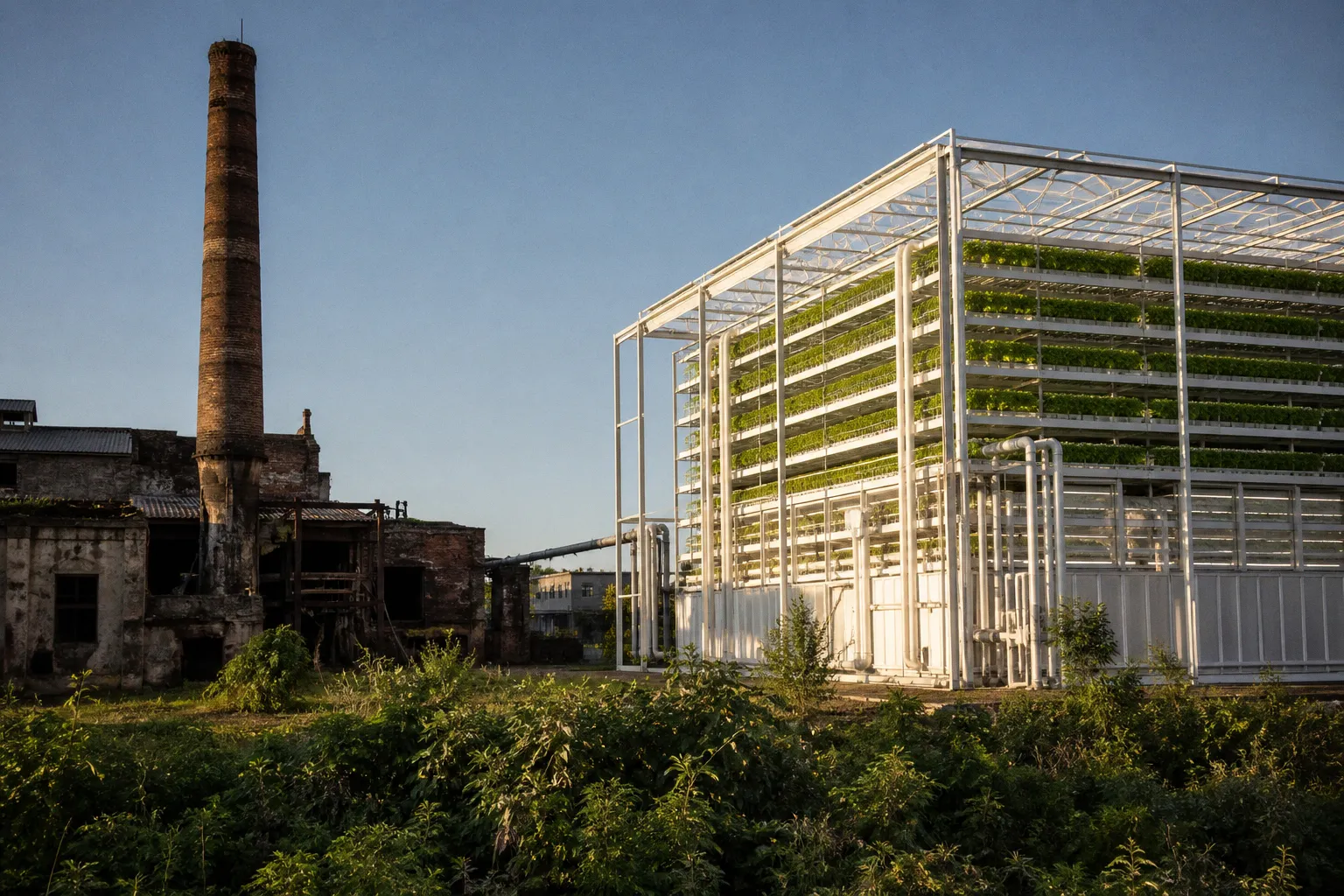
A strong climate solution can still struggle if it depends on expensive customer acquisition, large upfront purchases, slow procurement cycles, or a manufacturing footprint the company cannot finance. That is why the current climate tech business model pivot is less about changing the mission and more about changing the route to a durable company.
The shift is visible across the sector. Climate startups are moving from growth-at-all-costs toward unit economics, from consumer sales toward B2B contracts, from CapEx-heavy hardware toward service models, and from building factories toward licensing intellectual property. At the same time, the market is broadening its definition of climate value. Decarbonization still matters, but resilience, resource security, and economic competitiveness are becoming equally persuasive reasons to buy.
For founders, this creates a useful kind of pressure. We do not have to abandon the climate problem we care about. We do have to become more precise about who pays, what they are buying, and why the solution fits the way their organization already operates.
The profitability pivot: from growth at all costs to useful growth
The earlier climate startup playbook often looked familiar: raise capital, build the technology, acquire users, expand quickly, and trust that scale will eventually improve the economics.
That approach made sense in a market where capital was abundant and investors were willing to wait for a future cost curve. It becomes much harder when hardware prices fluctuate, deployment takes months, manufacturing requires working capital, and every customer needs education before signing a contract.
The new question is not simply, “How large could this become?” It is:
Can this company create measurable climate impact while becoming less dependent on outside capital with every major customer?
According to a 2026 Silicon Valley Bank report, 52% of venture-backed climate tech companies reduced their year-over-year net burn by focusing on core unit economics, removing weaker product lines, and designing for more efficient manufacturing. That number tells us something important about the current environment: financial discipline is no longer a finance-team exercise added after product development. It is part of climate tech product strategy.
What changed between the two models?
| Dimension | Earlier growth model | Emerging climate business model |
|---|---|---|
| Primary objective | Capture users and market share quickly | Prove repeatable, profitable deployment |
| Product range | Multiple pilots, features, or production lines | A narrower offer built around the strongest use case |
| Capital use | Fund expansion before economics are clear | Fund milestones that improve margins, retention, or deployment speed |
| Customer promise | Future savings or broad environmental benefit | Specific operational, financial, and climate outcomes |
| Hardware strategy | Sell equipment upfront and carry manufacturing risk | Use service contracts, partnerships, or licensing where they improve capital efficiency |
| Investor narrative | Total addressable market and long-term scale | Gross margin, payback period, contract quality, and credible expansion path |
This is not a call to make every early-stage company profitable immediately. Climate technologies often need research, certification, field testing, and infrastructure before the economics mature. The practical distinction is between deliberate investment and unbounded burn.
A deliberate investment might be funding a twelve-month pilot that validates performance in a difficult operating environment. Unbounded burn might be adding three customer segments, two hardware configurations, and a new geography before knowing which initial customer will renew.
For an early-stage team, the first step is to map the economics of one real deployment:
- What does it cost to acquire and onboard one customer?
- How long does deployment take from signed contract to operating system?
- Which costs repeat with every installation, and which fall as volume increases?
- When does the customer receive financial value?
- What must the startup pay before that value arrives?
- Which part of the system creates the strongest defensibility: hardware, software, data, integration, or intellectual property?
You do not need perfect answers. You need answers specific enough to expose where the model is fragile.
A climate metric is not a business model
Founders sometimes begin with a powerful impact claim: tonnes of carbon avoided, litres of water saved, megawatt-hours optimized, or kilograms of material diverted from landfill. These metrics are essential, but they do not automatically explain how a company earns revenue.
A customer may care about the emissions reduction and still approve the purchase because the system lowers peak energy costs, prevents downtime, meets a reporting requirement, extends asset life, or improves supply security. The climate benefit strengthens the case, but the buying decision often travels through an operational budget.
That is why a useful carbon impact business model shift connects three layers:
1. The physical outcome: what changes in the real world.
2. The economic outcome: whose costs, risks, or revenues change.
3. The purchasing pathway: which budget owner can approve the solution.
If those layers do not align, the startup may be asking one person to care about climate, another to find the budget, and a third to manage implementation. That is a long route to a purchase.
The B2B migration: why climate startups move closer to operational budgets
Consumer climate products are not impossible. Some do scale, particularly when they deliver immediate convenience, visible savings, or a compelling lifestyle benefit. But consumer acquisition and retention can be difficult when the product asks people to change habits without offering an equally immediate reward.
Research in the supplied market data indicates that approximately 90% of B2C climate startups eventually pivot toward B2B or B2B2C models. In the same data, 91% of climate tech startups sell B2B, compared with 72% of startups across the broader market.
Those figures should not be read as a command to abandon consumers. They are a signal about where climate value is often easiest to monetize: inside organizations that already have energy, infrastructure, compliance, procurement, or resilience budgets.
Why B2B often fits the climate problem better
Many climate technologies affect systems rather than isolated consumer choices. They may optimize a fleet, retrofit a building, manage industrial heat, improve grid flexibility, monitor agricultural inputs, or reduce waste across a supply chain.
The buyer may be a fleet operator rather than a driver. It may be a utility rather than a household. It may be a facilities director, manufacturer, insurer, logistics company, or municipal authority.
That creates a different value proposition:
- A fleet manager can measure charging utilization across hundreds of vehicles.
- A building owner can compare energy consumption before and after a retrofit.
- A manufacturer can connect material savings to production costs.
- An insurer can evaluate whether resilience technology reduces exposure to a known risk.
- A utility can use distributed assets to improve capacity planning.
In each case, the startup is not only selling a greener choice. It is selling a system improvement that happens to carry climate value.
The examples are instructive. Make My Day moved from a consumer-facing app focused on electric vehicle range anxiety toward a B2B fleet electrification strategy. LO3 Energy shifted from a peer-to-peer energy blockchain marketplace toward a B2B2C enterprise offering for utilities. The underlying climate ambition remained recognizable, but the route to adoption became more aligned with existing infrastructure and purchasing authority.
The B2C-to-B2B transition is not a simple packaging exercise
A common mistake is to take a consumer product, add a business dashboard, and call it an enterprise offering. B2B customers usually require deeper changes:
- Implementation must work across existing systems.
- Procurement needs clear contract terms and security documentation.
- The product may need role-based access, reporting, and audit trails.
- Sales cycles become longer, but contracts can be larger and more durable.
- The startup must support integration, training, maintenance, and renewal.
- The person using the product may not be the person signing the contract.
This is where many founding teams need to slow down and redraw the customer journey. Instead of asking, “Who likes our product?”, ask:
1. Who experiences the operational problem every week?
2. Who owns the budget connected to that problem?
3. Who carries the risk if the solution fails?
4. Who can introduce the product into the organization?
5. What evidence is required before a pilot becomes a contract?
6. What would make the customer renew after the first year?
The answers may reveal that the original consumer insight was still valuable. A fleet manager may care about the same driver anxiety that inspired a consumer app, but the commercial product could be fleet utilization, charging reliability, route planning, or total cost of ownership.
The strongest B2B pivot does not erase the original insight. It moves that insight to the place where the problem is expensive enough to solve.
How to validate a B2B climate tech business model
Before building enterprise features, choose one narrow operational setting and test the buying path.
For example, an energy management startup might begin with mid-sized cold-storage facilities rather than “commercial buildings.” The team can then investigate a concrete pattern: high refrigeration loads, demand charges, backup power needs, and a facilities manager who already monitors energy costs.
A useful early validation sequence looks like this:
1. Interview the operator, not only the sustainability lead. Learn what fails, what is measured, and what gets escalated.
2. Quantify the baseline. Establish current energy use, downtime, waste, maintenance cost, or exposure to price volatility.
3. Define the first paid outcome. Avoid promising a complete transformation when the initial contract can focus on one measurable improvement.
4. Run a bounded pilot. Set a timeline, success metric, data access plan, and decision date before installation.
5. Test the renewal logic. Ask what the customer would need to see to continue paying, not merely to praise the pilot.
6. Build the sales motion around the buyer’s calendar. Procurement, budgeting, facility shutdowns, and reporting cycles all affect the real timeline.
The goal is not to make the startup look enterprise-ready. It is to discover whether the organization can buy, deploy, use, and renew the solution without heroic intervention from the founders.
Hardware-as-a-Service: converting a large purchase into an operating relationship
Climate hardware often has a difficult financial shape. The startup pays for materials, assembly, certification, installation, logistics, and maintenance before the customer has fully realized the value. The customer, meanwhile, may hesitate to approve a large capital purchase for an unfamiliar technology.
Hardware-as-a-Service, or HaaS, addresses this tension by converting the transaction from “buy the equipment” to “pay for access to an operating outcome.” The customer may pay a monthly fee, a usage-based charge, a performance fee, or a combination of these.
The model has attracted attention because HaaS companies have reportedly secured valuation multiples 59% higher than non-HaaS frontier technology peers. That does not make HaaS automatically superior. It shows that investors often value the possibility of recurring revenue, closer customer relationships, and a more predictable deployment base.
What HaaS changes for the customer
A traditional hardware sale may ask the customer to absorb several risks at once:
- Does the equipment perform as promised?
- Will it integrate with existing systems?
- What happens when a component fails?
- How quickly will savings arrive?
- Who pays for upgrades?
- Will the technology become obsolete?
A service model can reduce the psychological and financial barrier by keeping the provider involved. In exchange for recurring revenue, the startup takes on more responsibility for uptime, maintenance, financing, and performance.
That exchange can be powerful when the company has a clear operational advantage. It is much less attractive when the provider is simply financing a product that has weak margins.
The hidden balance-sheet problem
HaaS shifts CapEx into OpEx for the customer, but it does not make capital needs disappear. The startup may still need to finance the equipment, carry inventory, cover installation, and wait months or years to recover its costs.
Before choosing HaaS, founders should model each deployed unit as a small financial asset:
- Total equipment and installation cost
- Financing cost and working capital requirement
- Expected monthly or annual revenue
- Gross margin after service and maintenance
- Failure rate and replacement cost
- Contract length and cancellation terms
- Customer acquisition and onboarding cost
- Payback period
- Residual value, if the asset can be redeployed
Consider a distributed battery system installed at commercial sites. A one-time sale might create faster cash collection but limit the addressable customer base. A service contract could improve adoption and create recurring revenue, while also requiring the startup to fund installation and manage performance over several years.
The right choice depends on the company’s ability to finance and operate the installed base. A recurring-revenue headline is not enough. We need to know whether each new contract strengthens the company or quietly increases its exposure.
When HaaS is a strong fit
HaaS tends to make more sense when:
- The customer receives value continuously rather than at the moment of purchase.
- The provider can monitor and improve performance over time.
- Maintenance or optimization creates a meaningful service advantage.
- The equipment has a useful life longer than the customer’s budget cycle.
- Customers resist upfront CapEx but can approve predictable operating expenses.
- The startup has access to working capital or a financing partner.
- The technology can be standardized enough to control deployment costs.
It is less suitable when every installation is bespoke, service costs are unpredictable, or the provider cannot accurately forecast equipment failure. In those cases, recurring revenue may conceal recurring losses.
A practical early-stage approach is to test two offers with the same customer segment: a direct purchase and a managed service. The purpose is not to force a pricing decision immediately. It is to learn what the customer values—cash preservation, performance guarantees, simplicity, ownership, or flexibility—and whether the startup can deliver that value profitably.
IP licensing: building influence without building every factory
For hardware climate companies, manufacturing can become the business before the product has earned the right to be one.
A promising technology may require a specialized facility, tooling, certification, quality systems, inventory, and a field service network. Building all of that internally can require $5 million to $10 million or more before the startup has reached meaningful commercial scale.
That is why more hardware climate startups are considering IP licensing. Instead of manufacturing every unit, the startup licenses its technology to an established producer, integrator, or industry incumbent. Revenue may come through an upfront fee, royalties, milestone payments, minimum commitments, or a combination of structures.
This can be a capital-efficient alternative, but it changes the company’s job. The startup must become excellent at proving, protecting, transferring, and supporting the technology.
What a licensee needs to believe
A potential licensee is not buying an idea. It is evaluating whether the technology can improve its existing business without creating unacceptable technical or reputational risk.
The licensee will typically want evidence that:
- The technology performs consistently outside the lab.
- Manufacturing can meet defined quality standards.
- The intellectual property is defensible and properly owned.
- The product can integrate into current systems or product lines.
- Customers will accept the solution.
- The economics are attractive at realistic production volumes.
- The startup can support technical transfer and troubleshooting.
- The licensing rights are clear across territories, applications, and markets.
This means validation should be designed with the eventual manufacturing partner in mind. A prototype that impresses a grant committee may not answer the questions a licensee needs answered.
For example, a new industrial coating might demonstrate strong emissions performance in controlled testing. A licensing partner will also need to understand application speed, shelf life, worker safety, equipment compatibility, quality variation, and cost at production scale.
Licensing versus manufacturing
| Question | Build and manufacture | License the IP |
|---|---|---|
| Capital requirement | Higher upfront investment in facilities, equipment, and inventory | Lower direct CapEx, but significant validation and negotiation work |
| Value capture | Potentially higher if production scales successfully | Shared value through royalties or fees |
| Operational control | Strong control over quality, delivery, and customer experience | More dependence on the licensee’s execution |
| Speed to market | Can be slower while infrastructure is built | May be faster through an established channel |
| Core capabilities | Manufacturing, supply chain, service, quality operations | IP protection, technical transfer, partner management |
| Main risk | Capital intensity and execution complexity | Losing control or receiving limited commercial traction |
| Best fit | A repeatable product with strong margins and a credible production path | A technology that fits an existing industrial platform |
Neither path is universally better. Direct manufacturing allows the startup to retain more of the total value if it scales successfully. Licensing can reduce capital exposure and open distribution that would take years to build alone.
The key alignment question is simple: Where does this team create the most defensible value? If the advantage lies in chemistry, control software, materials science, or a novel process, licensing may let the company concentrate on the part it understands best. If the advantage depends on tightly controlled production, installation, or service, owning more of the value chain may be necessary.
The Grand Pivot: from energy transition to resilience and competitiveness
The climate tech market is also changing at the level of customer motivation.
The energy transition remains central, but companies and governments are increasingly framing climate technologies through energy resilience, resource security, and economic competitiveness. This broader orientation has been described as the “Grand Pivot.”
It matters because customers do not operate inside a single-issue climate narrative. They are managing volatile energy prices, supply interruptions, aging infrastructure, extreme weather, labor constraints, and pressure to remain competitive. A solution that addresses several of these concerns may find a stronger path to adoption than one presented only as a carbon reduction tool.
Funding patterns reflect this shift. Energy-related startups accounted for nearly 35% of climate tech funding in the first three quarters of 2024, up from 30% in 2023. Over the same period, the share going to industrials fell from 17% to 7%. These figures do not mean industrial climate innovation has stopped. They suggest that capital is concentrating around themes with especially clear links to energy systems, resilience, and near-term strategic value.
Reframe the value without losing the climate purpose
A resilience-led climate business model might describe:
- Battery storage as protection against outages and demand volatility, alongside emissions reduction.
- Water monitoring as a way to secure production, reduce leakage, and manage drought exposure.
- Low-carbon materials as a route to supply security and lower lifecycle cost.
- Methane detection as operational risk management with a direct climate benefit.
- Grid software as a tool for reliability, capacity planning, and electrification.
- Regenerative agriculture as soil protection, input efficiency, and long-term farm productivity.
This is not greenwashing when the operational benefit is real and measurable. It is translation. We are helping a technology travel from the founder’s scientific language into the customer’s decision-making language.
A useful positioning exercise is to write three versions of the same product description:
1. Climate outcome: What environmental problem does it address?
2. Operational outcome: What changes in the customer’s day-to-day system?
3. Strategic outcome: Why does solving that problem matter to the organization’s future?
For a fleet charging platform, the climate outcome might be reduced transport emissions. The operational outcome could be higher vehicle utilization and fewer charging delays. The strategic outcome could be lower fuel exposure and a more reliable transition to electric vehicles.
When all three are true, the business model becomes easier to defend. The customer does not have to choose between climate responsibility and commercial logic.
Designing your own climate tech business model transition
A pivot should not be treated as a dramatic announcement. In most early-stage companies, it is a sequence of increasingly specific choices.
Start by reviewing the evidence you already have. Which customers moved fastest? Which use case produced the clearest measurable result? Where did implementation require the fewest custom features? Which buyer returned with a second problem after the first deployment?
Then compare the current model with three alternatives:
- A narrower B2B offer built around one operational buyer
- A service model that spreads the cost of hardware over time
- An IP or technology partnership that reduces manufacturing exposure
For each option, estimate the effect on five practical measures:
- Time to first revenue
- Cash required before the next deployment
- Gross margin at realistic scale
- Customer retention and expansion potential
- Climate impact per unit of capital deployed
You may discover that the best answer is hybrid. A company might sell smaller systems directly, offer managed service for larger deployments, and license a core component to a strategic manufacturer. The point is not to select the trendiest model. It is to create alignment between the technology, the buyer, the capital structure, and the team’s real capabilities.
One final test is worth doing with your founding team: describe the company without using the words “platform,” “ecosystem,” or “disruption.” Explain who pays, what they receive, when they see value, and what the company must deliver every month to keep the contract.
If the explanation becomes clearer, you are close to the business model. If it becomes more complicated, that is useful information too.
The climate tech companies best positioned for the next phase will not necessarily be the ones with the biggest visions. They will be the ones that connect ambition to a model capable of surviving deployment: focused products, credible economics, carefully chosen buyers, and impact that can be measured in the same conversation as cost and resilience.
Start with one customer, one use case, and one economic equation. Make that relationship work before asking the model to carry the whole transition.