Navigating DOE SBIR/STTR Funding for Solar Hardware and Software Innovation
Department of Energy, the Solar Energy Technologies Office (SETO) has reopened Small Business Innovation Research and Small Business Technology Transfer (SBIR/STTR) topics aimed at solar hardware…
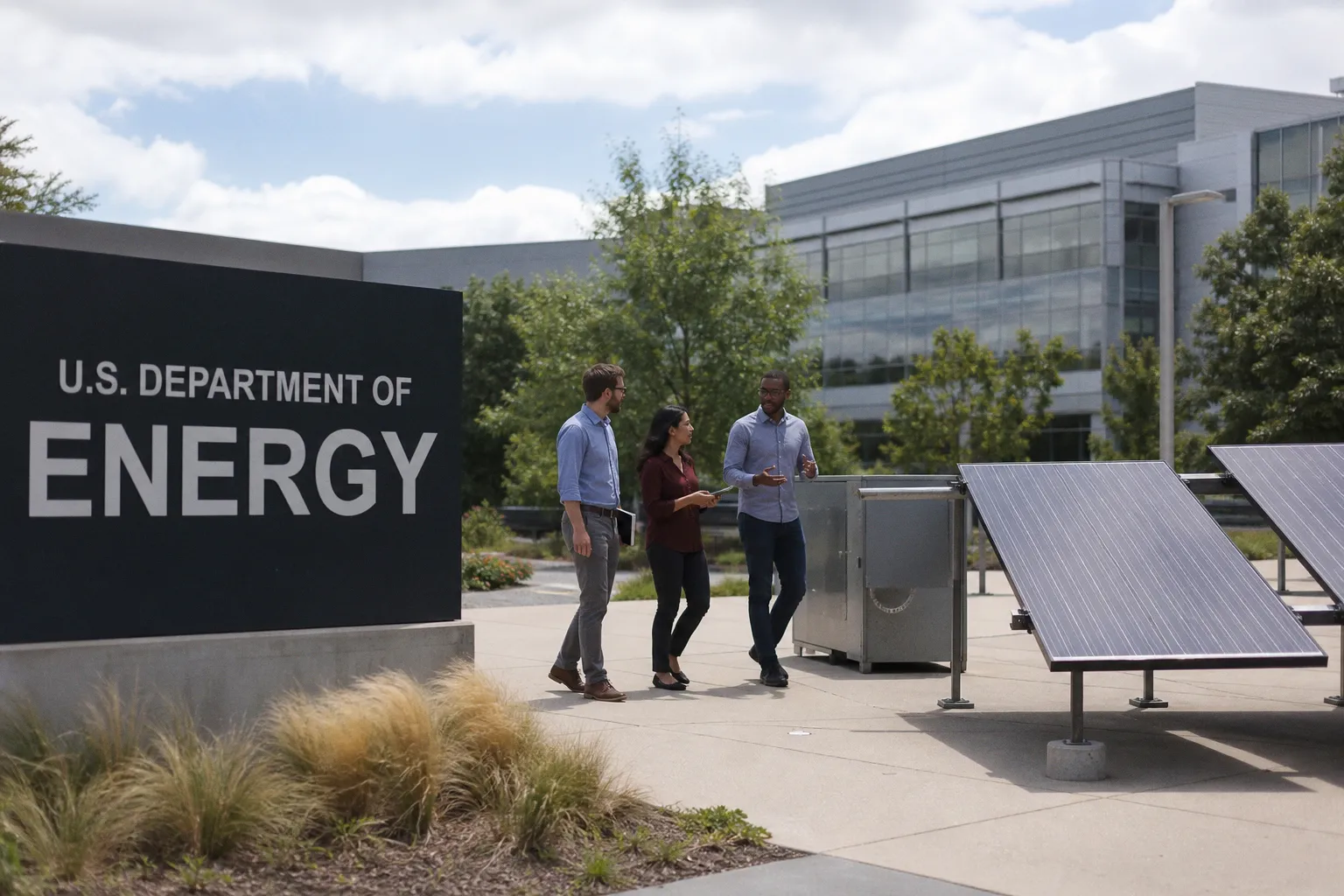
Per the U.S. Department of Energy, the Solar Energy Technologies Office (SETO) has reopened Small Business Innovation Research and Small Business Technology Transfer (SBIR/STTR) topics aimed at solar hardware, software, and manufacturing innovation. If we've ever watched a promising solar idea stall because the next round of capital feels impossible to land, this is one of those quietly important federal windows worth navigating with intention — especially for U.S.-based small businesses willing to take the technical and commercial risk.
The shape of the funding, and what it asks of you
DOE runs SBIR/STTR in two clear phases, and the structure itself is the lesson. Phase I funds feasibility studies and proof-of-concept work; Phase II supports prototype development once the idea has cleared that first gate. Applicants are expected to address commercialization challenges directly — DOE tracks outcomes through follow-up surveys, so the expectation is that your technology can find a profitable path to market, not just survive peer review. Awarded topics span photovoltaics, grid integration, solar-plus-storage, and community solar, giving most credible solar plays a plausible fit somewhere in the list. The agency also flagged one concrete example worth studying: AmpX Technologies in College Park, Maryland is building a compact, low-cost multi-port power electronics unit that ties rooftop solar, home storage, and EV charging into a single box — the kind of integrated hardware work SETO is signaling it wants to back.
The TTO lever and your next concrete step
There's a quieter mechanism inside the program that early-stage founders often miss: Technology Transfer Opportunities, or TTOs. SETO may release a TTO subtopic that transfers a specific patent held by a DOE national lab or university to one small business, paired with a six-month non-exclusive licensing agreement that can be extended through negotiation with the research institution. Only one company wins each TTO, so the alignment between your roadmap and the licensed IP has to be tight — but when it clicks, the leverage and impact are unusually high for a public program. The FY 2025 Phase I Release 2 funding opportunity is the next concrete checkpoint. Pull the subtopic list, map each line against your current technical claims, and ask the honest question: is this the non-dilutive bridge your solar venture has been waiting for?