How Bambrew Scaled Sustainable Packaging to a 50 Crore Revenue Business
According to India Today, the Bengaluru-based entrepreneur founded Bambrew to build sustainable packaging from bamboo, wood pulp, sugarcane, and seaweed — and today that decision has produced a…
From Single-Use Plastic Straws to Rs 50 Crore: What Bambrew's Growth Actually Teaches Us
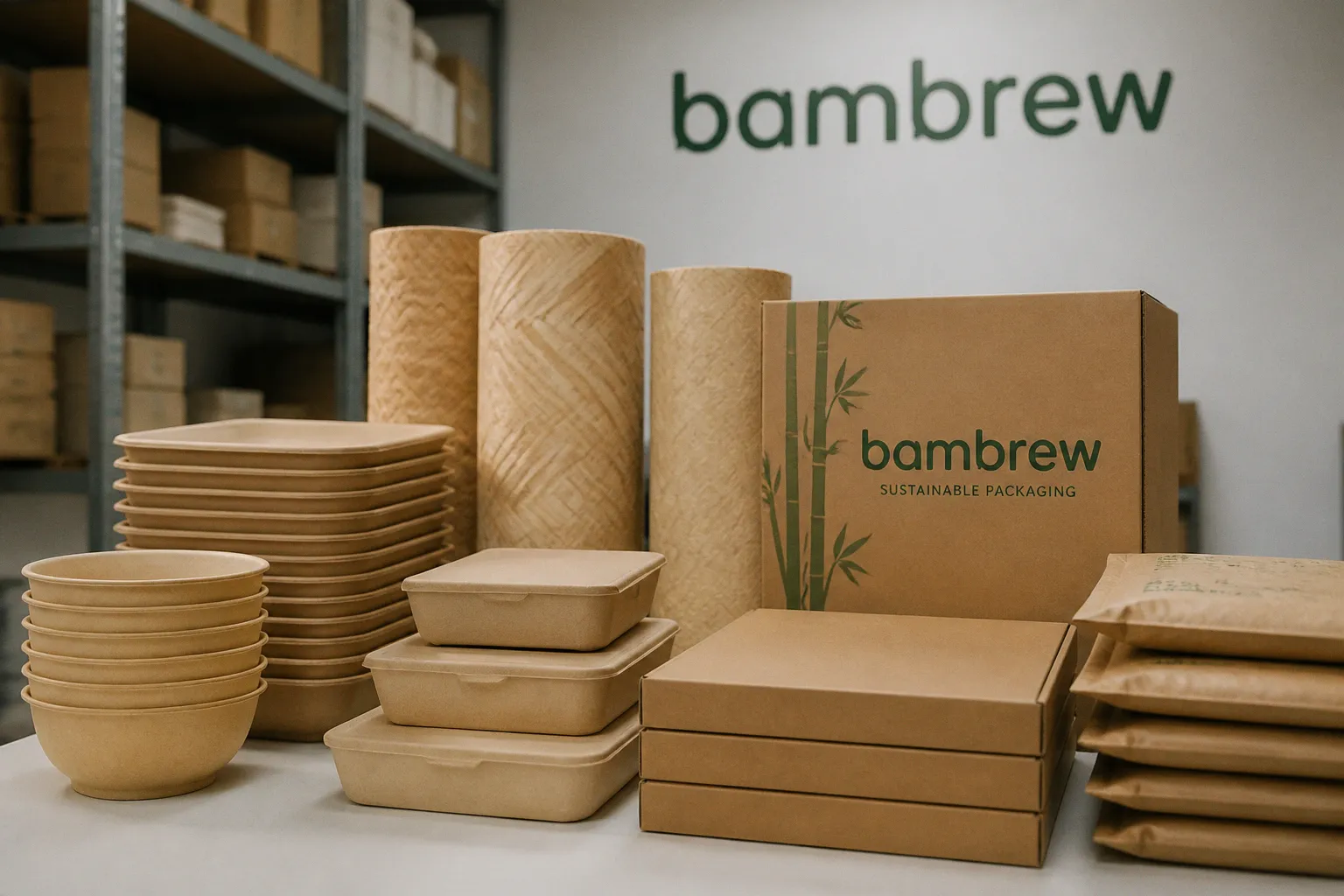
Have you ever stared at a massive global problem — plastic pollution, say — and felt the particular paralysis that comes with thinking someone bigger will solve this? Here's the thing: Vaibhav Anant felt that same pull in 2018, and then he quit his job anyway. According to India Today, the Bengaluru-based entrepreneur founded Bambrew to build sustainable packaging from bamboo, wood pulp, sugarcane, and seaweed — and today that decision has produced a business generating roughly Rs 50 crore in annual revenue while serving over 500 companies. The numbers matter, but what matters more for us is the how: the sequence of moves that turned a policy signal into a manufacturing operation running 3,000 tonnes per month.
Start Narrow, Then Expand with Proof
What stands out about Anant's trajectory is the restraint. Bambrew didn't launch claiming to reinvent the entire packaging supply chain. According to the report, the startup began with a single product category — alternatives to plastic straws — and only gradually moved into broader sustainable packaging solutions. That's a pattern we see again and again in successful climate tech ventures: you pick a wedge, you prove the material science and the economics work at a small scale, and then you expand. The founding catalyst itself is instructive too. The Indian government's 2018 announcement to phase out single-use plastics by 2022 created a regulatory tailwind. Anant didn't wait for the deadline — he positioned the company early enough to build capacity before demand spiked. For anyone in ideation right now, the question isn't just what problem do I care about? It's what policy or market shift gives me a three-to-five-year runway to build before the wave hits?
The Capital Followed Traction, Not the Other Way Around
Bambrew has secured over $12 million in total funding, including a recent Rs 60 crore Series A round aimed at strengthening research, development, and primary packaging capabilities. That funding came after the company had already built manufacturing infrastructure and proven it could serve hundreds of clients. We talk a lot in this space about the fundraising chase, but Bambrew's path illustrates something more grounded: investors in climate tech increasingly want to see physical capacity and customer validation before they write checks. The company also claims significant environmental impact — helping reduce over 10,000 tons of plastic, saving more than a million trees from being cut, and preventing substantial carbon dioxide emissions — though these figures come directly from the company's own reporting. For climate tech founders navigating early-stage fundraising, the alignment between commercial proof points and environmental metrics is becoming non-negotiable.
Your Next Step
If you're sitting on a material science idea or a packaging innovation and wondering where to begin, try Anant's first move: identify the single smallest product where your sustainable alternative can match or beat conventional performance and price. Don't start with the pitch deck. Start with one product, one customer willing to test it, and one data point that proves it works. The scale — the manufacturing facility, the 500 clients, the Series A — those are chapters three and four. Chapter one is getting something real into someone's hands and listening to what happens next.