How Fremantle Seaweed is Navigating the Climate Tech Valley of Death
Per Capital Brief, founder Chris De Cuyper has named the problem explicitly: the pre-scale phase is where climate tech startups sink, and the company's strategy is to convert the biology into a…
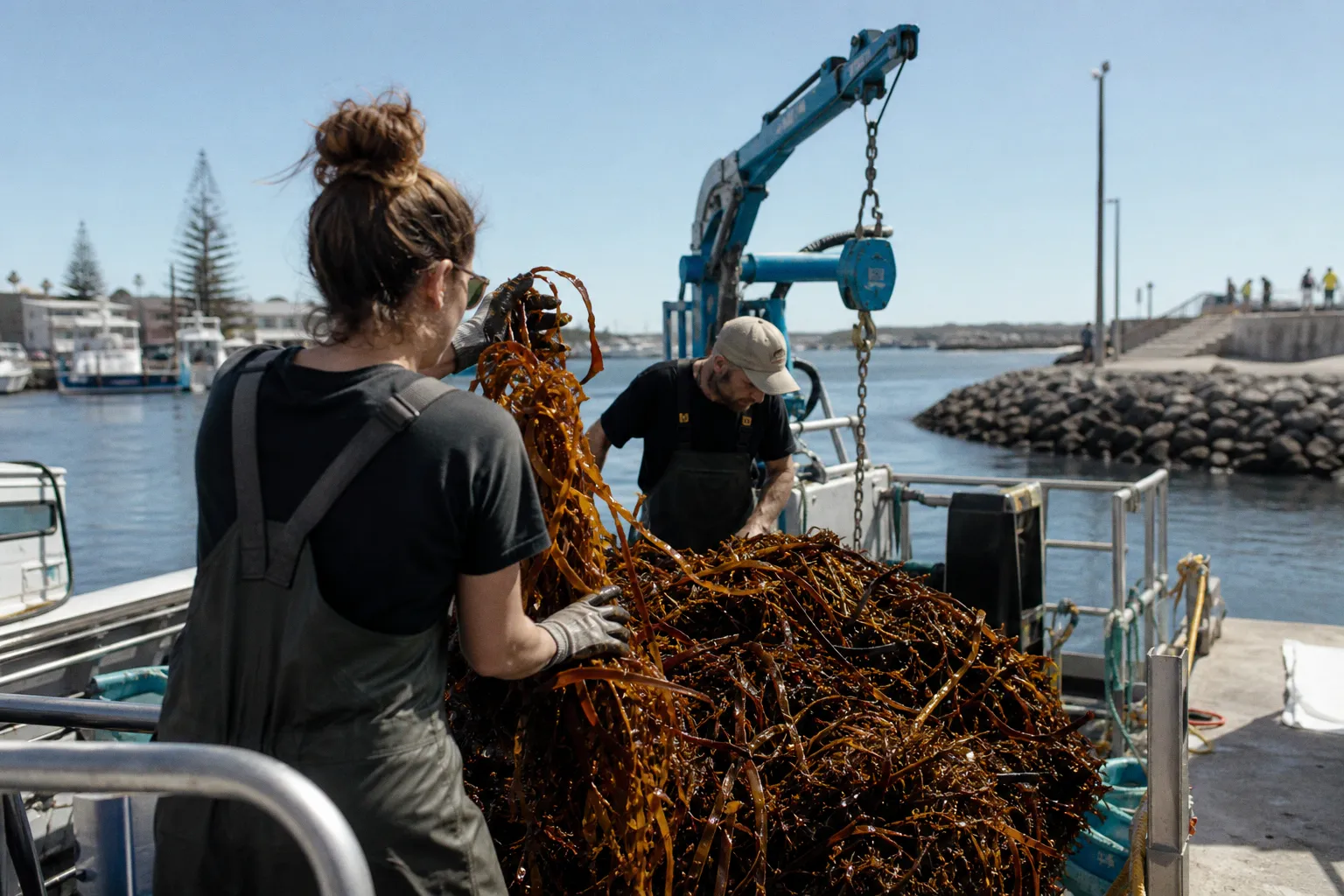
remantle Seaweed, a 32-hectare producer in Western Australia, is scaling asparagopsis — a cattle feed additive it says reduces ruminant methane emissions 80–90%. Per Capital Brief, founder Chris De Cuyper has named the problem explicitly: the pre-scale phase is where climate tech startups sink, and the company's strategy is to convert the biology into a bankable carbon line before the cash runs out.
Throughput versus the addressable herd
The unit economics break before the science does. Current capacity serves 4,500 head. Australia's national herd is 29 million. The majority are grass-fed — outside the feedlot setting where the supplement currently delivers. If asparagopsis needs a feedlot gate to reach the animal, TAM contracts by an order of magnitude on day one.
Two operational paths. First, keep the feedlot model and sell to premium corporate offtake. Second, reformulate for pasture, water troughs, or bolus delivery. Path two expands TAM roughly 10x but adds R&D burn and a heavier regulatory load. The founders must pick one and price it.
Carbon credits as the mechanism, not the mission
A federal methodology expected in early 2028 will let cattle producers earn Australian Carbon Credit Units for feed supplements such as asparagopsis. "Australian carbon credit units are the highest integrity carbon credit units globally," De Cuyper told Capital Brief. The model works if credit revenue per head exceeds supplement cost per head. If the gap is negative, the climate thesis collapses into commodity feed with a premium tax.
Capital is moving around this thesis at scale. MassMutual Ventures launched a $150 million Climate Technology Fund II targeting early-stage companies at the intersection of climate tech, AI, and real assets, bringing its total committed climate tech capital to $300 million. More dry powder does not fix a broken unit equation — but it does shorten the queue for startups that have one.
Parameters to monitor
1. Methodology publication date. Target is early 2028. Slippage extends burn.
2. ACCU price floor. Sets the breakeven for adoption at scale.
3. Delivery format. Determines TAM by a factor of 10 or more.
4. Corporate offtake contracts. Pre-2030 revenue visibility separates survivors from casualties.
For climate tech founders reading this: science de-risks the pitch, policy de-risks the unit economics, distribution de-risks the scale. Skip any one and the unit equation fails before the carbon price recovers the R&D.