How Land Restoration Is Becoming a Scalable Engine for Green Jobs
A UN News feature frames land restoration as a viable employment engine, spotlighting young entrepreneurs already testing the model.
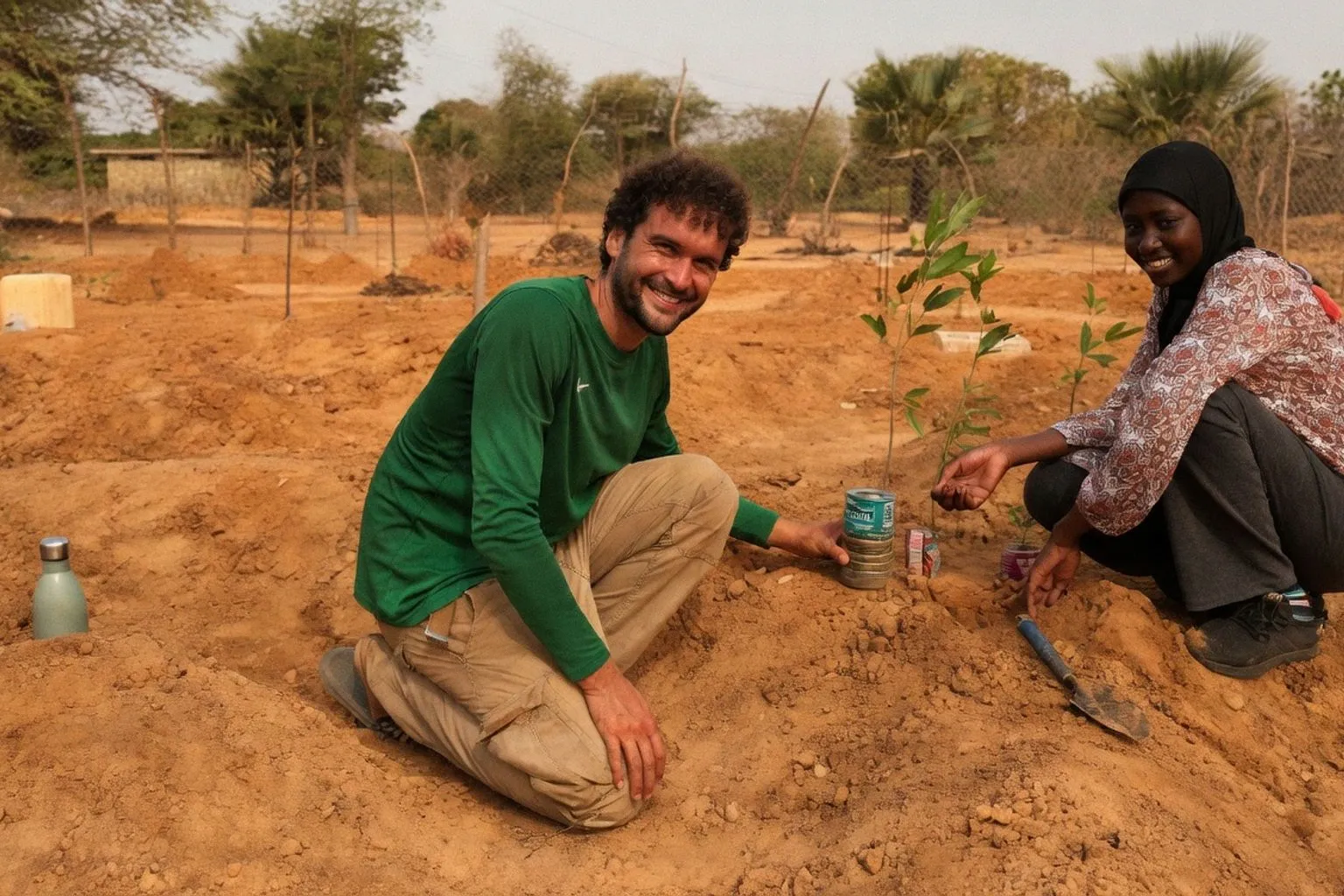
Can restoring land create jobs? These young entrepreneurs are proving it
For climate tech operators, the question is no longer ideological. It is mechanical: can restoration generate unit economics that scale?
Where the capital is assembling
Three recent signals point to the same operating frontier.
In Nigeria, CATAI and partners — including ActionAid Nigeria, ActionAid Denmark, and CIA Tech Africa — convened a Public-Private Partnership Dialogue in Maiduguri under the Strategic Partnership Agreement II (SPA II) Project, funded by the Danish International Development Agency (DANIDA). CATAI's stated focus: connecting youth and young women innovators in Borno State with banks, government, and private investors across climate resilience, renewable energy, recycling, climate-smart agriculture, and alternative livelihoods.
Adjacent to this, MSME Africa reports that AFC Capital Partners has launched a $150 million Climate-Resilient Infrastructure Fund in Nigeria. For founders, this is a capital-throughput marker. Infrastructure-scale money is deploying in the same geography where entrepreneur pipelines are being assembled.
In Central America, Belize Climate Week 2026 launched in Toledo, with organizers promoting innovation and climate resilience — another node in the regional partnership network for operators sourcing deal flow.
The bottleneck
The constraint repeats across all three signals: financing access post-ideation. According to CATAI Executive Director Abubakar Sadiq, young innovators face gaps in capital, technical expertise, mentorship, and policy support. The platform's design compresses those gaps by bringing banks into direct dialogue with founders.
For a startup operator, the unit economics problem is clear. Restoration ventures carry long payback periods, high upfront capital intensity, and revenue models that misalign with conventional venture timelines. Public-private dialogue mechanisms absorb some risk — but only when funding instruments match the project's cash flow curve.
Pre-engagement checklist
- Funding vehicle type. Confirm whether the instrument is grant, debt, equity, or blended. Each changes burn rate and dilution differently.
- Disbursement schedule. Map payout timing against operational milestones. Mismatch is the most common cause of stalled throughput.
- Technical assistance packaging. Determine if support is bundled or priced separately. Bundling reduces coordination cost.
- Sector alignment. Verify your venture's classification against the program's stated focus areas before applying.