How the DOE is Building an AI Infrastructure for Climate Tech Founders
Department of Energy is quietly building out an AI innovation ecosystem that could reshape how early-stage climate tech founders validate, test, and position their breakthroughs.
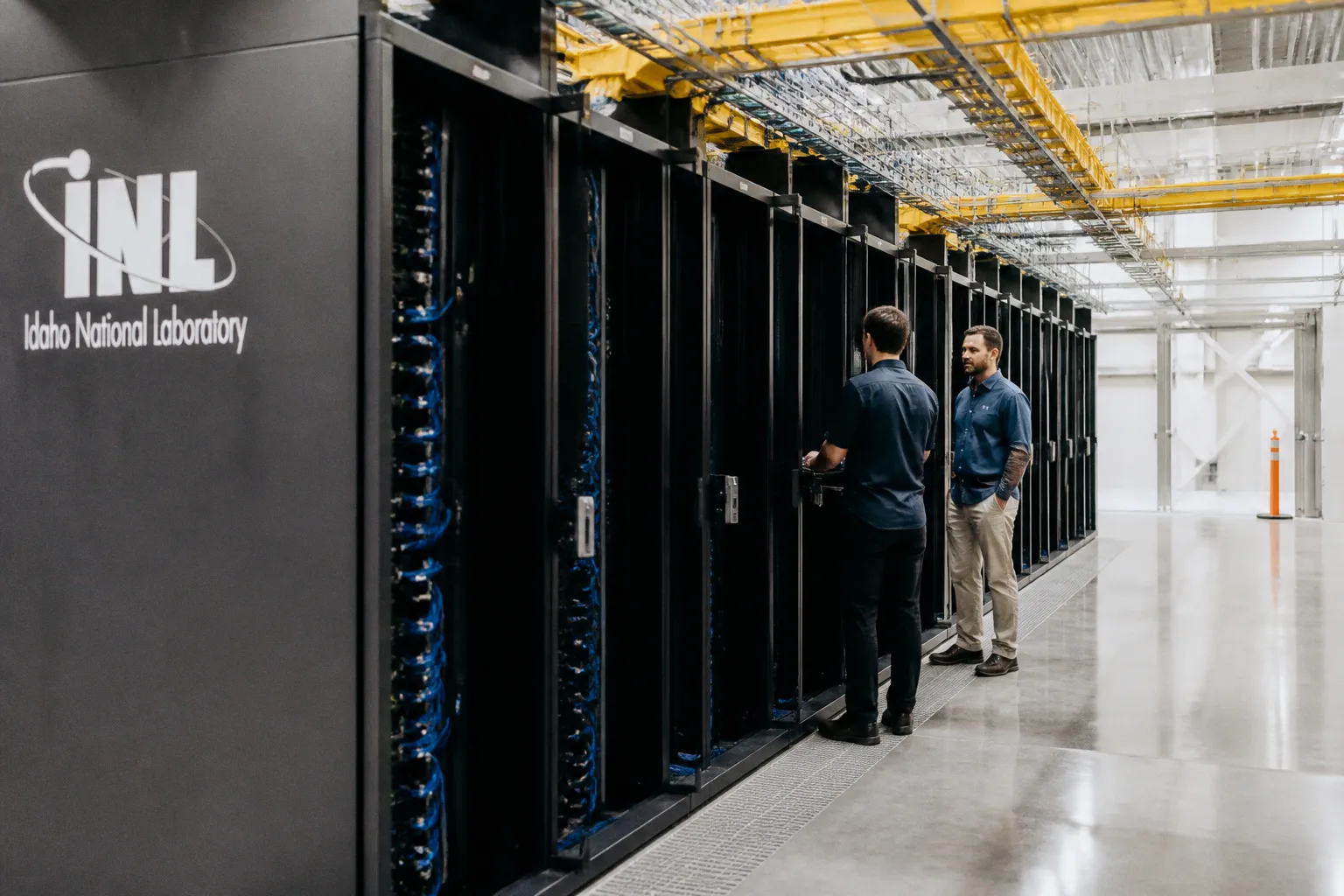
We've all been there—staring at a pitch deck wondering how to prove your climate solution scales beyond the lab. Here's a signal worth pausing on: the U.S. Department of Energy is quietly building out an AI innovation ecosystem that could reshape how early-stage climate tech founders validate, test, and position their breakthroughs. According to DOE's own announcement, the agency is developing foundation models trained on decades of national laboratory data—everything from climate forecasting to grid reliability to critical minerals—and making tools available that translate raw scientific output into actionable insight.
What DOE Is Actually Building
The core move here isn't a single product; it's an infrastructure bet. DOE is investing in AI foundation models that start with broad data inputs and then adapt to specific mission tasks. One concrete example already in play: the National Renewable Energy Laboratory (NREL) demonstrated a foundation model that draws on the national labs' massive repository of technical reports to answer user questions about Puerto Rico's transition to 100% renewable energy. Meanwhile, Los Alamos National Laboratory is developing foundation models for biological research—using large language models to study viral protein sequences, predict properties of mutated proteins, and generate drug candidates, with new guardrails for biosecurity. The throughline is that DOE wants to make its data, computing power, and scientific legacy available in ways that accelerate discovery rather than lock it behind institutional walls.
Why This Matters If You're Building in Climate Tech
If you're a founder in the early stages—validating your agrivoltaics concept, stress-testing a grid storage model, or trying to prove your soil carbon approach works at scale—this ecosystem is quietly lowering the barrier to credible evidence. The global agri-food tech venture market alone is estimated at $26.4 billion in 2026 and projected to grow to $64.8 billion by 2036, with AgTech capturing over 41% of that market by segment. Investors in this space are looking first at technical evidence, agronomic performance, and repeatable production economics before they write checks. Seed-stage programs currently account for 57–58% of market demand, which tells you where the money is flowing: into structured validation, not just shiny prototypes.
What DOE's foundation models offer is a shortcut to that credibility layer. Imagine querying a DOE-trained AI to benchmark your grid solution against historical performance data from national labs, or running environmental impact scenarios using models calibrated on government-grade datasets. You're not replacing your own R&D—you're cross-referencing it against a knowledge base that took decades and billions to assemble.
What to Watch—and What Not to Rush Into
A few things to keep in mind as this unfolds. First, DOE is framing this as "secure, trustworthy, and equitable" AI—language that signals regulatory guardrails are coming, not just open access. If your startup plans to build on or integrate with DOE tools, get ahead of compliance requirements now rather than retrofitting later. Second, the foundation models are mission-specific: energy, climate, security, and materials. That's excellent alignment for climate tech founders, but it also means the tools will have boundaries—don't expect plug-and-play flexibility across unrelated verticals.
One immediate next step: start mapping which national laboratory datasets and programs are relevant to your specific problem space. DOE's web portal highlights a selection of AI tools, foundation models, and partnerships across science, energy, climate, and security. Even if you're not ready to integrate, understanding what's available helps you frame your next investor conversation with sharper evidence and a clearer path from prototype to validated proof.
And if you're looking for structured funding to support that validation journey, there are fellowships emerging globally—like the Kenneth Myer Innovation Fellowships 2027 in Australia, offering up to AUD 180,000 for social and environmental changemakers. The ecosystem is expanding in multiple directions; the founders who navigate it early will have the strongest positioning when growth capital comes knocking.