Building Climate Resilience: How Ghana and Emerging Markets Are Scaling Green Ventures
Modern Ghana's headline this week lands like a launch brief rather than a news report: "Green Entrepreneurship: Ghana's Opportunity To Fight Climate Change, Create Jobs And Reduce Poverty." Three…
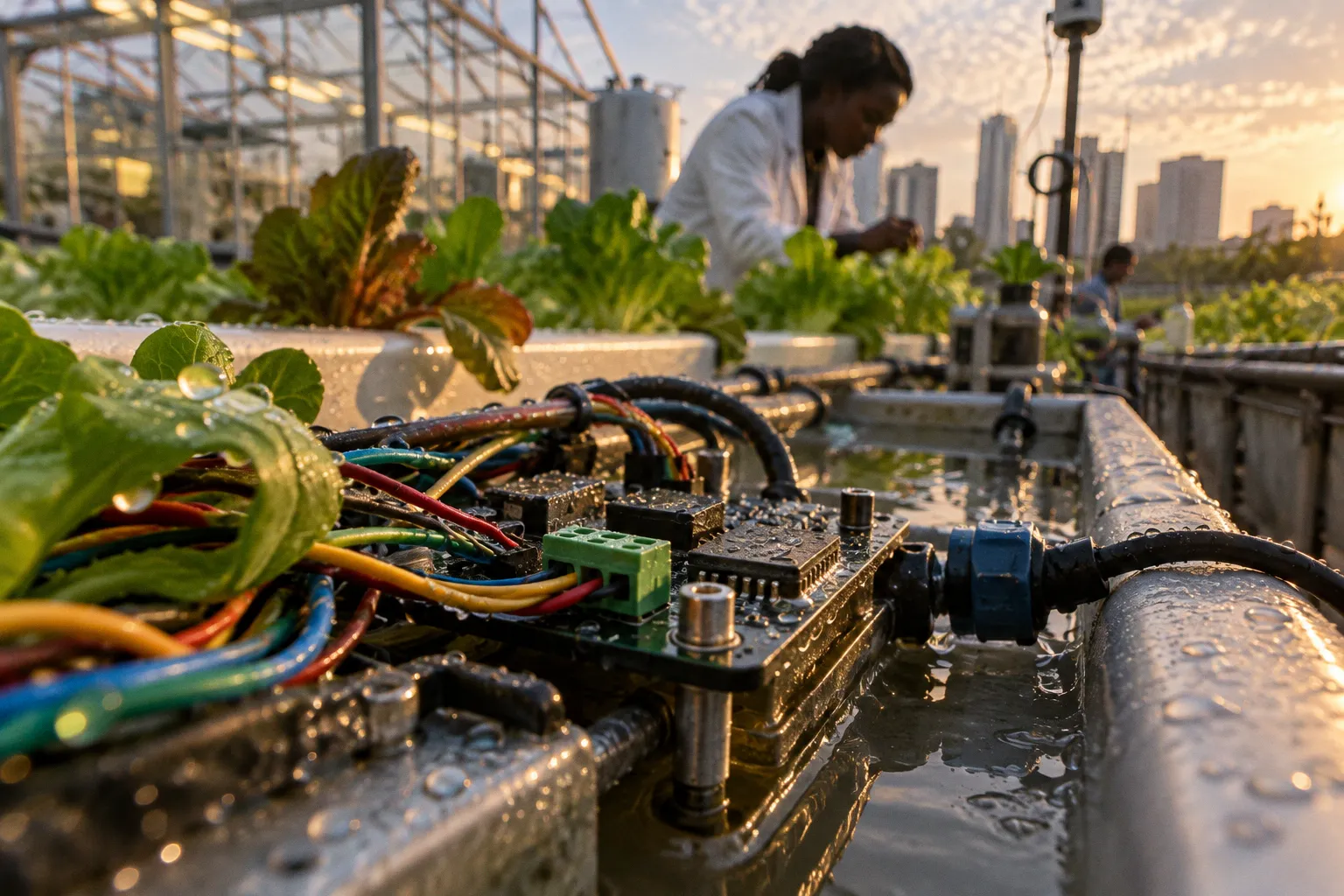
Modern Ghana's headline this week lands like a launch brief rather than a news report: "Green Entrepreneurship: Ghana's Opportunity To Fight Climate Change, Create Jobs And Reduce Poverty." Three verbs — fight, create, reduce — and each one quietly implies a business model. The question reshaping founder strategy right now: as similar threads run through News of Bahrain and the Oman Observer, where does the climate opportunity actually hide in plain sight?
Reading the Regional Signals Together
The Ghana framing is essentially jobs-plus-resilience. The Bahrain piece, by contrast, goes deep into specific technical bets. The author argues the country needs greater innovation depth behind its targets — net-zero by 2060, a 30% greenhouse gas cut by 2035 — and lays out a menu worth scanning: drone-assisted precision seeding for mangroves and seagrass, deep-sea water air-conditioning, 3D-printed restorative artificial reefs that dissipate wave energy, mineral carbonation turning captured carbon into construction blocks, and vertical microalgae farms that consume flue-gas CO₂ at industrial scale. That last one is the most worth sitting with, because it converts a captured emission into a feedstock rather than a liability.
The Oman Observer, meanwhile, points in the same direction a few days earlier — flagging an Environmental Innovation Center and a Green Branch Award as headline moments from Oman Climate Week.
What This Means for Your ClimateTech Pivot
Here is what I'd watch if you're building right now: the conversation has already moved past problem-acknowledgment into who-acts-first territory. When national targets sit ten or twenty years out, the founders who show up with deployable tech today tend to become the trusted partners when regulation eventually lands.
Two moves you can run this week. First, pull the headline climate commitments from any two markets you're considering and ask which one has the shortest distance between policy and procurement. Second, hunt for problems that are simultaneously public and private — mangrove restoration, for instance, doubles as a carbon sink and a natural storm-surge barrier, which means two budgets can fund the same project. That overlap is where early traction lives.
The Question to Sit With
Every story in this cluster lands the same way: someone, somewhere, decided climate is a market. When you read Modern Ghana's headline, the Bahrain innovation menu, and Oman's Climate Week summary together, the through-line is choice. Regions once described primarily in terms of vulnerability are now being described in terms of ventures.
For founders building now, that choice has a practical shape: where in your own market is the same reframe happening? Look for local press that names an opportunity — not a problem alone — and you've found a community already tilting toward backing you.
Three things to start with this week: one regional commitment worth tracking, one policy-to-procurement gap worth mapping, and one conversation worth having with a founder in a market five time zones away. ClimateTech is increasingly a cohort sport. Step into the room.