Climate hardware supply chain: a four-stage vetting project
Can your supplier build ten working prototypes, or only one impressive sample? Can they repeat the result when the design changes, the order grows, the installation moves outdoors, and a customer…
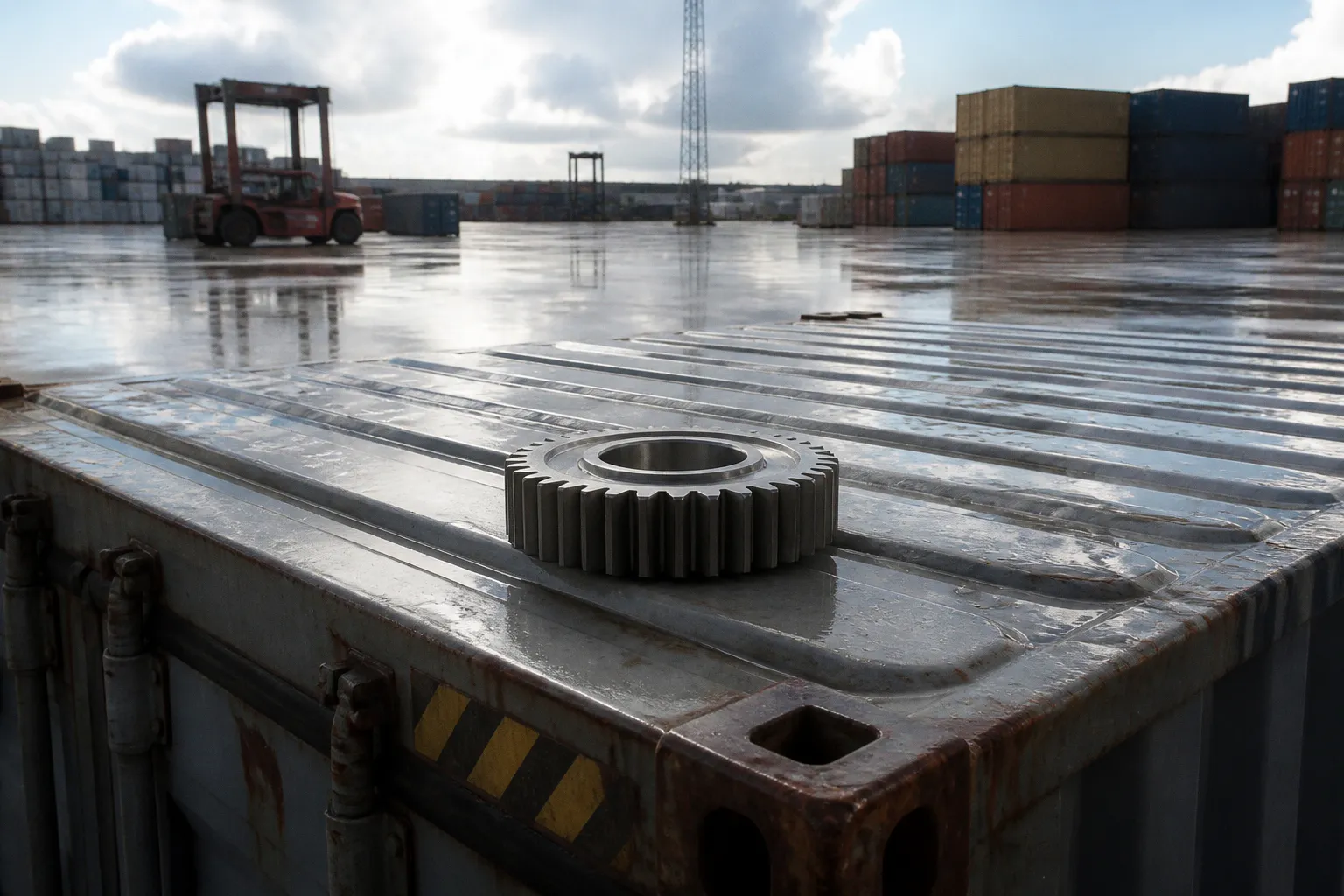
Can your supplier build ten working prototypes, or only one impressive sample? Can they repeat the result when the design changes, the order grows, the installation moves outdoors, and a customer asks for safety documentation?
Those questions sit at the center of climatetech hardware supplier vetting. A supplier can appear perfectly capable during an introductory call and still become the slowest, riskiest part of your product development cycle. The problem is rarely limited to manufacturing quality. It may involve weak engineering support, unclear component traceability, fragile finances, poor cybersecurity, limited production capacity, or a lack of experience with the physical conditions in which climate products operate.
For a climate startup, the supply chain is not a back-office concern. It is part of the product. If your sensor drifts in heat, your gateway cannot be replaced, or a contract manufacturer cannot provide the documents needed for a site approval, the customer experiences that as a product failure.
The good news is that we do not need to evaluate every supplier in the same way or solve every risk at once. A useful approach is to connect supplier decisions to the four technical stages of hardware development: Pre-Alpha, EVT, DVT, and PVT. Each stage asks a different question, and each requires a different level of evidence.
Start with the risk, not the supplier list
Early founders often begin by searching for a manufacturer that can make the whole product. That sounds efficient, particularly when the team is small and there is no technical co-founder to divide the work with. But “one supplier for everything” can quietly create a single point of failure.
A climate hardware product may depend on several distinct capabilities:
- enclosure design and fabrication;
- electronics assembly;
- sensors and microcontrollers;
- firmware development;
- battery or power-management components;
- connectivity hardware and gateways;
- calibration and testing;
- packaging, logistics, field installation, and service support.
One partner may be excellent at printed circuit board assembly but have no experience with outdoor enclosures. Another may manufacture durable metal parts but lack the quality systems needed for electronics. A third may offer a low unit price while relying on a subcontractor for the component that determines whether your device performs accurately.
Before collecting quotes, map the product’s dependency structure. For every major component or process, ask:
1. What happens if this supplier misses a delivery?
2. Can we replace the supplier without redesigning the product?
3. Is the component available from more than one manufacturer?
4. Does the supplier control the relevant tooling, firmware, test fixtures, or documentation?
5. Will a failure create a safety issue, a compliance problem, or only a schedule delay?
6. Does the customer require information about the component’s origin or environmental footprint?
This gives us a more useful definition of criticality. A low-cost fastener may be easy to replace. A specialized sensor, battery cell, gateway, or custom injection mold may determine whether the entire product can ship.
A simple risk map can divide suppliers into tiers:
| Supplier tier | Typical role | Main risk | Vetting emphasis |
|---|---|---|---|
| Tier 1 | Direct manufacturer or strategic assembly partner | Capacity, quality, continuity, engineering support | Site capability, financial health, quality controls, production records |
| Tier 2 | Component or process supplier used by your direct partner | Hidden dependency and limited visibility | Traceability, substitution rules, lead times, compliance |
| Tier 3 | Raw material, subcomponent, or upstream source | Environmental, geopolitical, and continuity exposure | Material origin, Scope 3 data, concentration risk, escalation plans |
The labels do not need to become a complicated procurement system on day one. Their purpose is alignment. We want to spend the most attention where a failure would be hardest to recover from.
The best supplier is not the one with the most polished sample. It is the one whose capabilities still hold when your product becomes more complicated.
The four stages of hardware validation
Climate hardware development moves through four sequential technical validation stages. They are not simply manufacturing milestones. Each stage changes what you should expect from a supplier and what evidence you should request.
1. Pre-Alpha: can the core idea work?
Pre-Alpha is the proof-of-concept stage. The product may use off-the-shelf parts, temporary enclosures, development boards, manual calibration, or an improvised power system. That is acceptable. The goal is to learn whether the technical principle works under realistic conditions.
At this point, supplier vetting should be lightweight but intentional. We are not yet selecting a long-term production partner. We are looking for suppliers who can help the team learn quickly without creating unnecessary lock-in.
For hardware prototype sourcing, ask suppliers to show:
- examples of similar components or fabrication processes;
- tolerance ranges and material options;
- whether they can make small quantities;
- how they handle design changes;
- what files and documentation you will receive;
- the difference between a prototype price and a future production price;
- which elements are made in-house and which are subcontracted.
A supplier who can produce a prototype but refuses to explain the process may be difficult to work with later. At the same time, we should not over-audit a small prototype shop as though it were a global manufacturing partner. The right question is whether the supplier is suitable for the learning objective in front of you.
At Pre-Alpha, keep the architecture replaceable where possible. Avoid building your first working demonstration around a proprietary component that the supplier alone can source. If a custom part is unavoidable, document its specifications, approved alternatives, tooling ownership, and expected replacement lead time.
The most valuable output of this stage is not a finished-looking device. It is a clearer understanding of what must become stable before engineering validation begins.
2. Alpha / EVT: can the design be engineered repeatedly?
EVT, or Engineering Validation Test, is where the product begins to move from technical experiment toward a defined engineering system. The team is testing whether the selected components, architecture, and manufacturing methods work together.
Supplier evaluation becomes more demanding here. You need evidence that the partner can maintain consistency across a small batch, not just deliver a one-off unit. The supplier should be able to discuss drawings, bills of materials, revision control, inspection methods, and test procedures without treating those documents as an afterthought.
A useful EVT conversation covers:
- how the supplier receives and controls design revisions;
- how nonconforming parts are recorded and quarantined;
- what incoming inspection is performed;
- which measurements are taken during assembly;
- how firmware or configuration is loaded;
- how test results are stored and linked to serial numbers;
- what happens when a component becomes unavailable;
- how quickly engineering questions receive a documented response.
This is also the stage to examine the supplier’s relationship with its own vendors. If your direct partner purchases a critical sensor from a single upstream source, that dependency belongs in your risk register even if you never speak to the sensor manufacturer yourself.
Ask for a bill of materials that distinguishes approved components from substitutions. “Equivalent” is not a sufficient technical definition for many climate products. A replacement sensor may have a different accuracy curve. A different battery cell may alter thermal behavior. A new microcontroller may require firmware changes or trigger a compliance review.
The design review should include the physical operating environment. Climate products may face dust, moisture, temperature variation, vibration, corrosion, unreliable connectivity, or difficult access for maintenance. A supplier who builds only for controlled indoor conditions may be a poor fit for a product deployed on rooftops, in agricultural fields, near industrial equipment, or inside energy systems.
3. Beta / DVT: can the product survive the real world?
DVT, or Design Validation Test, asks whether the design meets its intended performance and user requirements. This is where a climate startup should stop treating the supplier as a source of parts and start treating the relationship as part of the operational model.
The product should now be tested in conditions that resemble deployment. The supplier’s responsibility is not necessarily to design every test, but they should be able to support repeatable production, inspection, failure analysis, and controlled changes.
At DVT, look closely at:
- environmental and mechanical test support;
- calibration processes and calibration intervals;
- enclosure sealing and assembly controls;
- connector reliability and cable routing;
- battery handling and storage procedures;
- traceability of critical components;
- repair, rework, and return procedures;
- packaging for the actual transportation route;
- documentation needed for customer or site approvals.
B2B climate hardware pilots often slow down for reasons that have little to do with software. A customer may require a site access review, safety documentation, a method-of-change process, or a hazard analysis before installation. The project may involve procurement workflows that take longer than the technical build. If your supplier has never supported this type of deployment, the delay may appear only after the customer has committed internal resources.
That is why supplier interviews should include operational scenarios. Ask what information the partner would provide if:
- a field unit fails and must be replaced;
- a customer requests a change after installation;
- a safety reviewer asks how the device is isolated or maintained;
- a batch contains a recurring defect;
- a critical component is discontinued;
- an installer needs a revised mounting or wiring instruction.
You are listening for a practical operating rhythm: named owners, clear escalation, documented decisions, and an understanding that the device will exist in a customer’s physical environment.
4. Pilot / PVT: can production work at the intended scale?
PVT, or Production Validation Test, is the bridge between a validated design and a repeatable production process. The question is no longer simply whether the product works. It is whether the production line, suppliers, test fixtures, packaging, logistics, and service processes can work together.
This stage is often where optimistic assumptions meet capacity limits. A supplier may have enough time and attention for a prototype batch but not for a larger order. A process that works when an engineer is present at every station may become unreliable when production is handed to an operator team. A component with a long lead time may become the schedule constraint for the entire product.
Before committing to a production partner, clarify:
- available production capacity and the assumptions behind it;
- minimum order quantities and how they may change by component;
- expected lead times for common and critical parts;
- tooling ownership and maintenance;
- production ramp support;
- quality acceptance criteria;
- yield reporting and defect thresholds;
- warranty and replacement responsibilities;
- business continuity plans;
- the process for approving design or material changes.
There is no universal minimum order quantity across climatetech manufacturing partners. It varies by product category, material, tooling, component availability, and production method. Treat any early estimate as a working assumption that should be confirmed against the actual bill of materials and manufacturing process.
A PVT supplier should be able to show how production data will be captured. For a connected climate product, that may include serial numbers, firmware versions, calibration results, component lots, and final test status. The exact system can be simple at first, but the traceability logic should be clear.
How to evaluate a supplier beyond the sales call
A supplier’s presentation is useful for understanding how they want to be seen. It is not enough to understand how they operate. We need several forms of evidence, collected over time.
Capability evidence
Ask for relevant examples, but examine the similarity carefully. A supplier may have produced a large volume of consumer electronics while having no experience with outdoor deployments, long service intervals, or industrial installation constraints.
Look for evidence related to:
- comparable materials and environmental exposure;
- similar tolerances and assembly complexity;
- low-volume and ramp production;
- testing and calibration;
- field returns and corrective actions;
- regulated or safety-sensitive applications;
- engineering collaboration with early-stage customers.
A portfolio full of attractive product photographs tells us less than a clear explanation of how the supplier handled a defect, a component substitution, or a late design change.
Quality evidence
Quality control should be visible in the workflow, not just in a certificate folder. Ask how the supplier defines an acceptable unit and how they distinguish a process problem from an isolated defect.
Useful records may include:
- inspection plans;
- sample test results;
- nonconformance reports;
- corrective and preventive action records;
- first-article inspection documentation;
- calibration records for test equipment;
- change-control procedures;
- final acceptance criteria.
We should also agree on what happens when quality requirements are not met. Who pauses production? Who pays for rework? How are affected units identified? How quickly must the supplier notify you?
These details can feel overly procedural during the prototype stage. They become much more valuable when a customer is waiting for a deployment and the team needs to identify whether the issue affects one unit or an entire batch.
Financial and capacity evidence
Financial health is part of product continuity. A supplier under severe cash pressure may delay material purchases, reduce quality staffing, or prioritize a larger customer. You do not need to demand sensitive information casually, but you do need enough visibility to understand whether the relationship is stable.
Discuss:
- how long the supplier has operated;
- the share of revenue represented by customers of your size;
- planned capacity changes;
- dependence on a small number of upstream vendors;
- payment terms and material purchasing assumptions;
- what happens during a demand spike;
- how production is prioritized when capacity is constrained.
A small supplier can be an excellent early partner. The risk is not its size by itself. The risk is assuming that a partner built for small batches can absorb your growth without a transition plan.
Cybersecurity and data handling
Physical products increasingly depend on software, cloud services, remote diagnostics, and firmware updates. Supplier vetting therefore needs a technical security layer, even when the supplier’s main role is manufacturing.
Clarify:
- who can access design files and production systems;
- how files are transferred and stored;
- whether firmware is loaded by the supplier;
- how signing keys and credentials are handled;
- whether production systems are segmented;
- how incidents are reported;
- how obsolete files and devices are retired;
- whether subcontractors have access to your data.
For a connected device, a manufacturing partner may touch more sensitive information than expected. The supplier may handle device identities, configuration files, test data, or firmware packages. Define access boundaries early, before production pressure makes every shortcut feel necessary.
Building a supplier scorecard that people will actually use
A scorecard is helpful only if it supports a decision. It should not become a decorative spreadsheet with thirty columns that no one updates.
Start with a small set of weighted dimensions:
| Dimension | What we are trying to learn | Evidence to collect |
|---|---|---|
| Technical capability | Can the supplier build the product within the required tolerances and operating conditions? | Relevant builds, process description, engineering responses |
| Quality system | Can the supplier detect, document, and correct defects? | Inspection plans, test records, corrective-action examples |
| Capacity and continuity | Can production continue as volume, lead times, or demand change? | Capacity assumptions, lead-time data, contingency plans |
| Commercial fit | Can the relationship work at the startup’s current stage? | Prototype pricing, payment terms, tooling terms, scale assumptions |
| Compliance and safety | Can the supplier support required approvals and deployment constraints? | Certifications, material records, safety documentation |
| Cybersecurity | Can design, firmware, and production data be protected? | Access controls, incident process, file-handling procedures |
| Environmental and social performance | Can the supplier help us understand upstream impact and exposure? | Scope 3 data, environmental and social policies, audit information |
Use the scorecard to identify gaps, not to create a false sense of mathematical certainty. A supplier with a slightly lower total score may still be the better choice if its weakest area is easy to remediate. A supplier with a high average score but a severe single-point-of-failure risk may be unacceptable.
For critical suppliers, include a red-flag column. Examples include:
- refusal to identify key subcontractors;
- unexplained substitutions in the bill of materials;
- no documented revision control;
- inability to provide traceability for critical parts;
- unrealistic lead-time promises;
- reluctance to discuss defects or returns;
- dependence on one individual for technical knowledge;
- unclear ownership of tooling, firmware, or test fixtures.
We are not looking for perfection. We are looking for risks that are visible enough to manage.
ESG belongs in the supply chain conversation
Climate companies are often expected to understand not only the emissions avoided by their product, but also the environmental and social impact of making it. Supplier selection is where many of those questions become operational.
Frameworks such as the CDP Supply Chain Program, GRI 308 for environmental supplier assessment, GRI 414 for social supplier assessment, and TCFD or ISSB guidance including IFRS S2 can help structure the conversation around supply-chain exposure and Scope 3 emissions.
The practical starting point is not a polished sustainability report. It is a clear set of questions:
- What materials are central to the product?
- Which suppliers have the greatest environmental impact?
- Can the supplier provide data about energy use, materials, waste, and logistics?
- Are labor and safety practices monitored?
- Are there known risks connected to mineral sourcing or upstream processing?
- How much of the product’s footprint comes from transport, packaging, or replacement cycles?
- What happens when a supplier cannot provide reliable data?
For an early-stage company, the answer may initially be incomplete. That is normal. The important thing is to record the limitation, define the next data request, and avoid presenting estimates as verified facts.
Sustainable supplier selection also involves durability. A cheaper component that fails early can create replacement shipments, site visits, waste, and customer distrust. Environmental performance is connected to quality and service life, not separate from them.
Scope 3 work becomes useful when it changes a sourcing decision, a component choice, or a service model—not when it remains a report that no operator can act on.
Designing around single points of failure
A dual-sourcing strategy is often discussed as though every part should have two suppliers from the beginning. That is rarely practical for a young climate company. It can increase cost, slow learning, and force premature standardization.
A better approach is to prioritize redundancy where failure would stop the business.
For each critical component, document:
- the primary supplier;
- an alternative source or substitute;
- the redesign effort required to use the alternative;
- the expected replacement lead time;
- available inventory or safety stock assumptions;
- the validation required before substitution;
- the person responsible for monitoring the risk.
Some forms of resilience are technical rather than contractual. You may be able to design a board that supports more than one sensor, use standard communication protocols, separate the gateway from the sensing unit, or specify an enclosure that can be manufactured by more than one process.
The goal is not to eliminate every dependency. The goal is to know which dependencies are intentional and which have appeared accidentally.
This is especially important for components that look ordinary but are difficult to replace: connectors, adhesives, seals, battery-management parts, specialized coatings, custom tooling, and test equipment. A product can be technically open-source and still be operationally dependent on one manufacturer.
Turning vetting into an operating rhythm
Supplier evaluation should not end when the contract is signed. Conditions change as the product moves from prototype to deployment. A supplier may add a subcontractor, change a material, lose a key engineer, or face a capacity constraint.
Create a review rhythm that matches the stage of the business:
- During Pre-Alpha, review prototype quality, responsiveness, and documentation.
- During EVT, review revision control, process repeatability, and component dependencies.
- During DVT, review field-related testing, traceability, safety support, and failure analysis.
- During PVT, review production yield, lead times, capacity, corrective actions, and continuity plans.
- After launch, review returns, replacement rates, material changes, environmental data, and customer-impacting incidents.
Keep the meeting practical. One page is often enough: current risks, changes since the last review, open actions, and decisions needed. The purpose is to keep the relationship navigable as the product becomes real.
A supplier should also know how your company makes decisions. If every design change arrives as an urgent message from a different founder, even a capable partner will struggle. Assign one operational owner, define who approves engineering changes, and keep a shared record of the current bill of materials and production revision.
This internal alignment is easy to overlook. Supplier risk is not only an external problem. It grows when the startup itself has unclear ownership, undocumented decisions, or shifting requirements.
A practical sequence for the next two weeks
If your climate startup is beginning supplier selection, you do not need a full procurement department to make progress. You need a focused sequence.
1. Map the product’s critical dependencies.
List the components and processes that could stop production, create a safety concern, or require a major redesign if they fail.
2. Place suppliers into risk tiers.
Separate direct strategic partners from upstream component and material dependencies. Do not let a direct supplier’s confident presentation hide its own subcontracting structure.
3. Match the vetting depth to the validation stage.
A Pre-Alpha prototype shop does not need the same review as a PVT manufacturing partner. But every stage should produce the evidence needed for the next one.
4. Request process evidence, not only references.
Ask to see how the supplier handles revisions, defects, testing, traceability, and substitutions. The operating process is usually more revealing than the customer logo list.
5. Choose one critical dependency for a resilience plan.
Identify a backup, a qualified substitute, or a design change that reduces lock-in. Start with the component whose failure would have the largest customer impact.
6. Add ESG and security questions before they become urgent.
Early answers may be partial. That is still better than discovering during a customer review that no one knows where a critical material came from or who can access production firmware.
7. Record assumptions with an owner and a review date.
Lead times, capacity, component availability, and environmental data all change. An assumption that is not revisited becomes a hidden risk.
The resulting system can be modest: a dependency map, a supplier scorecard, a current bill of materials, and a short risk register. What matters is that the documents support decisions rather than exist for their own sake.
The supplier is part of the product
A climate hardware company is building more than a device. It is building a chain of evidence that the device can be made, deployed, maintained, and trusted.
That chain develops in stages. Pre-Alpha tests the idea. EVT tests the engineering system. DVT tests the product in conditions closer to reality. PVT tests whether production can become repeatable. Supplier vetting should mature alongside those questions.
If we evaluate a supplier only on price and prototype appearance, we are selecting for the easiest moment in the relationship. If we evaluate capability, continuity, quality, compliance, cybersecurity, and environmental exposure together, we have a better chance of building a company that can move from promising demonstration to dependable climate infrastructure.
Your next action is simple: take the current bill of materials and mark the three components that would be hardest to replace. Start the conversation there.