EnergyLab Shifts Focus to Hardware-First ClimateTech for 2026 Accelerator Cohort
ESD News reports that EnergyLab has selected 10 startups for its 2026 Climate Solutions Accelerator, with funding from the Australian Renewable Energy Agency (ARENA).
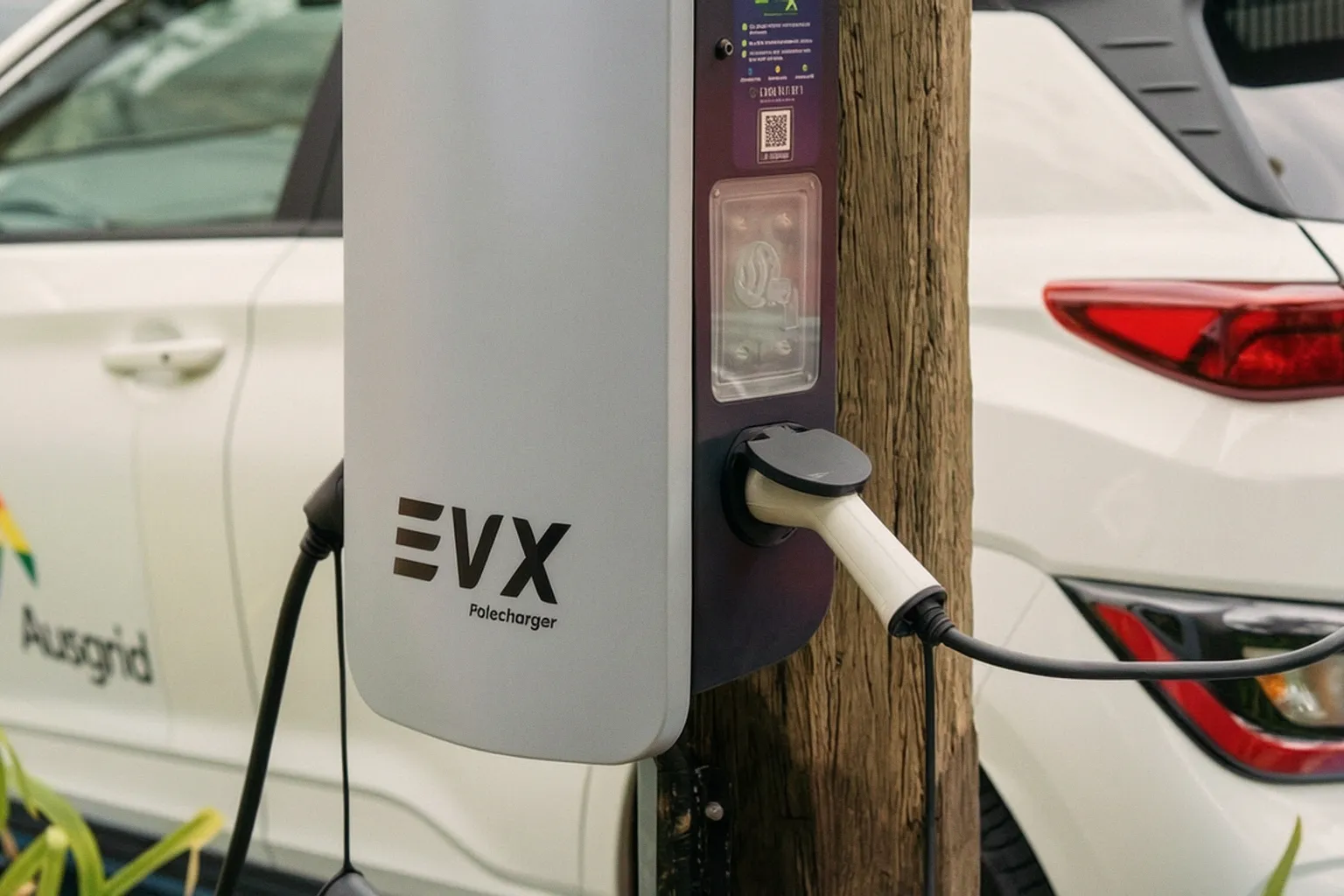
For the first time, the full cohort consists of hardware companies. Their focus areas include EV charging, energy management, and industrial decarbonisation. For ClimateTech founders, the signal is direct: physical infrastructure is moving back into the centre of the scaling equation.
The constraint is not ideation. It is deployment.
A hardware-only cohort changes the operating model.
Software can often reach a first customer with limited capital expenditure. Hardware cannot. It requires engineering capacity, manufacturing or integration partners, field testing, procurement cycles, installation work, and service support. Each layer adds a potential bottleneck.
That does not make hardware a better category by default. It makes the unit economics harder to hide.
For founders evaluating an accelerator, the relevant question is not whether the programme supports climate hardware. The question is whether it improves throughput from prototype to commercial deployment. If the answer is yes, the programme may reduce the time spent in technical validation. If the answer is no, it risks becoming another layer of activity between the company and its first paying deployment.
EnergyLab’s cohort covers a broad set of physical climate systems. EV charging, energy management, and industrial decarbonisation each involve different buyers, assets, approval processes, and capital requirements. A founder should not treat “hardware” as one market. It is an operating category, not a customer segment.
What founders should verify before applying
The public announcement confirms the cohort composition and funding source. It does not establish the programme’s commercial terms, selection criteria, or deployment outcomes. Those unknowns matter.
Use a five-parameter check:
1. Capital structure. Determine whether support is grant funding, equity, or another instrument. The effect on burn rate and ownership is different in each case.
2. Deployment access. Ask whether the programme provides access to real sites, industrial customers, utilities, or other buyers. Introductions are not deployments. A pilot without a conversion path can consume engineering capacity without improving revenue.
3. Technical milestone. Define the output expected by the end of the programme. It should be measurable: validated performance, completed integration, signed deployment, or another concrete result. “More market readiness” is not a milestone.
4. Procurement cycle. Map the time between technical acceptance and purchase order. In climate infrastructure, that interval can become the primary cash-flow bottleneck.
5. Follow-on capital. Check whether the company will need additional funding immediately after the programme. A hardware startup that reaches a prototype milestone but cannot finance production has improved its technology without improving its business.
This is where ARENA’s role becomes relevant to the funding stack. The announcement identifies the agency as the programme’s funder. That confirms public support for the accelerator, but it does not confirm funding for each startup or guarantee commercial scale-up. Founders and investors should keep those claims separate.
The scaling test
The cohort is important because it places hardware at the centre of an accelerator built around climate solutions. It is not proof that every hardware model in the sector is investable.
The practical test is binary:
- Proceed if the programme can reduce a defined technical or commercial bottleneck, provide a credible route to deployment, and preserve acceptable unit economics.
- Do not proceed if the offer is limited to visibility, generic mentoring, or introductions without a measurable path to revenue and follow-on capital.
For ClimateTech founders, the operating rule is simple. Join an accelerator to increase throughput. Do not join to postpone the hard part.