King Salmon Project Opens Applications for ClimateTech Pilots at Brooklyn Army Terminal
The Tokyo Metropolitan Government has opened applications for the King Salmon Project, in partnership with the Los Angeles Cleantech Incubator (LACI).
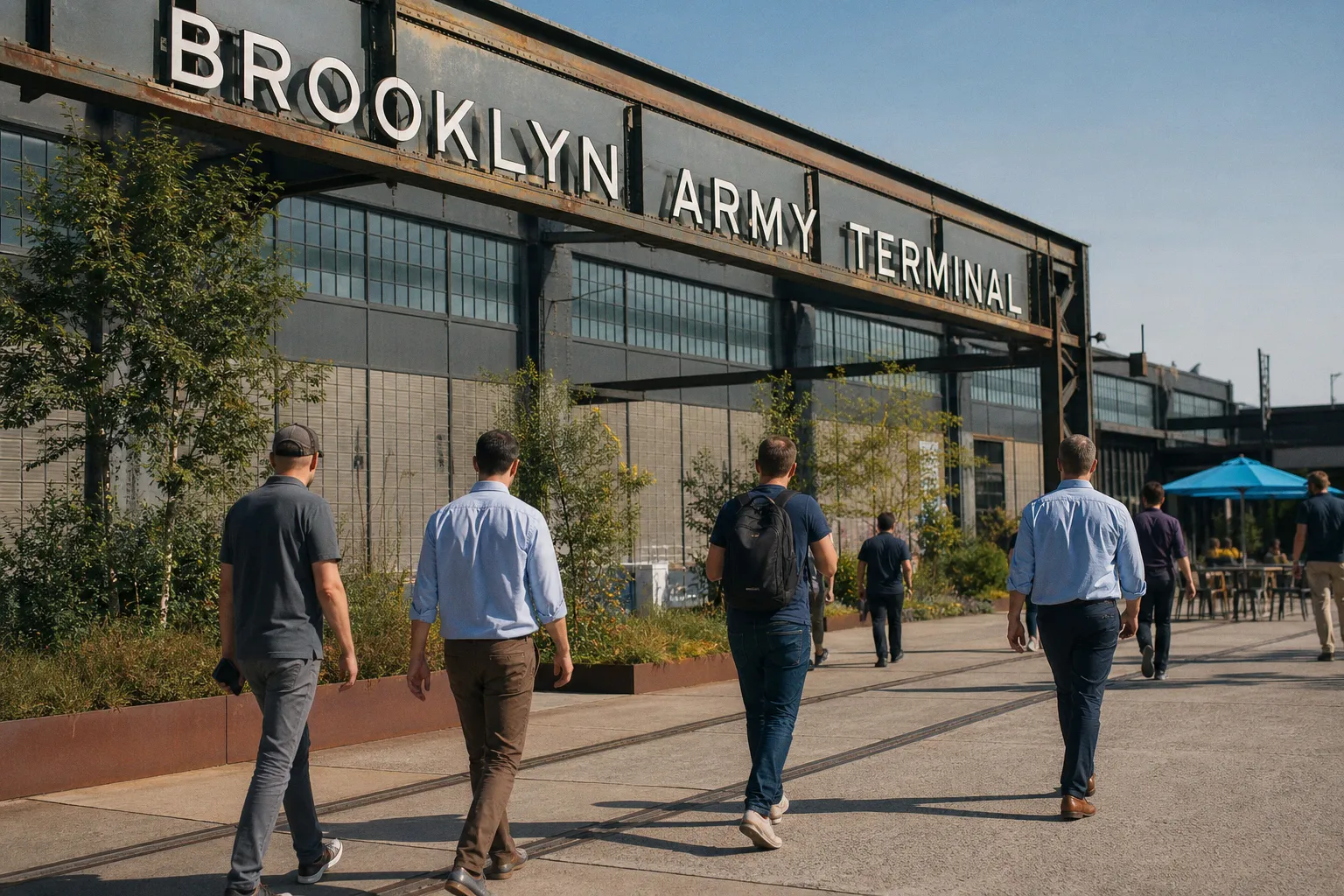
The program is designed to move climate-tech startups from product claims to pilot evidence through access to real-world infrastructure. For founders, the value is not another accelerator badge. It is a potential reduction in the deployment bottleneck.
The program connects Tokyo’s startup ecosystem with New York City infrastructure through Pilots at BAT, a pilot demonstration programme based at the Brooklyn Army Terminal in Sunset Park. The project is part of a broader collaboration involving the Tokyo Metropolitan Government, the New York City Economic Development Corporation and LACI.
The offer is pilot capacity, not general funding
The available support is operational. Selected startups can conduct pilot demonstrations at Brooklyn Army Terminal and receive access to BAT’s infrastructure, alongside tailored support for implementation and potential global expansion.
That distinction matters for unit economics. A climate-tech startup rarely fails because the prototype cannot be shown. It fails because the prototype cannot be tested in a relevant operating environment at a cost and speed compatible with the next financing milestone.
The King Salmon Project appears structured around that gap:
1. Tokyo Metropolitan Government handles the preliminary screening.
2. Applicants are assessed through document review and interviews.
3. One startup will be selected.
4. Later programme steps will be administered by LACI.
5. The selected company receives support for implementing the pilot.
The source does not state that the programme provides a grant, equity investment or direct procurement contract. Founders should therefore model the opportunity as pilot infrastructure and implementation support, not as non-dilutive capital.
The main diligence question is deployment fit
The application should be treated as a deployment case, not a pitch-deck exercise. The relevant question is whether the startup can produce measurable evidence from the available site.
Before applying, founders should isolate four parameters:
- Site dependency. Does the technology require industrial, port, logistics, energy or manufacturing infrastructure? BAT is a modern industrial campus and innovation hub, not a generic office accelerator.
- Pilot throughput. How many units, users, operating cycles or data points can the team generate during the pilot?
- Implementation load. What must the host provide, and what must the startup bring? Every unpriced installation, integration or compliance task becomes burn rate.
- Scale signal. Which result would change the next decision: a customer contract, a technical validation, a lower cost per unit or evidence for expansion into another city?
The programme description highlights access to BAT infrastructure and tailored support. It does not specify the pilot duration, budget, commercial terms, technical acceptance criteria or ownership of resulting data. Those unknowns are not minor. They determine whether the pilot improves the company’s financing position or simply consumes engineering capacity.
If the startup has a clear operating requirement and a defined evidence target, the programme may address a real bottleneck. If the company is still searching for a use case, the infrastructure will not solve the problem. It may increase coordination cost.
What applicants should verify before committing
The Tokyo Metropolitan Government is hosting an online information session covering the programme and application process. The application guidelines contain the detailed eligibility requirements. The source says the deadline for Step 1 must be met, but the available material here does not provide the date.
That makes the information session and guidelines the first control point. Applicants should verify:
- eligibility and geographic requirements;
- the Step 1 submission deadline;
- what infrastructure is actually available at BAT;
- whether the pilot requires the startup to fund installation or operations;
- what LACI’s later-stage support includes;
- how pilot success will be assessed;
- whether the project is expected to validate deployment in New York, Tokyo, or both.
The programme’s stated objective is to help climate-tech startups pilot solutions in an urban environment and support global expansion. That objective is useful only if the pilot produces evidence that transfers to the company’s target market. A technically successful demonstration with no route to repeatable deployment is activity, not scale.
The decision is binary:
- Apply if the company has a defined pilot hypothesis, measurable output and sufficient runway to execute.
- Do not apply yet if the main gap is product definition, customer selection or basic technical readiness.
For climate-tech founders, the opportunity is credible as an infrastructure pathway. Its value will depend on the terms that sit behind the application form.