LLC to C-Corp transition: what changes for climate startups
Are you building a climate company as an LLC because it is fast, flexible, and sensible for an early R&D phase—but now a venture fund is asking for a Delaware C-Corporation before it will invest?
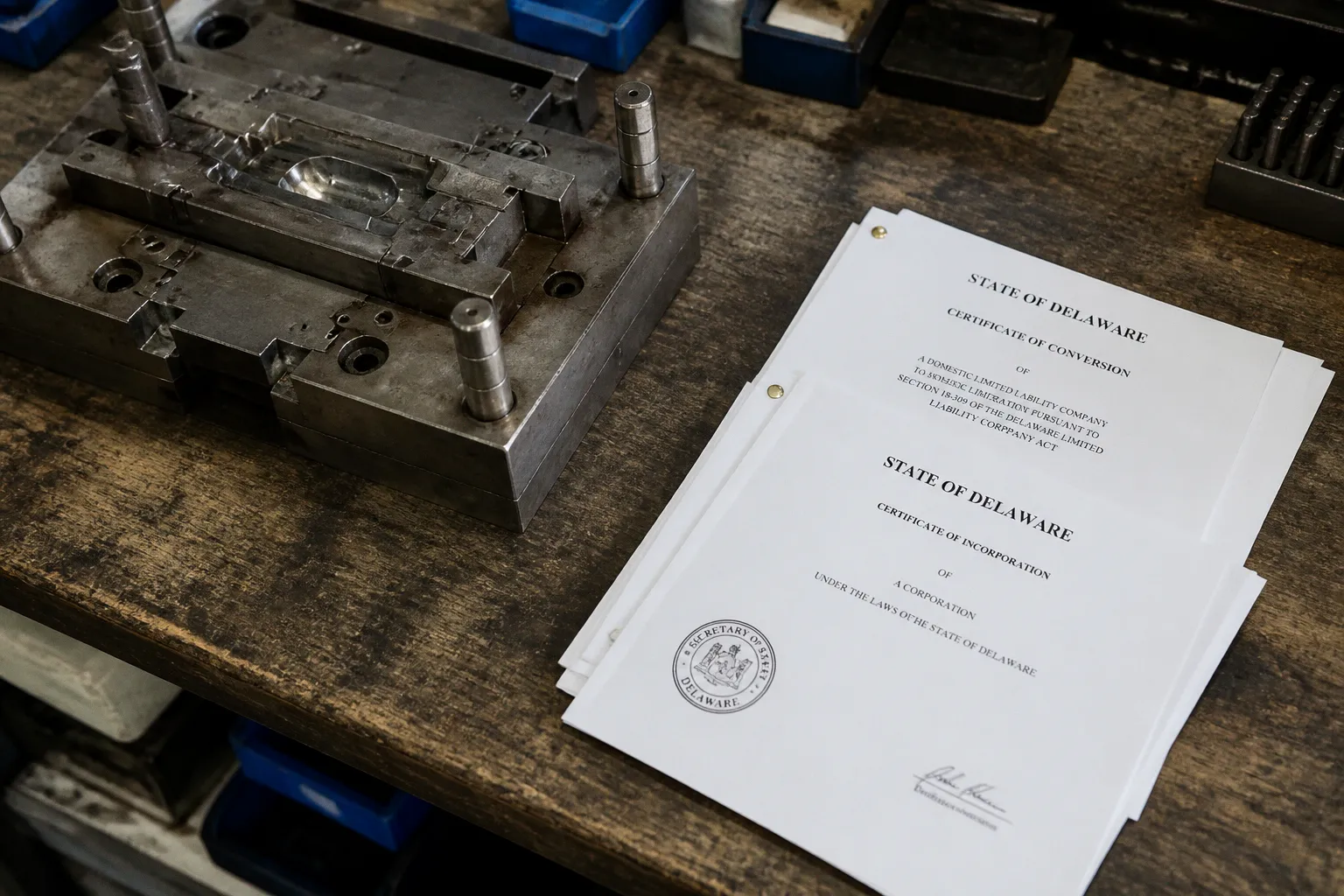
That moment can feel like an administrative detour when your real work is happening in the lab, on a pilot site, or inside a messy first product. But for many climate startups, the LLC to C-Corp transition is not simply a change of paperwork. It changes how you raise capital, issue equity, manage taxes, structure governance, and preserve future options for founders and employees.
The good news is that this transition does not have to interrupt product development. With the right timing and a clean record of your assets, liabilities, intellectual property, and ownership, we can treat incorporation as an operating project rather than a last-minute legal scramble.
Why climate startup investors usually ask for a Delaware C-Corp
An LLC is often a practical starting point for a climate startup. Early teams may be testing a scientific hypothesis, applying for grants, developing a first prototype, or validating a business model with a small number of customers. At that stage, pass-through taxation can be useful because early R&D losses generally flow through to the members rather than staying inside a separate corporate tax structure.
That flexibility matters when there is no institutional capital yet and the company is still finding its shape.
The structure becomes harder to live with once you begin approaching venture funds. Institutional investors overwhelmingly expect startups to be organized as Delaware C-Corporations. This is not because Delaware is magically better at climate technology. It is because venture funds, their lawyers, and their limited partners already understand the structure, its governance conventions, and its treatment under fund tax rules.
A Delaware C-Corp gives investors a familiar framework for:
- preferred stock financing rounds;
- board representation and protective provisions;
- standardized investor rights;
- employee stock option plans;
- convertible instruments that convert into corporate stock;
- clean capitalization tables;
- future financing rounds and acquisitions.
For a climate company, that familiarity can make a meaningful difference. Your investor is already navigating technical uncertainty, hardware risk, regulatory timelines, customer adoption, and long commercialization cycles. They usually do not want the legal structure to introduce another layer of uncertainty.
The climate-specific reason structure matters
Climate companies often have more complicated asset and development histories than a typical software startup.
You may have:
- university or government-funded research;
- grant restrictions attached to equipment or intellectual property;
- prototypes built before the company was formed;
- founder-owned patents or designs;
- pilot agreements with municipalities or utilities;
- manufacturing relationships that involve tooling or deposits;
- carbon, energy, or environmental data collected under specific permissions;
- a mixture of software, hardware, and scientific know-how.
An LLC-to-C-Corp conversion needs to account for that history. The question is not only whether investors will accept the new entity. We also need to understand what exactly is moving into it, who owns it today, and whether any grant, license, contract, or financing document limits the transfer.
This is where alignment becomes more useful than speed. The fastest filing is not necessarily the fastest route to a fundable company if the cap table, IP chain of title, or grant obligations remain unclear.
A C-Corp is not a badge of seriousness. It is the operating structure investors need when your company is ready to issue standard equity and carry institutional capital.
What actually changes in the LLC to C-Corp transition
Founders sometimes imagine the conversion as a single filing: submit documents, receive a new certificate, and continue as before. Legally, the process can be straightforward. Operationally, several parts of the company may change at once.
The main shifts usually involve ownership, governance, tax reporting, equity compensation, and documentation.
Ownership moves from membership interests to shares
An LLC has members who hold membership interests, often under an operating agreement. A C-Corporation has stockholders who hold shares under a certificate of incorporation, bylaws, board approvals, and stock purchase or equity grant documents.
That means the company needs a clear translation between the old and new ownership records.
If three founders owned an LLC in different percentages, the conversion documents should establish how those interests become shares. If advisors, contractors, or early employees received LLC units or promises of ownership, those arrangements need to be reviewed rather than copied casually into a new spreadsheet.
A clean capitalization table should answer:
- who owned the LLC immediately before conversion;
- what each person receives in the C-Corp;
- whether any interests are vested or subject to repurchase;
- whether promised equity was documented;
- whether any convertible notes, SAFEs, warrants, or side letters exist;
- whether the company intends to create an option pool before or after financing.
This is especially important in climate hardware, where founders may have contributed equipment, intellectual property, lab work, or early capital instead of receiving identical cash compensation.
Governance becomes more formal
An LLC may be managed relatively informally, depending on its operating agreement. A Delaware C-Corp requires a board of directors, officers, corporate records, and formal approvals for major actions.
That does not mean every decision needs a board meeting. It does mean that the company should develop a reliable habit of documenting decisions that affect ownership, financing, compensation, and IP.
At a minimum, the transition usually requires attention to:
1. The certificate of incorporation.
2. The bylaws.
3. Initial board and stockholder approvals.
4. Appointment of officers.
5. Stock issuance records.
6. Intellectual property assignments.
7. Employee and contractor equity documentation.
8. A new equity incentive plan, if one is being created.
9. Bank, tax, payroll, and vendor records.
10. Contracts that identify the old LLC as a party.
That list can feel heavier than the LLC structure you are leaving. It is also the infrastructure that allows a fund, acquirer, or strategic partner to understand the company without reconstructing its history from email threads.
Tax reporting changes with the entity
The tax consequences depend on how the LLC is taxed and how the conversion is implemented. A conversion from an LLC to a C-Corp can generally be structured as a tax-free transaction under IRC Section 351, but that outcome is not automatic.
One central condition is that liabilities assumed by the corporation must not exceed the tax basis of the assets transferred. If the company has debt, equipment, accrued obligations, or other liabilities that do not align with the tax basis of its assets, the conversion may create tax exposure.
That is one reason a founder should not treat the transition as a form-filling exercise. Before the conversion, we want a clear picture of:
- cash and cash equivalents;
- equipment and inventory;
- capitalized development costs, if any;
- outstanding loans;
- unpaid founder expenses;
- accounts payable;
- grants and restricted funds;
- intellectual property valuation and ownership;
- any related-party transactions.
Your accountant and startup counsel should coordinate here. Counsel can prepare the legal conversion documents, but the tax treatment depends on the company’s actual balance sheet and tax position.
How the Delaware conversion process works
The precise mechanics depend on the LLC’s formation state, tax classification, operating agreement, and the structure you want after conversion. In a statutory conversion, the company typically files a Certificate of Conversion together with a Certificate of Incorporation in Delaware.
The Delaware statutory conversion fee in the research underlying this guide is $164, and the minimum filing fee for the Certificate of Incorporation is $109. Those state fees are only one part of the budget. Typical legal costs for an LLC-to-C-Corp conversion can range from $5,000 to $15,000, depending on the company’s records, ownership complexity, financing history, and IP situation.
The filing itself is rarely the difficult part. The work before and after filing is where most of the value sits.
Before filing: reconstruct the company’s real history
A young climate startup may have formed quickly and accumulated important assets informally. Before converting, gather the documents that show what the company owns and owes.
A useful working folder should include:
- the LLC operating agreement and amendments;
- member contribution records;
- prior tax returns;
- bank statements and debt agreements;
- grant agreements and reporting obligations;
- patent, trademark, software, and data ownership records;
- founder and contractor invention assignments;
- customer and pilot contracts;
- equipment purchase records;
- convertible notes or other financing instruments;
- promises of equity made to employees, advisors, or collaborators.
This is not busywork. If a founder built the original technical system before incorporation, the company may need a written assignment to establish that the new corporation owns the relevant IP. If a university owns part of a patent, the new entity may need an updated license or consent. If a grant funded a prototype, the grant agreement may contain restrictions that should be reviewed before assets or contracts move.
During filing: choose the corporate architecture deliberately
The certificate of incorporation establishes more than the company’s name and registered agent. It also sets out the authorized stock structure, including the number and type of shares the corporation may issue.
Founders should align this document with the near-term financing plan. A company preparing for a priced venture round may need authorized common and preferred stock provisions that counsel can adapt to the financing strategy. A company beginning with a convertible instrument may need a simpler initial setup, but it should still avoid creating a structure that will need to be rebuilt before the next raise.
The goal is not to predict every future financing. It is to avoid obvious friction:
- too few authorized shares;
- unclear founder stock issuance;
- missing vesting or repurchase terms;
- no workable option pool plan;
- inconsistent names or addresses across documents;
- ownership records that do not match the conversion schedule.
After filing: make the new entity real in daily operations
Once the C-Corp exists, update the systems that make the company function.
That may include:
- opening or updating the corporate bank account;
- obtaining or confirming the corporation’s tax identification details;
- moving contracts to the new entity where required;
- updating invoices and purchase orders;
- changing payroll and contractor records;
- transferring domain names, software accounts, and equipment;
- confirming insurance coverage;
- updating grant records;
- issuing stock certificates or electronic records;
- adopting an equity incentive plan;
- recording board and stockholder approvals.
For a software climate startup, this may mean transferring cloud accounts, repositories, data-processing agreements, and customer contracts. For a hardware company, it may include equipment leases, prototype ownership, manufacturing deposits, tooling, warehouse arrangements, and field-test agreements.
The transition is complete when the company’s records, not only its state filing, reflect the new structure.
The IRC Section 351 question: when is the conversion tax-free?
IRC Section 351 is often part of the planning conversation because it can allow property to be transferred to a corporation without immediate recognition of gain when specific conditions are met.
The phrase to hold onto is specific conditions.
A founder may transfer assets such as cash, equipment, intellectual property, or other property into the new corporation in exchange for stock. But the tax treatment needs to be evaluated alongside the company’s liabilities and basis in its assets. If assumed liabilities exceed the tax basis of the transferred assets, the transaction can create a tax issue rather than a clean rollover.
This becomes more important for climate startups that have spent heavily before revenue. A company may own expensive lab equipment, inventory, or prototype materials while carrying loans, unpaid obligations, or liabilities connected to grant-funded work. The balance between those items should be understood before documents are signed.
A practical preparation sequence looks like this:
1. Prepare an asset and liability schedule. Separate cash, equipment, IP, inventory, receivables, debt, payables, and restricted funds.
2. Confirm tax basis. Your accountant should identify the relevant basis for assets being transferred, rather than relying on purchase price or current replacement value.
3. Review the operating agreement. Check how conversion approval works and whether member consent thresholds apply.
4. Trace ownership of IP. Make sure every founder, employee, contractor, university, and collaborator assignment is accounted for.
5. Model the post-conversion cap table. Show founder stock, existing investors, promised equity, and any planned option pool.
6. Coordinate legal and tax documents. The conversion agreement, stock issuance, assignments, and tax analysis should tell the same story.
7. Document approvals. Keep member, board, and stockholder consents with the company’s permanent records.
The right question is not, “Can we use Section 351?” It is, “What facts make Section 351 available for this company, and what needs to be corrected before we rely on it?”
QSBS: the incentive many climate founders discover too late
Qualified Small Business Stock, or QSBS, is one of the major reasons founders and investors pay attention to the C-Corp structure. The benefit is available exclusively to qualifying C-Corporation shares. It does not apply to LLC membership interests.
Under Section 1202, the potential federal capital gains exclusion is generally described as the greater of $10 million to $15 million, depending on the applicable rules and company circumstances, or 10 times the shareholder’s adjusted cost basis. The exact result depends on eligibility, issuance details, business activity, shareholder status, and the rules in effect when the shares are sold.
The structural point is simpler: an LLC interest is not QSBS. C-Corp stock may qualify if the company and the shares meet the requirements.
The holding period does not travel backward
One of the most important details in an LLC-to-C-Corp transition is the QSBS holding period.
The five-year holding period required for a full federal QSBS exclusion begins on the date the C-Corp stock is issued upon conversion. Time spent operating as an LLC does not count toward that five-year period.
That means a company founded as an LLC in 2021 and converted into a Delaware C-Corp in 2025 does not generally treat the 2021 founding date as the start of the QSBS clock for the new corporate shares. The relevant holding period begins with the stock issuance at conversion.
The supplied research also identifies a three-year period for partial exclusion and a five-year period for 100% exclusion under the applicable expanded provisions. Because QSBS rules can change and eligibility is highly fact-specific, founders should have their tax advisor confirm which rules apply to the company, the issuance date, and each shareholder.
The LLC years may help you build the science, the product, and the first customer relationships. They do not automatically become QSBS holding years once you incorporate.
Why timing matters for founder stock and options
If you are close to a financing round, employee equity grants, or a major valuation change, the timing of the conversion deserves careful attention.
Founder stock issued at conversion may have a different tax and QSBS timeline from options granted later. An option recipient generally has separate questions about when the option is exercised, what type of option it is, and whether the resulting shares qualify. The company’s valuation and documentation also matter.
This is not a reason to rush into a C-Corp before the business is ready. It is a reason to avoid postponing the decision until the night before a term sheet deadline.
Build a timeline that includes:
- the expected financing date;
- the date investors need the Delaware entity;
- founder stock issuance;
- option pool creation;
- employee and advisor grants;
- anticipated valuation changes;
- grant and contract renewal dates;
- the company’s tax year.
The aim is to make the corporate structure support the next phase of value creation, not to manufacture a tax outcome without checking the underlying facts.
When should a climate startup convert from an LLC?
There is no universal conversion date. The right timing depends on the company’s financing path, tax position, ownership complexity, and operating maturity.
Still, several signals commonly point toward conversion.
Convert before institutional venture diligence becomes urgent
If you know you will approach institutional venture funds, starting the conversion before formal diligence is usually easier than waiting for an investor to make it a closing condition.
A fund may ask for:
- a Delaware C-Corp;
- a complete capitalization table;
- properly issued founder shares;
- a board structure;
- a stock option plan;
- invention assignment agreements;
- a clean record of prior financings;
- evidence that the company owns the IP it is commercializing.
Each item can be addressed under pressure, but the pressure is expensive. It pulls founders away from fundraising and product work precisely when both need attention.
Convert before issuing complex equity
An LLC can make early ownership arrangements feel easy. A founder can add a member, promise a percentage, or document a profit interest in a way that seems proportionate to the moment.
Those arrangements may not translate neatly into corporate stock, options, or preferred shares. If you expect to grant meaningful equity to employees, technical cofounders, advisors, or early executives, a corporate structure may make the documentation clearer.
This is particularly relevant when recruiting a technical cofounder. A candidate joining before conversion may negotiate an LLC interest, while the same candidate joining after conversion may receive restricted stock or options. The economic intent can be similar, but the legal and tax mechanics are different.
Consider the company’s tax year
Executing the conversion on the first day of the taxable year—January 1—can reduce administrative overhead. It may eliminate the need to file a stub-year partnership tax return alongside a separate corporate return for the same year.
That does not make January 1 the right date for every company. A financing deadline, grant requirement, or investor process may justify another date. But if the business has flexibility, tax-year alignment can make the transition easier to administer.
For a company with a non-calendar tax year, the same principle should be evaluated against that company’s actual reporting cycle.
Do not convert only because it sounds more venture-backed
A C-Corp creates more formal obligations. If your company is still validating a concept, has no near-term institutional financing plan, and benefits from pass-through treatment, staying as an LLC may be reasonable.
The decision should connect to a real operating milestone:
- an institutional fundraising process;
- a planned option program;
- a major commercial partnership;
- a need for standard preferred stock;
- a strategic acquisition pathway;
- a desire to preserve potential QSBS eligibility;
- a governance structure that no longer fits the LLC.
Structure should follow the company’s next chapter. It should not become a performance of ambition.
Budgeting for the transition
The state filing fees are visible, so founders often focus on them first. The larger budget question is the legal and accounting work required to make the transition reliable.
The Delaware statutory conversion filing is listed at $164, with the Certificate of Incorporation carrying a minimum filing fee of $109. Typical legal conversion costs can range from $5,000 to $15,000. A simple company with two founders, no outside financing, clean IP assignments, and a straightforward balance sheet may sit toward the lower end. A company with grant funding, multiple contractors, convertible instruments, equipment financing, and several ownership promises will require more review.
A useful budget separates the work into categories:
| Workstream | What it covers | Why the cost varies |
|---|---|---|
| Delaware filings | Certificate of Conversion and Certificate of Incorporation | Filing choices, expedited processing, and state requirements |
| Corporate documents | Bylaws, consents, board structure, officer appointments | Number of founders, investors, and approval layers |
| Cap table conversion | Translating LLC interests into corporate shares | Existing promises, vesting, notes, SAFEs, and disputed records |
| IP and contract review | Assignments, licenses, grants, pilots, vendor and customer agreements | Number of contributors and transfer restrictions |
| Tax analysis | Section 351 treatment, liabilities, basis, reporting | Debt, assets, tax classification, and transaction history |
| Equity plan | Option pool and employee/advisor grants | Hiring plans and financing expectations |
Keep a separate contingency for issues that only appear during diligence. A missing contractor assignment or an undocumented founder contribution can take more time to repair than to prevent.
The most economical approach is usually not choosing the cheapest filing service. It is preparing the company’s records before counsel begins drafting.
A practical transition plan for the next 30 days
If the conversion is becoming relevant, we can move through it in a calm sequence rather than treating it as one large legal task.
Week one: gather the facts
Create a single source of truth for ownership, assets, liabilities, contracts, grants, and IP. Do not try to fix every inconsistency immediately. First, make the inconsistencies visible.
Pay particular attention to assets created before the LLC existed. In climate technology, that often includes code, experimental results, CAD files, lab notes, patentable inventions, datasets, and prototype designs.
Week two: align the financing and tax plan
Ask your prospective investors what structure they require and by what point in the financing process. At the same time, have your accountant review the tax classification, balance sheet, basis, and liabilities relevant to Section 351.
Discuss QSBS timing now, not after the conversion. The holding period begins with the corporate stock issuance, so the date should be recorded and preserved in the company’s permanent records.
Week three: build the post-conversion cap table
Decide how existing LLC interests will map to shares. Resolve informal promises before they become part of an investor’s diligence questions.
If an option pool is needed, model it transparently. Founders often discover that the percentage they expected to retain changes depending on whether the pool is created before or after the financing. That is a financing discussion, not a spreadsheet detail.
Week four: file, approve, and update operations
Complete the Delaware filings, approve the corporate documents, issue stock, update IP and contracts, and move operational accounts to the new entity.
Then save the final records in a place the company can maintain as it grows. Your future self—and your future counsel—will be grateful for a conversion folder that contains the signed documents, effective date, cap table, stock ledger, tax analysis, and transfer records.
The transition is a bridge, not a verdict on your startup
Moving from an LLC to a Delaware C-Corp can feel like a declaration that the company has entered a more serious phase. In reality, it is a tool for making the next phase easier to finance and govern.
For a climate startup, the strongest transition connects four things:
- the company’s scientific and technical assets;
- the ownership records behind those assets;
- the financing structure investors expect;
- the tax and operational consequences of the chosen timing.
Start with the facts. Build the cap table. Review liabilities and asset basis before relying on Section 351. Record the stock issuance date for QSBS purposes. Then let the financing plan—not pressure, fashion, or fear—set the pace.
Your immediate next action is simple: open one working document today and list every asset, liability, owner, grant, contract, and equity promise connected to the LLC. That inventory will give your lawyer and accountant something much more useful than a rushed request to make the company look venture-ready.