Service to product pivot: what changes for climate startups
The hardest moment in a climate startup’s service-to-product pivot is rarely the technical one.
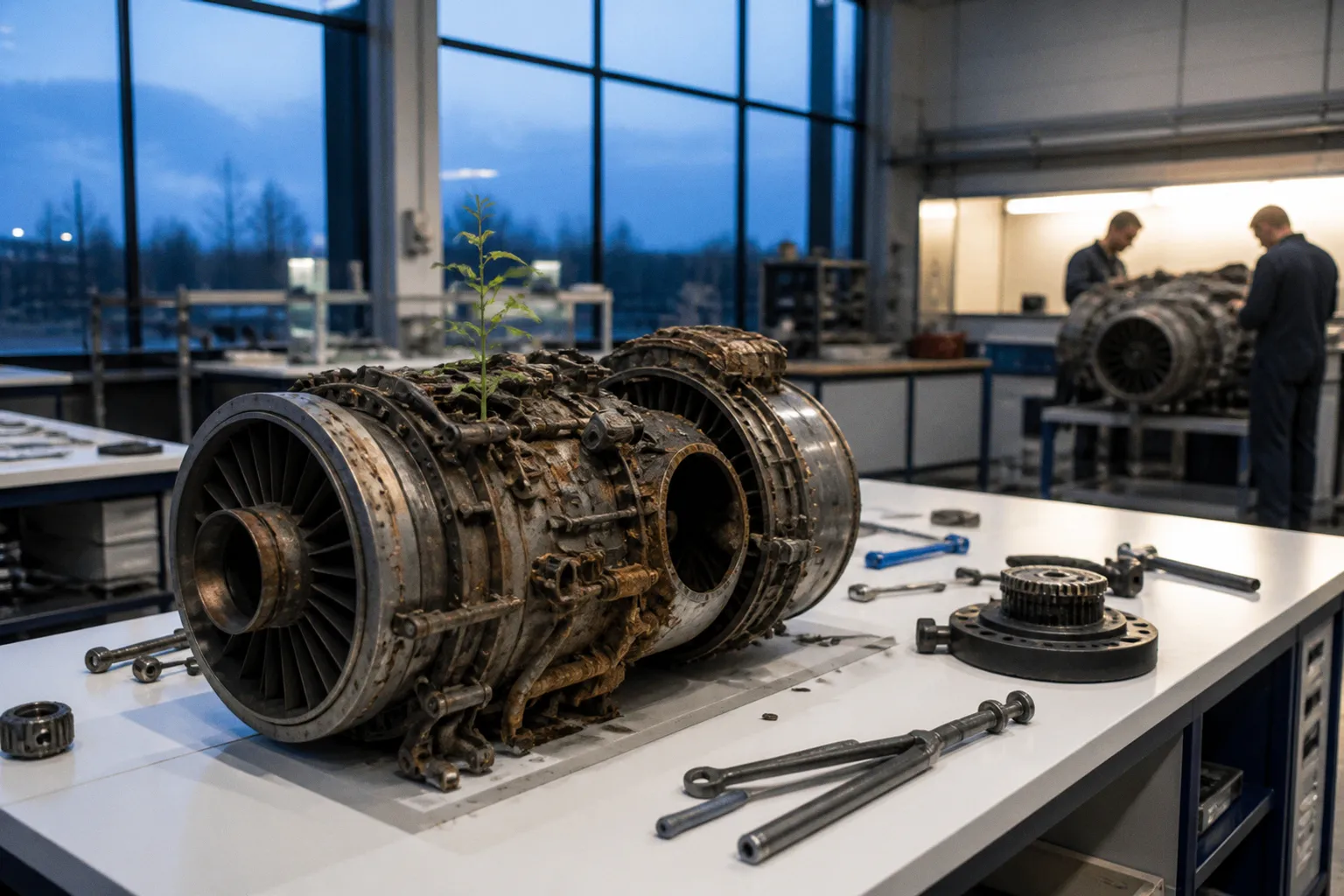
It is the moment the founder has to look at a paying consulting project and ask whether it is helping the company build a repeatable business—or simply keeping the lights on.
That question is uncomfortable because services often provide the first real proof that the market cares. A utility pays for a custom deployment. An industrial customer funds an analytics project. A land manager asks for a bespoke monitoring system. Revenue arrives before a polished product exists, and the founding team learns more from one demanding customer than it could have learned from months of market research.
But the same work can quietly become the company’s operating system. Every customer gets a different implementation. Every contract requires founder involvement. Engineering is pulled toward the latest request. Margins depend on people, not software, hardware, or a repeatable process.
A climate startup service to product pivot is therefore not a packaging exercise. It changes the company’s economics, engineering priorities, sales motion, team structure, and relationship with early customers. The trade-off is not between “bad services” and “good products.” It is between useful flexibility now and scalable repetition later.
The first question is not “Can we build a product?”
It is “What exactly are customers already paying us to repeat?”
Many climate companies begin with high-touch work because the problem itself is still being discovered. A consulting engagement or custom pilot can perform three jobs at once:
- generate early revenue without immediately raising more equity;
- expose the operational realities that a lab or spreadsheet will miss;
- help the team co-develop intellectual property with an enterprise partner.
That is a strong starting position. It becomes dangerous when the company mistakes customer-specific work for evidence of a standard product.
A service business can survive on variation. A product business is built by controlling it.
The useful material is hidden inside the service delivery. Which part of the work happens in nearly every engagement? Which inputs are predictable? Which decisions follow a repeatable logic? Which deliverables customers value enough to pay for, even when the implementation details differ?
For a climate analytics company, the repeatable product might be an automated data platform rather than a full consulting report. For a hardware company, it might be a modular monitoring unit sold through hardware-as-a-service rather than a new system engineered for every site. For a deployment business, it could be the operating layer that coordinates installations, maintenance, and performance data.
The product is not necessarily the most sophisticated part of the current service. It is the part that can deliver a meaningful customer outcome with less custom labor each time.
The pivot begins when you stop asking how to serve every customer and start identifying the smallest repeatable outcome worth building around.
That distinction matters because climate problems are often site-specific. Weather, grid conditions, permitting, legacy equipment, soil, supply chains, and safety rules can all vary by location. A founder who promises a completely standardized solution may be ignoring the physical world. A founder who treats every difference as a reason for bespoke work may never build a scalable company.
The practical goal is not perfect uniformity. It is a controlled product boundary: a core that stays consistent, with a limited number of configurable edges.
Productization changes the unit economics before it changes the interface
A service invoice can conceal the real cost of delivery. Founders may know the contract value but not the labor, rework, travel, integration, customer support, hardware replacement, and founder time required to fulfill it.
Before committing to a product pivot, the team needs a more honest view of the existing business. Not a polished investor model—an operating model that reflects how work actually gets done.
| Service-led model | Product-led model |
|---|---|
| Revenue tied to projects, hours, or deployments | Revenue tied to subscriptions, standardized units, usage, or recurring service |
| Scope negotiated separately for each customer | Core scope defined in advance, with controlled configuration |
| Gross margin can depend heavily on staff utilization | Gross margin improves when delivery becomes more repeatable |
| Sales often led by relationships and technical credibility | Sales must communicate a clear, repeatable customer outcome |
| Engineering responds to individual requirements | Engineering protects a common architecture and roadmap |
| Capacity grows by hiring or adding contractors | Capacity can grow through automation, modularity, channels, or repeatable deployment |
| Customer feedback arrives as bespoke requests | Customer feedback is translated into product patterns and prioritized themes |
This shift does not mean recurring revenue is automatically better. A poorly designed subscription can become a service contract wearing a software label. If each customer still requires a separate data pipeline, manual reporting, and constant intervention, the billing model has changed but the business has not.
The more useful questions are operational:
- How many hours of human work are required to activate one customer?
- Which integrations are genuinely necessary for the first use case?
- What percentage of delivery can happen without a founder or senior engineer?
- How often does the team redo work that was supposedly completed for a previous customer?
- Which custom features create a durable product capability, and which exist only because one buyer asked for them?
- What happens to margins when deployment volume increases?
A capital-intensive climate solution needs particular discipline here. Physical products, field installations, certification, inventory, maintenance, and financing can extend the path to break-even well beyond the timeline familiar from traditional software. Product standardization cannot remove those costs, but it can make them visible and manageable.
The team may eventually choose a productized service rather than a pure software or hardware product. That can be the right answer. The mistake is pretending the choice is more scalable than it really is.
The product roadmap must be written against field reality
Climate founders are especially vulnerable to building an impressive prototype that works under controlled conditions and fails under operating loads.
Laboratory performance is not the same as field performance. A prototype may work with clean data, stable power, careful calibration, and expert supervision. A customer site may introduce vibration, dust, weather exposure, intermittent connectivity, untrained operators, maintenance delays, safety constraints, and equipment that behaves differently from its documentation.
This is where many early pilots become expensive lessons. The technology is not necessarily wrong. The company has simply tested the wrong version of reality.
A serious productization effort moves field constraints into the engineering process early. That means treating deployment conditions as product requirements rather than implementation annoyances.
For software and data products, the hard questions may involve:
- incomplete or inconsistent customer data;
- permissions and cybersecurity requirements;
- integration with legacy systems;
- auditability of calculations;
- offline or low-connectivity environments;
- the level of human review customers still expect;
- liability if a recommendation is acted upon and the result is poor.
For hardware and physical climate systems, the list expands:
- installation time and technician skill;
- access to the site and transport conditions;
- weather and seasonal variation;
- component replacement and repair;
- operating loads beyond the laboratory test;
- safety procedures and certification;
- end-of-life handling and warranties.
A product roadmap that ignores those details will eventually be rewritten by the field, usually at the most expensive possible moment.
The service phase can help here. Keep the engagements that expose the repeatable operational problem. Document them aggressively. Turn recurring exceptions into design constraints. Do not assume that because a customer tolerated a manual workaround during a pilot, the workaround belongs in the product forever.
The objective is to reduce the number of exceptions without denying that exceptions exist.
Design the first product around a narrow job
Broad climate missions are useful for recruiting and fundraising. They are rarely useful as a first product definition.
“Help companies decarbonize operations” is not a product. “Give a facilities team a reliable weekly view of energy waste across three common building systems” is closer. “Help a fleet operator identify which vehicles are ready for electrification under its current depot constraints” is closer. “Provide modular monitoring for a defined class of industrial assets, with installation completed through a repeatable process” is closer still.
A narrow job makes the trade-offs visible:
- which customer owns the problem;
- who approves the budget;
- what data or equipment is required;
- how long activation should take;
- what outcome can be measured;
- what the company will explicitly refuse to customize.
That last point is not a minor detail. The pivot requires a growing list of things the company will not build, support, or manually repair. Without those boundaries, the product roadmap remains a record of the loudest customer conversation.
Go-to-market changes from selling expertise to selling a system
Service customers often buy confidence in the team. They want people who understand a complicated environment and can adapt when conditions change. That is valuable, particularly in climate markets where procurement cycles are long and operational risk is real.
A product buyer still wants confidence, but the purchase has to become easier to explain and easier to repeat.
The sales conversation must move from “we can solve this with you” toward a clearer account of:
1. the recurring problem;
2. the customer segment for which it is most painful;
3. the product’s defined scope;
4. the implementation effort required from the buyer;
5. the measurable operational or financial value;
6. the boundaries of what the product does not cover.
This transition can feel like a loss of sophistication. Founders are used to winning deals by demonstrating that they understand every nuance of a customer’s situation. Product sales demand the opposite discipline: showing that the company understands the common pattern beneath those nuances.
Enterprise customers will still ask for customization. Some requests will be legitimate. A feature that unlocks an entire segment may deserve priority. A feature that makes one strategic account happy but adds permanent complexity should be priced and treated as custom work.
One useful approach is to separate three layers:
- Core product: functionality every target customer receives.
- Configurable layer: supported variations that fit within a defined architecture.
- Professional services: customer-specific work with separate pricing, timelines, and ownership.
The third layer should not be disguised as product revenue. Keeping it visible protects the economics and tells the team which complexity is being purchased rather than accidentally absorbed.
This is also where founders need to be candid with investors. Service revenue can provide non-dilutive capital and customer access while the product matures. It should not be eliminated simply to make the company look more venture-like. If the service work is funding product development and generating relevant learning, it may be strategically useful.
The danger is allowing that temporary bridge to become the permanent business model while telling a different story in fundraising materials.
The team has to change its definition of good work
In a service company, responsiveness is often a competitive advantage. The team wins by solving the customer’s immediate problem, even if the solution is inelegant.
In a product company, responsiveness without prioritization becomes a liability. The team must protect the system from being reshaped by every request.
That requires more than hiring a product manager. It requires a different internal reward structure.
Engineers need permission to remove one-off work, not just add features. Customer-facing staff need a way to record patterns rather than forwarding every request as an emergency. Founders need to stop treating personal involvement as proof of quality. If a deployment cannot succeed without the founder in the room, it is not yet a repeatable product process.
The organizational shift often exposes emotional friction:
- early employees may feel that the company is abandoning the customer intimacy that made it successful;
- the sales team may fear losing deals by refusing bespoke commitments;
- engineers may resent being asked to standardize a system they built through improvisation;
- founders may feel that saying no is damaging relationships they worked years to earn;
- customers may interpret product boundaries as a reduction in service.
None of this means the pivot is wrong. It means the business is changing underneath people who learned to succeed under different rules.
A practical transition plan can include:
- assigning one owner for product priorities;
- documenting the current delivery process before automating it;
- tagging every customer request by frequency, value, effort, and strategic relevance;
- creating a sunset plan for low-value custom features;
- setting a target for reducing manual steps in activation and support;
- preserving a limited number of paid design-partner engagements;
- reviewing whether each new contract strengthens the core product or pulls it sideways.
The point is not to turn a climate startup into a generic software company. It is to make the company’s scarce talent work on the bottleneck that prevents scale.
Productization is not the removal of human judgment. It is the decision to spend human judgment where repetition cannot solve the problem.
Capital discipline is part of the pivot, not a consequence of it
The funding environment makes this transition less forgiving. Climate tech investment in the first half of 2025 totaled $13.2 billion, down 19% year over year. Whatever the exact conditions of a particular subsector, the broader signal is clear: a compelling climate mission is not a substitute for credible unit economics and customer value.
That does not mean every climate startup should optimize for short-term profitability. Hardware, infrastructure, and industrial deployments often need substantial upfront investment. The lesson is narrower and more useful: founders have less room to hide unresolved economics behind growth language.
A service-to-product transition typically creates a period of financial tension. Service work may be reduced before product revenue is reliable. Engineering costs rise as the team rebuilds around standardization. Existing customers may want support for legacy implementations. Sales cycles may lengthen while the new offer is tested.
The company needs an explicit bridge plan. It should show:
- which service contracts will continue;
- which engagements will be declined or repriced;
- what portion of service capacity is reserved for product learning;
- when the first standardized version is expected to be usable;
- what evidence will trigger further investment;
- how much runway is needed if sales take longer than planned.
There is no universal timeline for a climate startup moving from consulting to SaaS or standardized hardware. The physics of the product, procurement rules, customer concentration, certification requirements, and deployment environment all matter. Founders should be suspicious of simple benchmarks that promise a predictable conversion rate or a neat number of months.
Instead, define gates based on evidence. For example:
- Can a new customer reach the first meaningful outcome without a bespoke implementation?
- Can the team explain the product’s value without a founder-led technical workshop?
- Are the most common deployment problems known and priced into the model?
- Does additional revenue require roughly proportional additional labor, or is the ratio beginning to improve?
- Are customers renewing, expanding, or referring others because of the standardized offer?
These are not vanity metrics. They indicate whether the company is actually becoming more repeatable.
What to preserve from the service business
The pivot is often described as a move away from services. That framing is too blunt.
The best service businesses contain assets that product companies struggle to acquire:
- direct access to difficult customers;
- deep knowledge of operational workflows;
- real-world data;
- credibility in a conservative industry;
- revenue that does not depend entirely on equity financing;
- a detailed understanding of where existing solutions fail.
The task is to preserve those assets while removing the dependence on custom labor.
That may mean keeping a service arm for strategic deployments. It may mean charging separately for integration and implementation. It may mean using a small number of design partners to validate the product while refusing to let those partners define the entire roadmap.
European accelerators such as Climate-KIC have supported more than 6,000 climate startups and helped unlock €3 billion in follow-on investment. The useful lesson is not that acceleration solves the productization problem. It is that commercialization in climate requires a wider system of support than product development alone: customer access, capital planning, technical validation, and a credible path to impact all have to connect.
A founder should also be clear about what “scale” means in the specific climate market. It may mean more software subscriptions. It may mean a standardized unit deployed through partners. It may mean licensing a process. It may mean reducing the labor required to deliver an outcome, even if some high-touch implementation remains.
Venture-scale growth is one possible destination, not a moral upgrade from a durable, profitable climate business.
The hard-earned lesson
A climate startup service to product pivot succeeds when the company becomes more specific, not more abstract.
It identifies a repeated customer outcome. It sets a product boundary that survives contact with the field. It measures labor and delivery costs honestly. It keeps services where they create learning or cash, but stops allowing custom work to quietly dictate the roadmap. It gives the team permission to disappoint some customers in order to serve the right customers consistently.
The messy part is that the old business often works well enough to make change dangerous. Customers are paying. The team is busy. The founder has a reputation for solving difficult problems personally. There may be no dramatic failure forcing a decision.
That is exactly when the pivot deserves attention.
Do not wait until the service pipeline collapses to discover that the company has no repeatable product. Start with the engagements already generating revenue. Find the common operational job inside them. Standardize the part customers truly value. Price the exceptions honestly. Test the product under real operating conditions, not only in a controlled environment.
Resilience in climate entrepreneurship is not endless willingness to absorb complexity. Sometimes it is the discipline to stop absorbing it.