Climate startup LCA: a four-stage assessment project
A climate founder can spend six months building an MVP, raising a first round, and preparing a compelling impact story—only to discover that the product’s largest environmental burden sits somewhere…
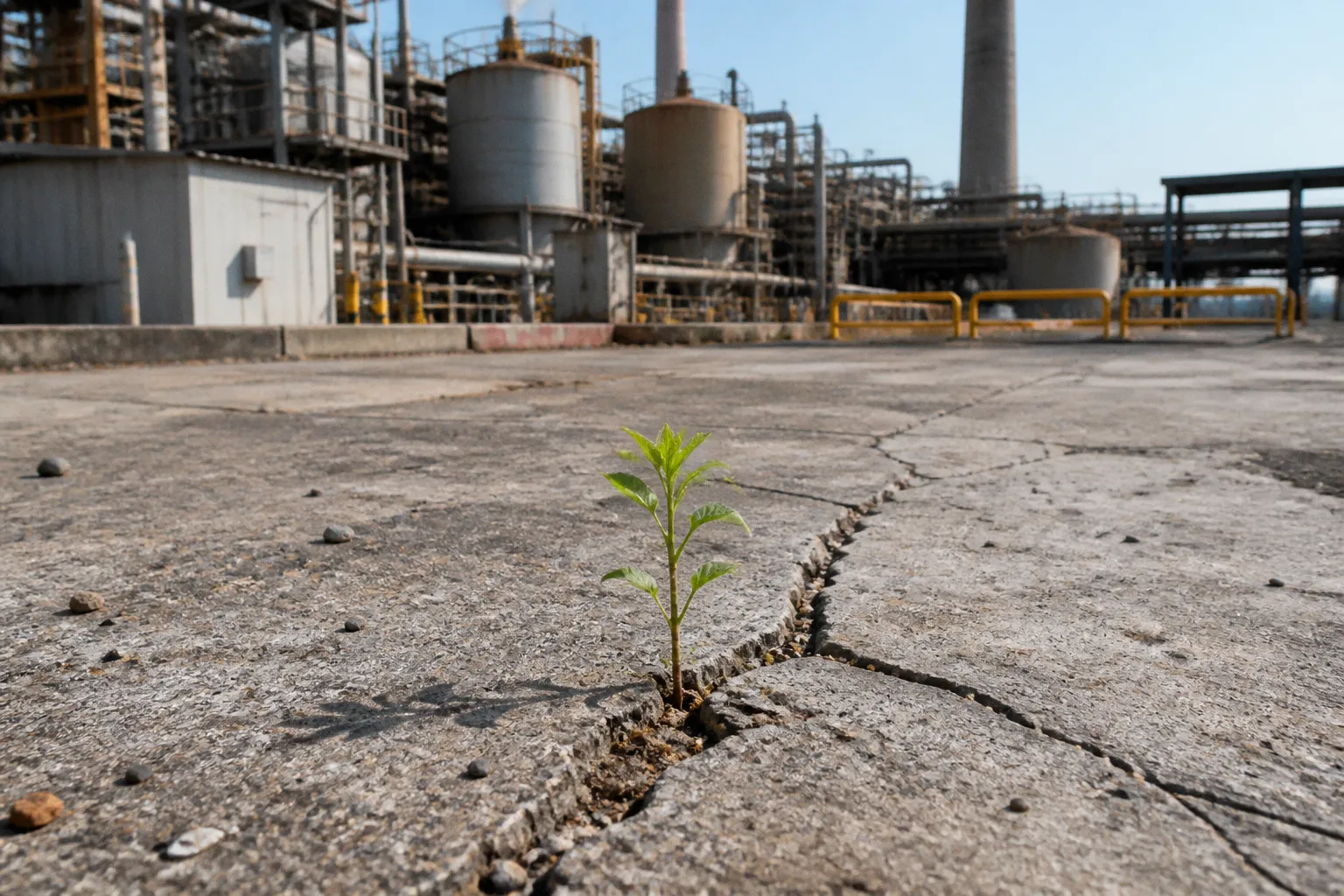
A climate founder can spend six months building an MVP, raising a first round, and preparing a compelling impact story—only to discover that the product’s largest environmental burden sits somewhere they never measured: a material, a supplier, a shipping route, an energy source, or the way customers use the product.
That is the uncomfortable decision behind a climate startup LCA setup. Do you pause product development to measure environmental impact properly, or move quickly and clean up the numbers later?
In practice, this is rarely an either-or choice. A useful early-stage life cycle assessment does not need to be a perfect audit of a finished product. It needs to be a disciplined way to make better design and operating decisions before those decisions become expensive to reverse.
For climate startups, that distinction matters. Approximately 80% of a product’s environmental impacts are determined during the early design phases, before manufacturing begins. An LCA started at the MVP stage is therefore not administrative overhead. It is part of product development.
The strategic value of early-stage LCA
A life cycle assessment measures environmental inputs and outputs across a defined product system. Depending on the project, that can include raw material extraction, manufacturing, transport, installation, use, maintenance, and end-of-life treatment.
It does not automatically measure profitability, social impact, or business viability. Those questions may require complementary methods such as Life Cycle Costing or Social LCA. The job of an ISO-based LCA is narrower and more concrete: understand environmental impacts, document the assumptions behind them, and use the findings to improve the system.
For a climate startup, this creates three operational advantages.
It tests whether the product creates the impact it promises
Many climate products are sold through a simple claim: fewer emissions, less waste, lower energy use, more efficient resource consumption. The claim may be directionally correct and still fail under closer analysis.
A carbon removal device may require energy-intensive materials. A smart building platform may reduce operational energy but depend on hardware with a short replacement cycle. A packaging alternative may eliminate fossil-based plastic while increasing transport emissions because of weight or volume.
The LCA forces the founder to examine the entire system rather than the most attractive part of it.
This is one of the first trade-offs for a non-technical climate founder. A narrower, well-defined analysis can produce a useful decision faster than an ambitious model filled with weak assumptions. The goal is not to make the first spreadsheet look impressive. The goal is to identify which design choices can still be changed.
It turns impact into an engineering question
The strongest early-stage LCA is connected to product decisions:
- Should the enclosure use recycled aluminum, virgin aluminum, or a different material?
- Is the product still beneficial if it requires frequent replacement?
- Does local assembly outweigh the environmental cost of shipping components separately?
- Which component deserves redesign before the first production run?
- Does the software need dedicated hardware, or can it run on infrastructure the customer already has?
- What happens when the product reaches end of life?
These questions give LCA a place inside the product development lifecycle. It becomes a design input, alongside cost, reliability, safety, customer experience, and manufacturability.
It protects the company from weak green claims
Climate startups often move faster than the evidence behind their marketing. Early enthusiasm creates language that later becomes difficult to substantiate: carbon neutral, net zero, zero waste, planet positive, emissions-free.
That creates a commercial and regulatory risk. The EU Empowering Consumers for the Green Transition Directive, Directive 2024/825, becomes enforceable in September 2026. It is intended to require more reliable and standardized environmental claims and to discourage unsupported green assertions.
The practical lesson is not that every young company needs a fully audited LCA before speaking to customers. It is that claims should be built around a documented boundary, a clear functional unit, and data that can withstand reasonable scrutiny.
An early LCA is not a certificate that your product is good. It is a way to find out where the product is still making the wrong trade-offs.
The ISO 14040 and ISO 14044 framework
The international standards divide LCA into four interdependent stages:
1. Goal and scope definition
2. Life cycle inventory analysis
3. Life cycle impact assessment
4. Interpretation
They are often presented as a neat sequence. Real projects are messier. A result from the inventory stage can force you to revise the scope. A missing data point can change the assumptions in the goal definition. Interpretation can reveal that the original question was too broad or not useful enough for a product team.
ISO 14040 defines the overall principles and framework. ISO 14044 provides more detailed requirements and guidelines, including data quality, allocation rules, and critical review. ISO 14067 builds on this framework for quantifying and reporting the carbon footprint of products.
For founders, the important point is that ISO alignment is not a one-time box to tick. It is an iterative operating process.
1. Goal and scope: decide what question the LCA must answer
The first stage is where many projects quietly go wrong. Teams begin collecting supplier data before deciding what they are trying to learn.
A better starting point is a decision. For example:
- Should we change the material used in the main product housing?
- Can this device deliver a lower-impact service than the incumbent?
- Which part of the product should we redesign before pilot manufacturing?
- Can we support a specific environmental claim in a target market?
- What is the impact of one delivered unit, one operating hour, or one year of service?
The goal determines the level of detail required. An internal design comparison does not necessarily need the same evidence as a public comparative claim. A screening LCA for an MVP is not the same project as a third-party-reviewed assessment for regulatory or customer procurement purposes.
The scope should establish several boundaries.
Functional unit
The functional unit describes what is being compared. It should represent the service or output, not merely the object.
For a hardware product, the functional unit might relate to one device over a defined service life. For a software-enabled energy system, it might be a defined amount of energy managed or a period of system operation. For a reusable product, the number of uses may matter more than the individual item.
If the functional unit is vague, the comparison will be vague as well. Comparing one reusable container with one disposable container is rarely enough. The relevant question is usually the impact of delivering the same practical function over a comparable period.
System boundaries
A cradle-to-gate boundary may include raw material extraction through manufacturing but exclude customer use and disposal. A cradle-to-grave boundary includes the full life cycle through end of life. A gate-to-gate study examines a specific process.
There is no universally correct boundary for every startup. There is, however, a correct boundary for the decision at hand.
A hardware startup focused on material selection may begin with manufacturing and transport. If the product consumes electricity in operation, excluding the use phase could hide the main impact entirely. If the startup is making a claim about circularity, end-of-life assumptions cannot be treated as a footnote.
Geography and time period
Electricity mixes, recycling systems, transport infrastructure, and manufacturing practices vary by location. The model should identify where the relevant activities occur and which period the data represents.
This matters especially for climate software and hardware combinations. A product may have a light physical footprint but depend on data centers, connected sensors, or replacement devices. A founder who models only the app has not necessarily modeled the product.
Intended audience and review level
An internal LCA can support a product decision with provisional data. A public claim may require more robust documentation and, depending on the purpose, critical review.
The assessment should therefore state who will use it and how. If the intended audience is an engineering team, prioritize sensitivity analysis and design alternatives. If the audience includes enterprise buyers or regulators, plan for clearer evidence trails and stronger review requirements.
2. Life cycle inventory: build the operating picture
The life cycle inventory, or LCI, is the evidence-gathering stage. It records the materials, energy, transport, emissions, waste, and other flows associated with the defined system.
This is where a non-technical founder can feel out of depth. The vocabulary is specialized, supplier data is incomplete, and the product may not yet exist in final form. But the first task is not to achieve perfect data. It is to separate what is known, estimated, assumed, and still missing.
A practical inventory for an early MVP may include:
- Bill of materials and approximate mass for each major component
- Manufacturing processes and locations
- Electricity or fuel consumed during production
- Packaging materials and weights
- Transport mode, distance assumptions, and shipment frequency
- Expected product lifetime and maintenance requirements
- Energy consumption during use
- Replacement parts and consumables
- End-of-life route, including reuse, recycling, disposal, or uncertain treatment
- Software infrastructure and connected hardware where they materially affect the system
The quality of the inventory depends less on the number of rows than on whether the important contributors are represented.
A useful internal classification is:
- Primary data: information supplied directly by your team, manufacturer, or supplier
- Secondary data: values drawn from established databases or published datasets
- Proxy data: a substitute used when the exact process is not available
- Assumption: a working estimate that needs validation
Do not hide assumptions inside a polished model. Label them. The messy part of climate work is not uncertainty itself; it is unacknowledged uncertainty presented as certainty.
For an MVP, create a data register alongside the model. Record the source, date, geography, unit, confidence level, and the person responsible for improving the entry. That turns the LCA into a living operational document rather than a one-off consultant deliverable.
3. Life cycle impact assessment: convert flows into impacts
The third stage translates inventory data into environmental impact categories.
Carbon footprint is often the first category a startup needs, but it is not the only possible one. Depending on the product, the assessment may also consider water use, resource depletion, eutrophication, acidification, toxicity, or other impact categories.
The selection should follow the product and the decision. A water technology startup that reports only greenhouse gas emissions may miss the burden that matters most to its customers or local stakeholders. A materials startup may need to examine resource use and toxicity as well as climate impact.
For carbon footprint calculations, ISO 14067 provides specific principles and requirements for quantifying and reporting the carbon footprint of products. It is useful when the question is specifically about product greenhouse gas emissions, but it does not eliminate the need to define the system boundary, functional unit, data quality, and assumptions.
A common mistake is to treat the impact result as a single unquestionable number. In an early-stage model, the result is better understood as a range or a decision signal. If a conclusion changes dramatically when one assumption changes, that assumption deserves attention before the company builds a claim around the result.
4. Interpretation: find the decision hiding in the model
Interpretation is where the analysis becomes useful to the business.
The team reviews the results, tests the sensitivity of key assumptions, identifies significant contributors, and checks whether the findings support the original goal and scope.
For a climate startup, the interpretation should answer practical questions:
- Which life cycle stage contributes most to the impact?
- Which input has the greatest uncertainty?
- Which design change could materially improve the result?
- Does the product still outperform the relevant alternative under less favorable assumptions?
- What evidence would change the conclusion?
- What should be measured next?
- Which claims are supported, and which should be removed from the website or pitch deck?
This is also where the emotional trade-off appears. Founders want the model to validate the mission. Sometimes it does. Sometimes it reveals that the most visible sustainability feature is not the most important one.
That is not a failure of the LCA. It is exactly what the assessment is for.
How to operationalize LCA before the product is finished
The best time to begin is when the architecture is still flexible. That does not mean waiting until every component is known. It means starting with a model that is intentionally provisional and updating it as the design changes.
A workable early-stage process can follow five moves.
Start with a decision, not a database
Write one sentence describing the decision the assessment will inform. If the sentence contains several unrelated questions, separate them.
For example, an early hardware team may need to decide whether a product can be assembled from two alternative material systems. That is a manageable first LCA question. It is more useful than attempting to model every possible environmental impact of the entire future product portfolio.
Map the product system on one page
List the relevant stages from materials to end of life. Include the customer’s use of the product, not only the part of the system your company controls.
For a connected device, the map may include:
1. Raw materials and component manufacturing
2. Final assembly
3. Packaging
4. Transport to the customer
5. Installation
6. Electricity and consumables during use
7. Maintenance and replacement parts
8. Return, reuse, recycling, or disposal
This is not a substitute for the formal LCA. It is a way to identify omissions before they become model structure.
Create a minimum viable inventory
The first inventory should concentrate on likely hotspots. It may be enough to begin with the main materials, energy use, transport, lifetime, and end-of-life assumptions.
Do not spend weeks collecting low-impact packaging details while the product’s central component remains an estimate. Rank data gaps by their potential influence on the result.
For each gap, decide whether to:
- Obtain supplier-specific data
- Use a documented proxy
- Model a low and high case
- Exclude the item with a written rationale
- Revisit the question after the next prototype
Put LCA into design reviews
If LCA is left to a sustainability lead at the end of development, it becomes a reporting exercise. If it appears in design reviews, it can influence the product.
Add environmental impact questions to the same meetings where the team discusses cost and performance:
- Did the new component reduce one impact while increasing another?
- Did a weight reduction require a more intensive material?
- Did extending lifetime reduce the need for replacement?
- Does the new supplier change the geography or electricity assumptions?
- Is the product’s claimed benefit dependent on customer behavior the company cannot reliably control?
This is where resilience matters. A model that survives design changes, supplier changes, and skeptical questions is more valuable than a one-time result that looks precise.
Keep a version history
Every significant change should be recorded: new bill of materials, revised lifetime, updated electricity mix, different transport route, or a change in the functional unit.
Version control is not bureaucracy for its own sake. Climate startup assumptions move quickly. A founder may be comparing an early prototype with a planned production model, while a sales deck still reflects an older version. Without a clear history, numbers start drifting between teams.
Treat the LCA like product infrastructure: versioned, questioned, and updated when the system changes.
Tooling and data strategy for a lean climate team
The choice of LCA software matters, but it should come after the question and scope have been defined. Software cannot repair a badly framed functional unit or a missing use phase.
Tools range from open-source platforms to commercial SaaS products. openLCA is an example of open-source software, but open-source does not mean that every relevant dataset is free. External background databases, including ecoinvent, may require separate licenses.
Commercial tools can reduce the operational burden for teams that need guided workflows, collaboration, reporting, or preconfigured datasets. Entry-level subscriptions for some products start at around €290 per month for small product sets, although actual costs vary by provider, database access, product count, and support requirements.
The decision should reflect the company’s stage.
| Startup situation | Sensible tooling approach | Main trade-off |
|---|---|---|
| Concept or very early MVP | Spreadsheet-led system map plus documented assumptions | Fast and inexpensive, but limited for complex modeling |
| Hardware prototype with several material options | LCA software with structured inventory and scenario comparison | Better iteration, but requires learning and data discipline |
| Software product with modest physical infrastructure | Model hardware, energy, infrastructure, and use assumptions proportionately | Avoids focusing only on the application layer |
| Customer-facing environmental claim | More robust data trail, documented methodology, and appropriate review | Slower and more expensive, but stronger defensibility |
| Multiple products or frequent design changes | Commercial collaborative platform or a dedicated internal process | Better scale, but recurring software and database costs |
The important distinction is between the tool and the dataset. A polished interface does not guarantee good evidence. Data quality should be assessed by:
- Geographic relevance
- Temporal relevance
- Technological relevance
- Completeness
- Consistency
- Precision
- Transparency of assumptions
For an early-stage founder, a transparent proxy is often more useful than an inaccessible number with an impressive interface. Record why the proxy was selected and what would justify replacing it.
A small team also needs to decide who owns the model. It should not become an orphaned file held by a consultant or a single sustainability employee. Assign responsibility for updates, define when a new assessment is triggered, and connect the model to product and procurement workflows.
What non-technical founders should not outsource blindly
A non-technical founder does not need to become an LCA specialist. They do need to understand the decisions embedded in the assessment.
There are four areas where outsourcing without internal ownership creates problems.
The functional unit
A consultant can build a technically coherent model around a functional unit that does not match how the product creates value. The result may be correct on paper and irrelevant to the customer decision.
The founding team should own the definition of the service being compared.
The system boundary
A narrow boundary can make a product look cleaner by excluding difficult stages. Sometimes that boundary is legitimate. Sometimes it is simply convenient.
Ask what has been left out, why it was left out, and whether the omission affects the intended claim.
The lifetime assumption
Product lifetime is often a major driver of results. A device used for ten years can look very different from the same device replaced after two years. If the lifetime is based on hope rather than field evidence, model a range.
The same applies to repair, refurbishment, and reuse. Circularity is not created by a take-back statement alone. The model needs a plausible route and an estimate of what actually happens to the product.
The comparison product
A climate benefit is usually relative to an alternative. That alternative must be defined carefully. If the incumbent product has a different lifetime, capacity, performance level, or use pattern, a simple unit-to-unit comparison can distort the conclusion.
The most persuasive comparison is not always the one with the most favorable baseline. It is the one that reflects how customers actually make the decision.
Preparing for the 2026 EU green-claims environment
The September 2026 enforcement date for Directive 2024/825 gives climate startups a practical planning horizon. Companies selling into the EU should review how environmental language is created, approved, and retained.
That does not mean every website sentence needs to become unreadable legal prose. It means the company should distinguish between:
- A measured result and a future target
- A product footprint and a corporate footprint
- A reduction claim and an avoided-emissions estimate
- A recycled-content claim and a circularity claim
- A modeled scenario and a verified outcome
- An internal hypothesis and a public statement
The LCA file should support that distinction. Keep the goal and scope, inventory sources, assumptions, calculation method, impact categories, results, limitations, and interpretation together. If a claim changes, the supporting analysis should be easy to locate.
Founders should also watch for claims that combine different levels of analysis. A product may have a lower carbon footprint under a defined use case without making the entire company net zero. A component may contain recycled material without the product being circular. A platform may enable emissions reductions without being able to claim that all those reductions belong to the platform.
This is where candid communication becomes a competitive advantage. Customers do not need inflated certainty. They need to know what was measured, under which conditions, and where the boundaries are.
The LCA is a product decision system, not a climate badge
The most useful climate startup LCA is not the one that produces the most flattering number. It is the one that changes a costly decision early enough to matter.
For a non-technical founder, the path is manageable:
1. Define the product function and the decision the assessment must support.
2. Set an explicit boundary, geography, lifetime, and intended audience.
3. Build a minimum viable inventory around likely impact hotspots.
4. Use documented assumptions and label uncertainty instead of hiding it.
5. Run scenarios when the result depends on unresolved design choices.
6. Bring the findings into product, procurement, and marketing decisions.
7. Update the model as the MVP becomes a real product.
8. Match public environmental claims to the strength of the evidence.
There will be pivots. Suppliers will change. The first product architecture may not survive manufacturing. A design that looked environmentally elegant may fail on cost or reliability. That is normal. Resilience in climate technology is not the ability to avoid messy trade-offs; it is the ability to see them early and make them explicit.
An ISO 14040 and ISO 14044-based assessment gives the team a structured way to do that. Start small, model the system honestly, and let the results challenge the story before the market does.