Decoding the WEF ClimateTech List: Strategic Signals for Founders
The World Economic Forum has published a roundup titled "5 tech innovations that could tackle climate change." For ClimateTech founders, this functions as a market signal — a benchmark for what…
The World Economic Forum has published a roundup titled "5 tech innovations that could tackle climate change." For ClimateTech founders, this functions as a market signal — a benchmark for what institutional capital, multilateral bodies, and large corporate buyers now classify as investable categories. The list is not the product; the signal is.
The signal set
A WEF-curated roundup carries specific weight. It shapes LP allocation conversations, sets the language of RFPs from development banks, and seeds talking points for accelerator cohorts and government pilot programs. If your startup sits inside one of the five categories, expect inbound interest from funds that track WEF output. If it sits outside, treat the roundup as a gap map — what category is your work missing from the institutional consensus, and is that absence a risk or an advantage?
The publication date, source authority, and framing make this a timing event for ClimateTech education and deal flow. The full text describing each of the five innovations was not available in the materials reviewed here, so the specifics require verification before any investor deck cites them by name.
Adjacent throughput indicators
Three parallel signals moved through the same news window and frame the bottlenecks the roundup is responding to:
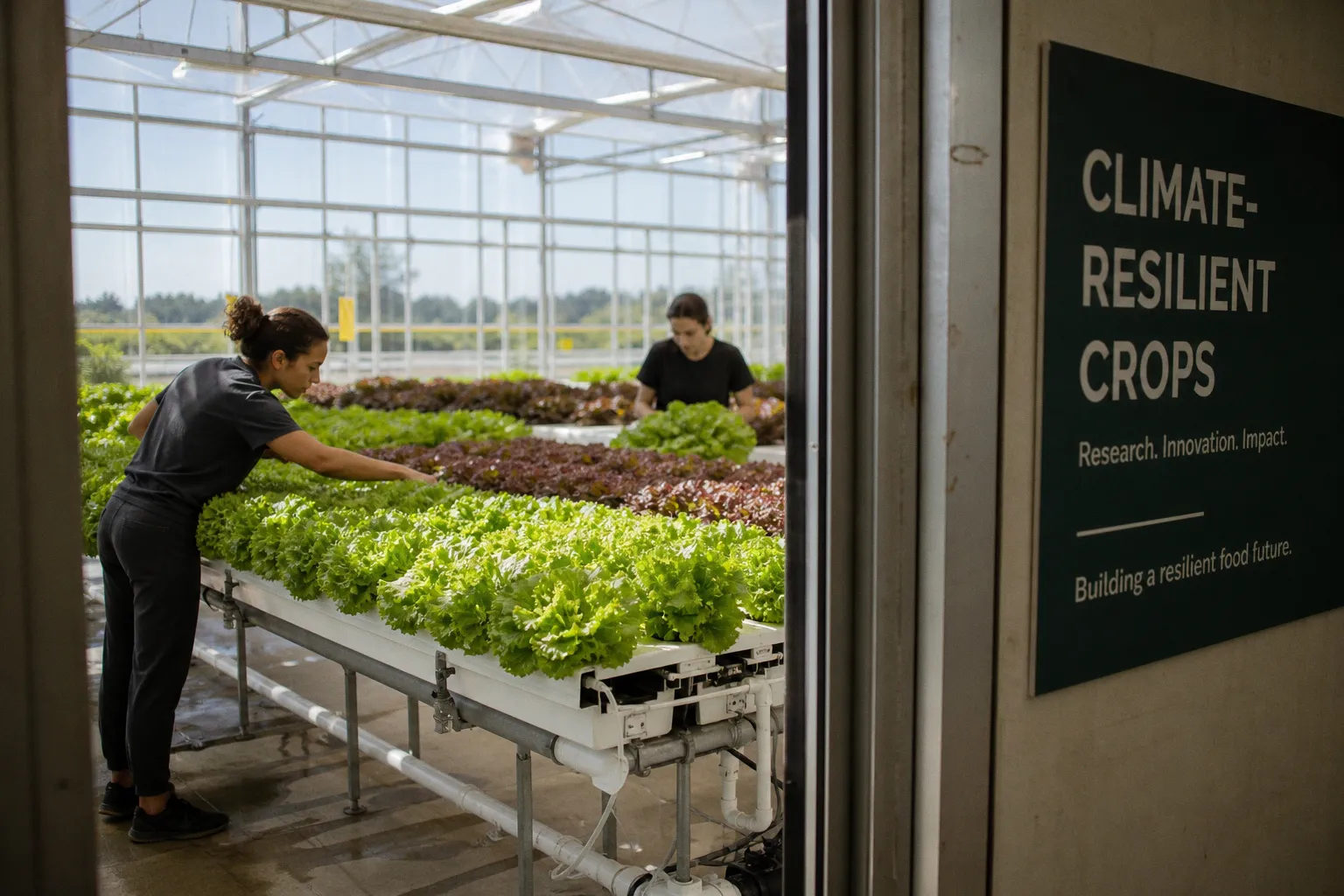
1. Food and Drink Technology reported a "climate-proof lettuce" innovation debut. Category read: agricultural climate risk converted into a unit-economics play for indoor and protected cultivation.
2. News4JAX reported that the UK and Google are testing flight-path changes to cut aviation emissions. Category read: infrastructure-layer intervention where routing software and data, not hardware, carry the margin.
3. The Star reported that Malaysia's Environs Minister called for innovation, AI, and Indigenous community partnership on climate. Category read: governance signal that policy access now demands multi-stakeholder design, not a tech demo alone.
The pattern across all four stories is consistent. The bottleneck is shifting from invention to deployment. Software, data layers, and institutional alignment are the throughput multipliers in 2026 deal flow.
Founder checklist
Before this WEF roundup enters your narrative, answer the following:
- Have you identified which of the five categories your product maps to, and which it does not?
- Do your unit economics hold without policy subsidy, or does the thesis require the WEF-style tailwinds to clear?
- Have you mapped which of the three adjacent signals (food resilience, aviation routing, governance/AI) creates your largest second-order exposure?
- Is your go-to-market built for institutional buyers who consume WEF output, or for commercial customers who do not?
Score pass or fail on each line. Two or more unresolved items means the roundup is not yet an asset for your narrative — it is noise.