Global Hackathon Seeks AI Solutions for Urban Climate Resilience
According to EnviroNews Nigeria, a new Global Hackathon is now openly soliciting the kind of AI tooling that might buy urban climate planners some breathing room, and the call is pointed directly at…
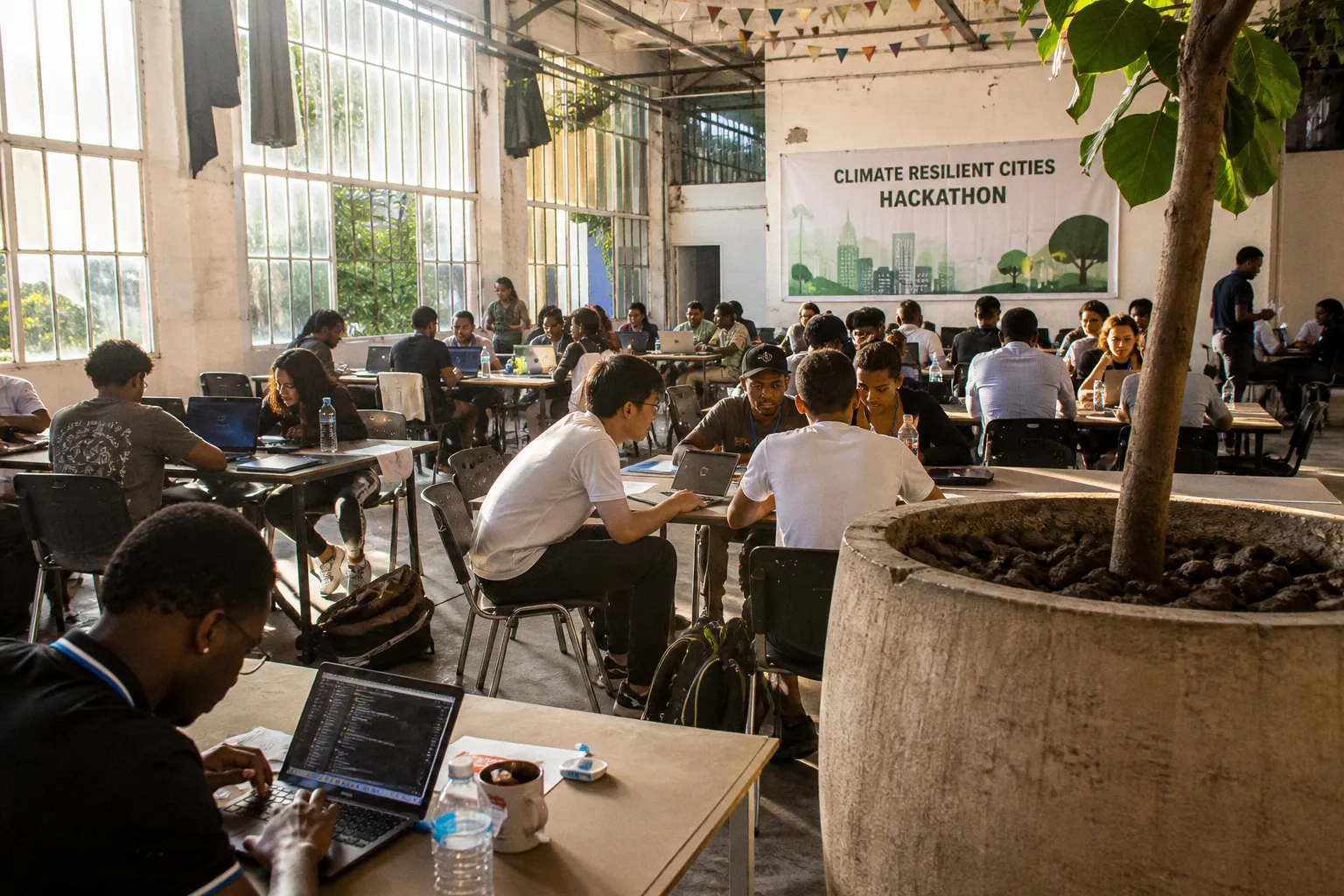
The moment every founder dreads is the one where the problem outruns the solution. A city's heat island spikes, the flood maps redraw themselves, and someone has to decide, quickly, what to actually build. According to EnviroNews Nigeria, a new Global Hackathon is now openly soliciting the kind of AI tooling that might buy urban climate planners some breathing room, and the call is pointed directly at teams who can move from prototype to pilot inside a quarter, not a fiscal year.
The signal buried in the ask
Hackathons are not new, and most climate-flavored ones have, historically, ended in slide decks. What makes this round worth watching is the framing. The brief, as reported, asks for AI applied to city-scale climate challenges — not abstract modeling, not academic benchmarks, but the messy operational layer where utilities, transit authorities, and municipal procurement teams actually live. For ClimateTech founders, that distinction matters enormously. Selling a model is one problem. Selling a model that survives procurement review, a cybersecurity audit, and a city budget cycle is a different company entirely.
The unknown, of course, is what happens after demo day. Hackathon alumni who have raised follow-on rounds will tell you the real product work begins when the glamour fades and the API keys start to cost real money. So treat this as a forcing function for crisp scope, not a finish line.
Where the policy winds are blowing
The hackathon is not landing in a vacuum. The same news cycle carried a piece from Vanguard News noting that ASCE is pushing for community engagement and policy frameworks around climate-responsive urban development. Read that alongside Vietnam+'s coverage of a national environmental protection and climate response vision to 2045, and a pattern emerges: cities and infrastructure bodies are publicly signaling that they want partners who can ship against measurable, jurisdictional targets.
That is good news for teams with regulatory literacy and harder news for teams whose only moat is a clever neural net. The buyers on the other side of these hackathons increasingly want audit trails, not just accuracy claims. Founders pitching into this space should plan their data lineage, their model card, and their explainability story before they plan their demo reel.
The trade-off worth naming
Here is the candid part. A global hackathon is a legitimacy lever — it gets you a room, some press, occasionally a paying pilot. It is not a business model. The founders who extract real value from events like this treat the submission as a forcing function for a sales conversation they would have needed anyway, with a buyer they would have had to find cold. If you cannot draw a straight line from your hackathon entry to a named municipal pain and a plausible procurement path, you are building a trophy, not a company.
What to watch next: whether the organizers publish judging criteria and a partner list, and whether any of the participating cities put real budget behind the pilots they say they want. Until then, file this under "useful pressure," not "arrived opportunity."