Google Launches $500,000 Research Grants to Accelerate Carbon Removal Innovation
According to ESG News, Google has opened applications for its 2026 Carbon Removal and Superpollutant Elimination R&D Awards — research grants of up to $500,000 per project aimed at breaking down the…
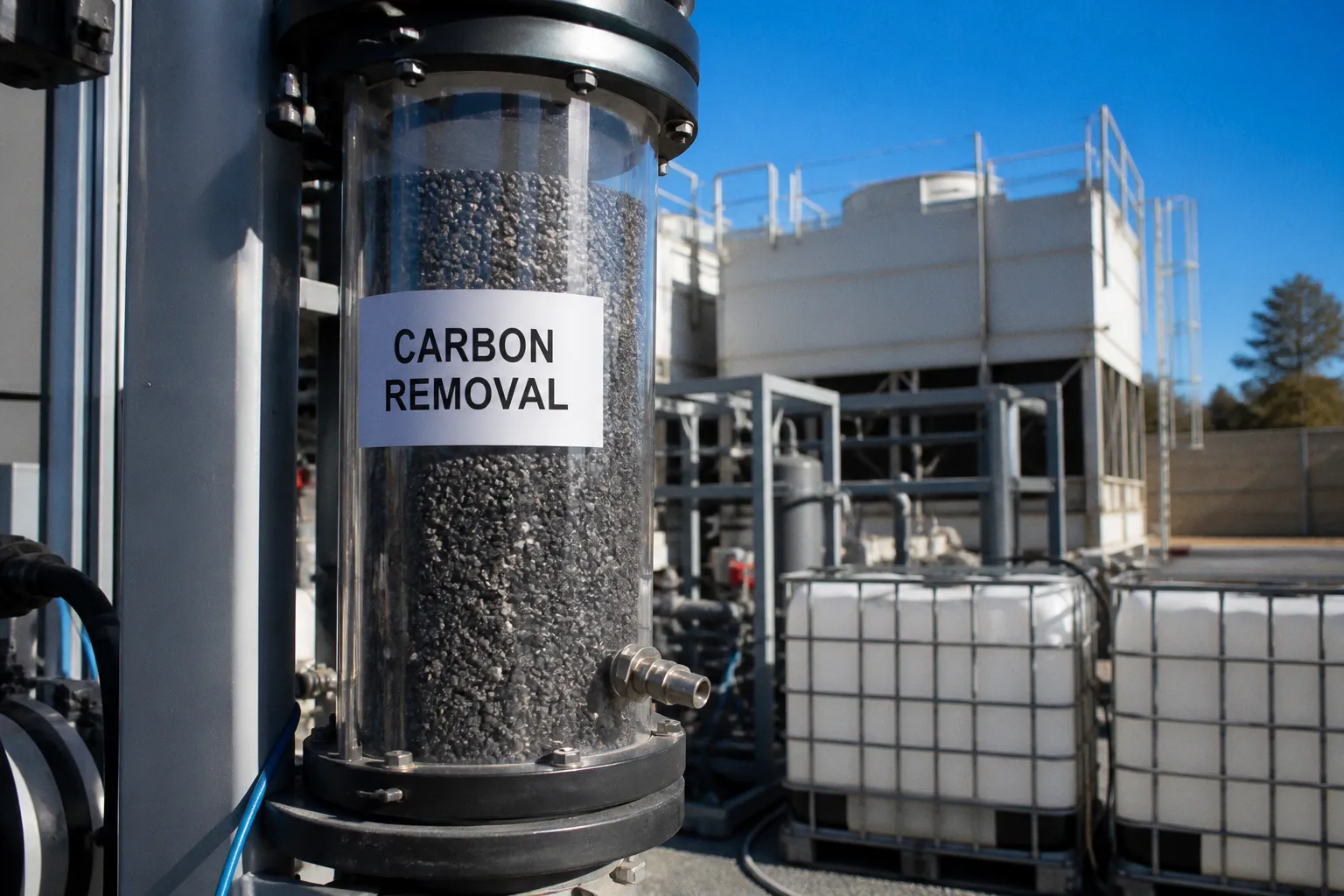
You know that question that surfaces every time a climate founder sits down to map the next eighteen months: which research dollars are actually worth chasing, and which ones will quietly drain your runway before the check ever arrives? Google just put real money behind that question.
According to ESG News, Google has opened applications for its 2026 Carbon Removal and Superpollutant Elimination R&D Awards — research grants of up to $500,000 per project aimed at breaking down the scientific and engineering barriers standing between today's climate tech and gigatonne-scale deployment.
The scope is bigger than "carbon capture"
This isn't a single bucket of cash for one technology. The awards thread through several pressure points where the field still lacks credible evidence, and the funding spans laboratory work, field trials, engineering prototypes, modelling, and data analysis. Universities, research institutions, nonprofits, social enterprises, and eligible businesses can apply. The priority areas include:
- Ocean alkalinity enhancement: up to $450,000 to study OAE's environmental and ecological impacts in the field, plus $400,000 to test whether the approach can move beyond today's concentration of coastal deployments — looking at regional chemistry, ocean mixing, and new alkalinity dispersal systems.
- BECCS and next-gen capture: $400,000 for reducing the energy and operating costs of carbon capture, including solid sorbents and metal-organic frameworks tested under real biomass combustion conditions.
- Biochar: research into processing underused biomass sources like municipal waste, sewage sludge, and non-woody crop residues.
- Nature-based removal: $350,000 for protecting restored mangroves from sea-level rise, and $400,000 for understanding how land use affects leakage, additionality, and durability across reforestation, agroforestry, and mangrove projects.
- Low-concentration CO2 capture: $450,000 for novel approaches to the high energy requirements that still constrain direct air capture.
- Methane: two awards of up to $500,000 — one for oxidizing methane in dilute emission streams (ventilation air methane, dairy barn exhaust, landfill emissions), and another developed with Spark Climate Solutions on methane's atmospheric lifetime and removal mechanisms.
- Tidal wetlands and landfills: $450,000 each for balancing long-term carbon storage against methane emissions in tidal wetland restoration, and for monitoring, reporting, and verification (MRV) in open-system landfill interventions.
Why this matters beyond the lab
Read carefully and you'll notice what Google is actually signaling. The awards target gigatonne-scale potential for CO2 removal and megatonne-scale potential for superpollutant abatement. The language is scale, but the ask is the unglamorous middle: credible measurement, environmental safeguards, and field evidence that lets a technology move from "promising" to deployable at materially larger scales.
For early-stage founders, that's a quiet invitation. The program wants partners who can generate the data regulators, insurers, and buyers will eventually require. If your venture already touches OAE, BECCS, biochar, nature-based pathways, DAC, methane abatement, or MRV, this is one of the moments where the field is actively recruiting collaborators rather than waiting to be convinced.
What to do this week
Before the application window starts slipping, take ninety minutes and do three things. First, map your venture against the priority list and identify where your roadmap already touches one of these pathways — even tangentially. Second, decide whether you need a research partner to make a competitive bid, or whether you already hold the data and only need the grant mechanics. Third, draft a one-page framing of your project's gigatonne or megatonne potential, because that's the language these reviews respond to.
The deadline will move faster than you think, but the alignment between your roadmap and Google's call for credible, scale-ready evidence is something you can begin shaping today. We don't need to navigate every award at once — just the one that already sits inside the work you're building.