Validating Climate Tech Ideas Through Community-Led Traction
Renew Economy reports that Sydney-based early-stage climate investor Impact Ventures has crossed $10 million under management and secured the first close of its inaugural follow-on fund — a hard…
Renew Economy reports that Sydney-based early-stage climate investor Impact Ventures has crossed $10 million under management and secured the first close of its inaugural follow-on fund — a hard signal that climate capital is now flowing toward startups that have already cleared a validation threshold. For founders still in pre-build mode, the operating question is no longer "do I build?" but "which gatekeeper do I pass first."
Where validation happens before capital
Three recent mechanisms illustrate the shift. Impact Ventures, founded in 2021, has backed over 50 climate tech startups including renewable energy retailer Amber Electric, energy software company Orkestra, and aerial robotics firm Infravision. Deal flow runs through accelerator partnerships with EnergyLab, Boomerang Labs, Rocket Seeder, and OIO. The new follow-on fund will deploy $2 million annually, with final close expected this month and capital deployed across the next 12 months. Co-founder James Tilbury states the thesis directly: portfolio companies are moving into growth phases and require continuity capital.
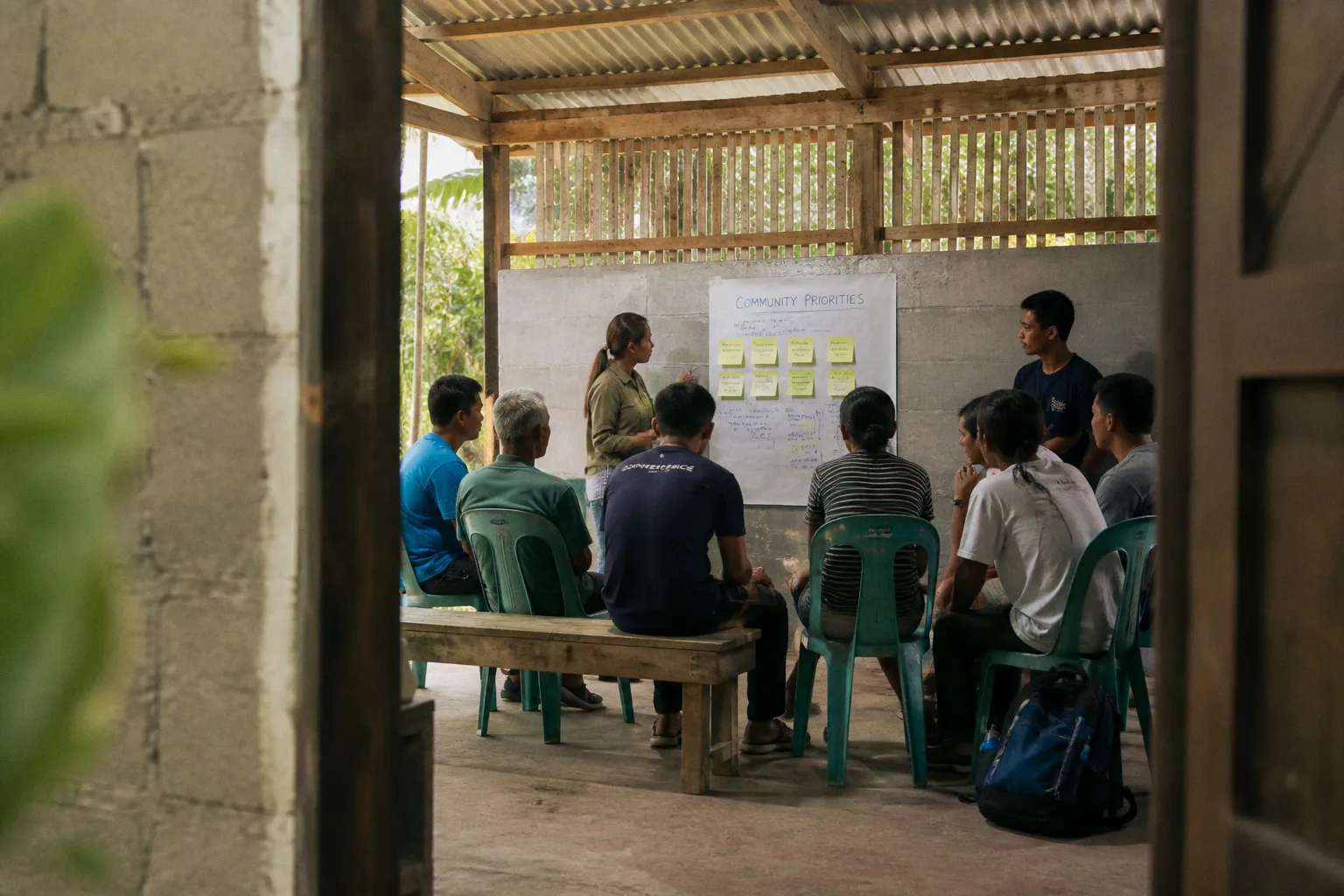
The Exelon Foundation has added Public Grid and Buckstop to its Climate Change Investment Initiative (2c2i), an early-stage climate tech portfolio. Swiss Re Foundation has opened applications for Shine 2027, a grant mechanism for early-stage urban climate innovation ventures, per a Global South Opportunities listing. A TradeFlock piece titled "Community-First Startups: Validating Ideas Before Building" threads the same thesis across the funding stack.
What the gatekeepers actually screen for
If capital is gated, the screening criteria become the de facto curriculum. Three parameters dominate:
1. Demonstrated community pull. Letters of intent, paid pilots, or waitlists proving demand exists before the product does.
2. Unit economics visibility. Even rough cost-to-serve versus willingness-to-pay ratios.
3. Bottleneck clarity. A single named assumption whose failure would collapse the model.
Renew Economy notes that Impact Ventures' follow-on fund targets "the most successful start-ups across its portfolio as their business models mature." That language names the input variable: maturity, not novelty. Apply that filter to every program above and the throughline becomes obvious — pilots and partnerships precede equity.
Binary checklist
Before applying to any channel, answer yes or no:
- Have you shipped a prototype or pilot with at least one paying or piloting counterparty?
- Can you state, in one sentence, the assumption whose failure would collapse your model?
- Is your burn rate mapped against the next 12 months of runway at current monthly net?
One "no" is acceptable. Two "nos" means you are building, not validating. Redirect capital and time accordingly.