Securing DOE Funding for Solar Innovation: A Guide to SBIR and STTR Grants
The Department of Energy runs a funding track that was built for exactly this moment — and it doesn't ask for your equity in return.
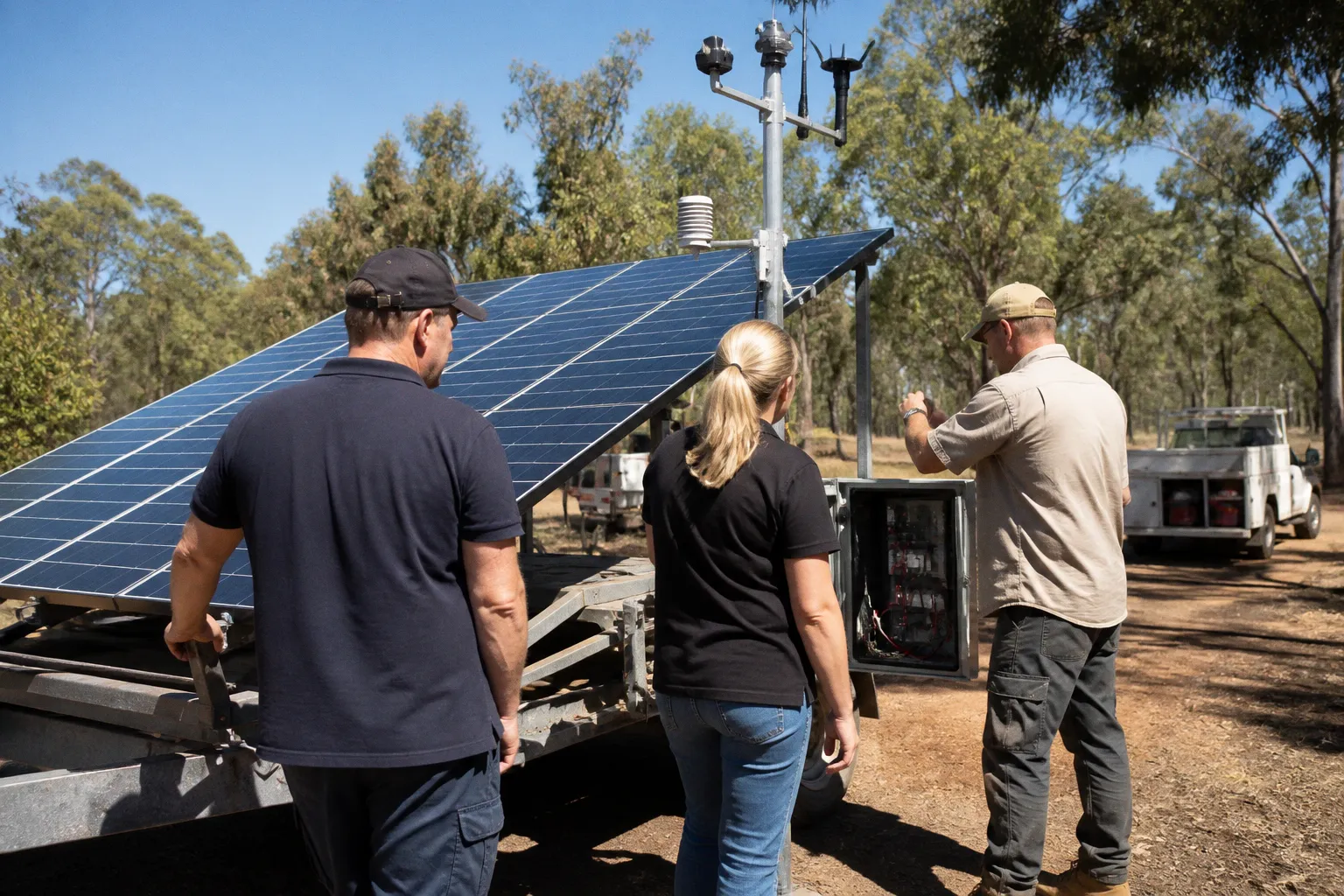
Stuck watching your solar innovation stall somewhere between whiteboard and prototype? The Department of Energy runs a funding track that was built for exactly this moment — and it doesn't ask for your equity in return.
The DOE's Small Business Innovation Research (SBIR) and Small Business Technology Transfer (STTR) programs are competitive awards designed for U.S. small businesses willing to take on high-risk, high-reward research with real commercialization potential. Through the Solar Energy Technologies Office (SETO), funding flows to companies pushing forward the affordability, reliability, and performance of solar — across photovoltaics, grid integration, solar-plus-storage, and community solar.
How the money actually moves
The structure is calmer than most founders expect. Phase I backs your feasibility study and proof-of-concept work. Phase II steps in once you've cleared that gate, funding prototype development. The expectation woven through both phases is simple but non-negotiable: you have to think about commercialization early, because DOE surveys awardees afterward to track outcomes.
There's also a side door worth knowing about. Technology Transfer Opportunities (TTOs) let a single small business pick up a specific patent from a DOE national lab or partner university. The award comes bundled with a six-month non-exclusive licensing agreement — extendable through negotiation with the institution that owns the patent. If your idea has roots in academic research, this lane can save you years of licensing friction.
Why this matters for early-stage climate founders
Solar hardware is brutally capital-intensive at the prototype stage. Traditional venture capital rarely moves that early, and bootstrapping hardware is exhausting. Public programs like SBIR and STTR exist precisely because private markets underserve this gap — they want to foster technology transfer to the private sector and keep entrepreneurial participation flowing into the sector.
Look at AmpX Technologies in College Park, Maryland. They're building a compact, integrated multi-port power electronics unit — one "box" that connects rooftop solar, home batteries, and electric vehicles through a single interface. That's the kind of hardware-heavy, capital-hungry project that's nearly impossible to fund without a partner willing to absorb early risk. SETO's award structure is designed for builders like these.
Your first concrete step
The FY 2025 Phase I Release 2 funding opportunity is live on the DOE site. Pull the topic list, map your current work against the subtopics, and confirm your team qualifies as a U.S. small business. If you're considering STTR specifically, line up a research institution partner before you start writing — that relationship is structural to the application, not optional.
You don't need a polished pitch deck to begin. You need ten quiet hours, the topic list, and an honest read on where your technology sits between feasibility and prototype.